Central New York’s housing market is being reshaped by a single infrastructure project. The Micron chip fabrication facility under construction in Onondaga County has tightened inventory so severely that buyers are pushing 20 miles or more into surrounding counties to find available homes, creating a ripple effect that has doubled rents in some areas over the past 18 months and drawn buyers relocating from as far as Tennessee and California.
The dynamic is straightforward: a massive employer is arriving in a region that didn’t have the housing stock to absorb it. The pressure radiates far beyond the construction site and is expected to persist for a decade.
“Everything is really boiled down to this Micron plant,” says Janet Knopp, Principal Broker and Agent at Capital Region Preferred Properties, who has worked the upstate and central New York market for 30 years. “People who want to be close by are finding it difficult. There’s just not a lot of housing.”
The Spillover Pattern
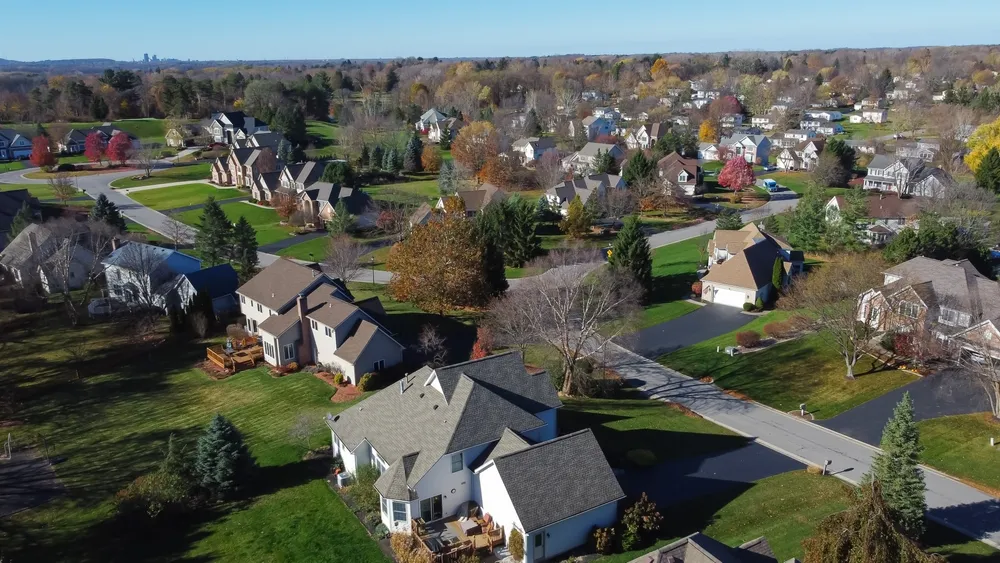
The tightest conditions are in Onondaga County, where Micron’s construction is already underway. But the more actionable story for investors is what’s happening in the ring of counties around it, southern Oswego County, northern Oneida County, and parts of Cayuga County, where buyers priced out of the immediate area are landing.
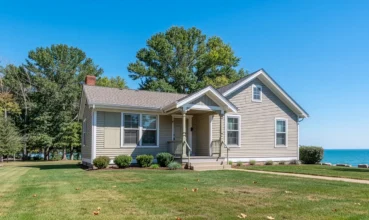
Knopp points to a recent transaction on Church Street in Pulaski, roughly 30 minutes north of the Micron site, where a buyer relocated from Tennessee for work she believes was connected to the facility. Prices in Onondaga County pushed the buyer to Pulaski instead, where they could get land rather than an apartment or condo, a preference Knopp sees repeated across the spillover market.
Rents in the broader area have roughly doubled over 18 months, though Knopp notes they have since flattened. The housing shortage, however, has not eased. Inventory remains low, price cuts are not occurring, and demand continues to outpace supply.
A Complicated REO Market
For investors looking at distressed properties, central New York presents an unusual friction. REO inventory, properties repossessed by lenders after foreclosure, is at what Knopp describes as a 20-year low. The properties that do exist face a structural mismatch: banks price them for owner-occupants to promote neighborhood stabilization, which investors perceive as overpricing. Meanwhile, the owner-occupants those banks prefer typically need financing, and most REO properties won’t pass appraisal in their current condition.
“The investors are saying they’re overpriced and the retail people that are going to owner-occupy don’t really want to do any work,” Knopp says. The result is that roughly a third of REO contracts fall through, with buyers backing out after going under contract.
The counties with the most active foreclosure inventory right now are Oneida County, just south of Onondaga, and Jefferson County near Watertown, areas where the Micron effect is present but less intense.
Where the Opportunity Sits
For investors willing to deploy capital, Knopp points to suburban and rural areas surrounding Onondaga County as the strongest opportunity. Housing is scarce, demand is employer-driven and likely to persist for years, and distressed properties that can be acquired through auction sites and renovated can serve either the rental market or the resale market.
The catch is financing. Most REO properties aren’t financeable through conventional mortgages, which means cash or renovation-specific lending is required to participate. That constraint narrows the buyer pool but also limits competition for those who can operate within it.
Knopp sees no major headwinds on the horizon. Additional projects, a yogurt plant and a new hospital in Utica, add modest demand, but the Micron facility is the dominant force. “That will be for the next 10 years probably,” she says.
A Secondary Demand Layer
Beyond the employment-driven market, central New York has a separate buyer profile operating on different motivations entirely. Pulaski bills itself as the salmon fishing capital of the world, and the surrounding region draws snowmobilers and outdoor recreation enthusiasts who purchase second homes. Knopp reports buyers arriving from as far as California for these properties. In Cayuga County, the Renaissance Fair, which she describes as likely the oldest on the East Coast, draws visitors who stay for a week or more, generating its own second-home demand.
These buyers operate independently of the Micron effect, meaning the region has two distinct demand drivers running simultaneously, one industrial, one recreational, each pulling from different geographies and buyer motivations. “The housing market is pretty much on fire in Onondaga County and Oswego, northern Oneida, east Cayuga,” Knopp says.
For buyers and investors evaluating central New York, the practical question is not whether demand exists but how to access a market where conventional financing often doesn’t apply, and available inventory remains scarce. The Micron-driven shortage shows no signs of easing in the near term, and the recreational demand layer adds pressure that operates on its own seasonal cycle. Both forces favor sellers and landlords, and both reward buyers who can move without depending on traditional mortgage approval.
About the Expert: Janet Knopp is Principal Broker and Agent at Capital Region Preferred Properties and has worked the upstate and central New York market for 30 years.
This article is based on information provided by the expert source cited above. It is intended for general informational purposes only and does not constitute legal, financial, or real estate advice. Readers should conduct their own research and consult qualified professionals before making any real estate or financial decisions.