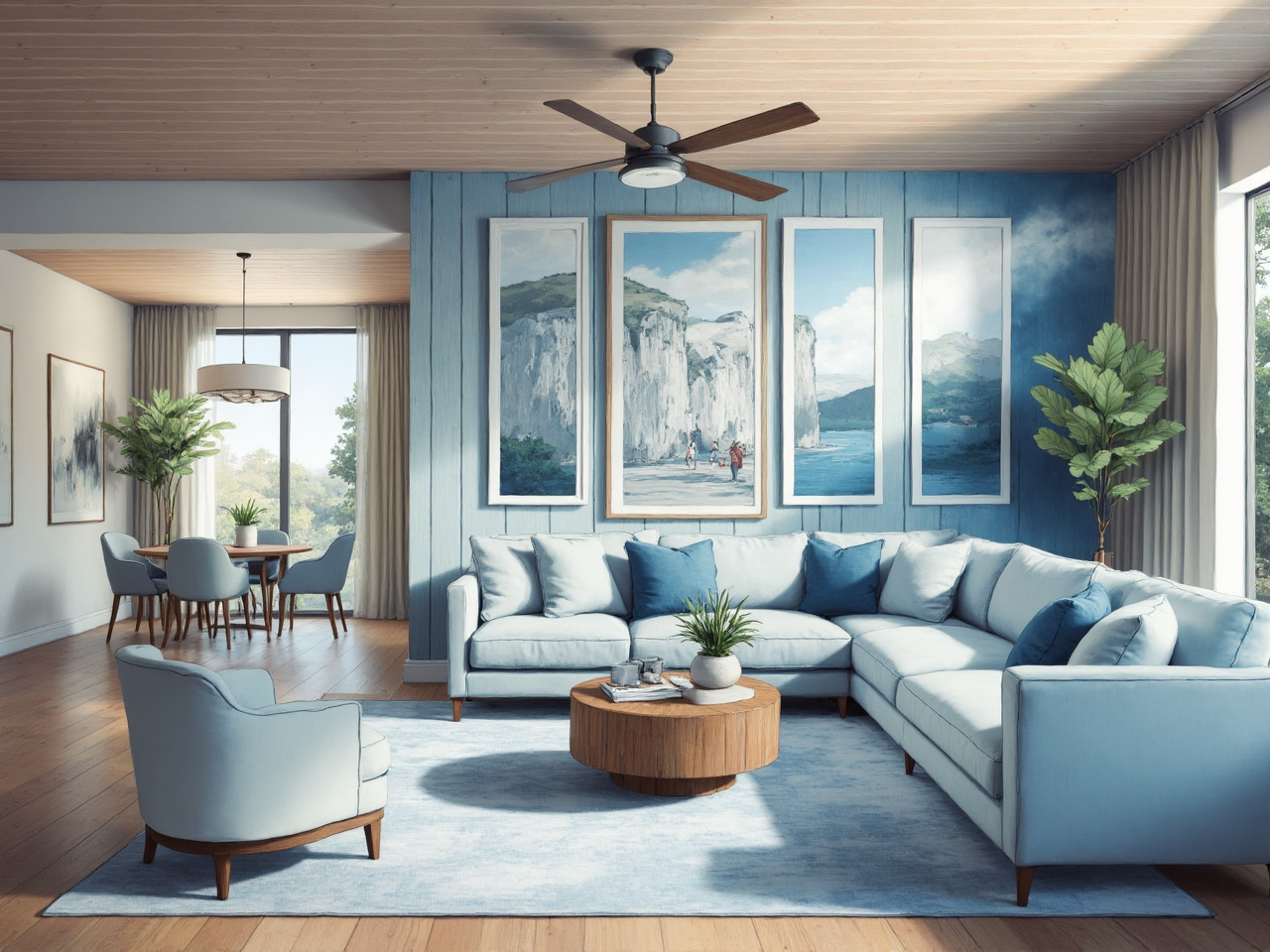
Walk into a typical $280,000 production home in Central Florida, and you’ll find six windows. Walk into one of Ryan Hinricher’s Sunworth Homes, and you’ll count 18. That difference, 12 additional portals to natural light, represents a radical thesis: wellness features don’t have to be reserved for million-dollar estates.
The Science of Affordable Wellness
“You see all these beautiful photos on Instagram of wellness homes that 99.9% of the world can’t afford,” says Hinricher, who has built over 400 homes since 2020. “My thought process was to focus on the hard-coded elements that make a home healthy, essentially turning the clock back 100 years to things that were common in houses before.”
But this isn’t nostalgia, it’s neuroscience. Hinricher works with a certified biophilic designer who applies research-backed ratios for incorporating nature patterns into residential spaces. Recent model homes underwent strategic refinements: wooden beams replaced tongue-and-groove ceilings in primary bedrooms to avoid pattern overload. Penny tile in the secondary bathrooms was reduced from three walls to one focal wall to prevent visual overwhelm. Even brass fixtures were reconsidered, transitioning to brushed nickel for plumbing while keeping brass in lighting to draw eyes upward toward windows and natural light.
“There’s a specific ratio where your eyes and body start relaxing,” Hinricher explains. “Not enough, and it doesn’t impact at all. Too much is overwhelming and actually detrimental.”
The evidence is compelling. European children’s hospitals have documented accelerated healing times simply by incorporating wood elements into patient rooms. Hinricher is translating this medical-grade design thinking into production housing at one-tenth the typical cost.
The Land Play Nobody Else Wants
Here’s where Hinricher’s strategy gets counterintuitive: while competitors clear-cut lots to maximize margins, he’s paying 15% premiums to preserve mature oak trees.
“The land contractors don’t want to deal with me,” Hinricher admits. “They’re overcharging because they don’t understand why I’d save these trees.” But those trees create what he calls “focal points on nature”, sight lines from interior spaces that connect residents to their environment. Each home is named for its unique landscape characteristics. “One Fine Oak” was built around a historic tree that required repositioning the entire structure.
It’s a farming background informing development strategy. “The best farmland becomes the best housing development, which becomes the best high-rise location,” Hinricher notes. “It always goes back to land quality.” He’s betting that in markets flooded with identical beige boxes, premium lots at modest premiums will command outsize returns.
Testing the Appetite for Wellness Appliances
All Sunworth materials meet GreenGuard Gold standards for zero-VOC emissions. Advanced air filtration provides real-time air quality monitoring through smartphone apps, a $200 upfront investment plus $50 quarterly filters, versus a $5,000+ HVAC upgrade. Reverse osmosis water filtration comes standard.
But the real experiment is happening in the garage. Some of the newest model homes will feature infrared saunas, an $8,000-$10,000 addition traditionally reserved for luxury custom builds. “Is somebody going to pay an extra five grand for that?” Hinricher wonders. “I don’t know. But of all the wellness appliances that are add-ons, that’s the one with the most data behind it.”
It’s a calculated risk. The profit margins are already tighter than conventional production housing. Hinricher is essentially asking whether entry-level buyers, priced out of wellness real estate, will pay premiums for features they’ve only seen in unattainable Instagram posts.
Early Returns
So far, the market is answering. Sunworth’s first Parade of Homes entry won the best kitchen under $400,000 award. Despite minimal traditional marketing, six homes have sold with zero current inventory. A recent buyer relocated from Naples specifically seeking “healthy homes” and found Julie Fernandez, Sunworth’s certified green realtor, through online research.
“Some people walk in and talk about the wellness aspects,” Hinricher says. “Others just say it’s the best-looking home they’ve seen at this price point.”
With over 20 premium lots in inventory and multiple model homes finishing in early 2026, Sunworth is stress-testing a provocative hypothesis: that wellness isn’t a luxury amenity but a fundamental expectation of the next generation of homebuyers, regardless of budget.
If Hinricher is right, Central Florida’s entry-level market may be the canary in the coal mine for a broader industry shift. If he’s wrong, he’ll have some very expensive oak trees and a garage full of saunas.
Ryan Hinricher is the founder of Sunworth Homes and Oak Avenue Real Estate, specializing in wellness-focused entry-level housing in Central Florida’s rapidly growing markets.
This article was sourced from a live expert interview.
Every month we conduct hundreds of interviews with active market practitioners - thousands to date.
The affordable housing sector has long struggled with a disconnect between how residents prefer to pay rent and how property managers collect it. While luxury apartment complexes have adopte...
Florida’s real estate market is undergoing a period of adjustment, with international buyers stepping in as domestic investors pull back. The state’s enduring appeal, combined with new t...
Property managers of luxury multifamily buildings are facing increasing pressure to prevent catastrophic damage from seemingly minor issues like water leaks, according to Dan Ross, VP at Bri...
Commercial real estate has long operated under a simple premise: build buildings, lease space, collect rent. But according to Bill Douglas, CEO of OpticWise, this traditional approach is lea...
In an industry where delays and cost overruns are the norm rather than the exception, Planera is revolutionizing construction scheduling by combining intuitive visual planning with AI-driven...
Commercial real estate owners are unknowingly giving away millions in value by letting vendors control and monetize their buildings’ operational data, according to one industry expert ...