

“Today, architects are doing more than their previous generation – smaller teams doing more work, handling more responsibilities, and interacting with more groups,” reflects Et...

The D.C. Condo Market and the Suburbs Are Moving in Opposite Directions

Written by:
Date:
09 Sep 2026
Share via Facebook

Share via Linkedin

Share via X

Copy to clipboard

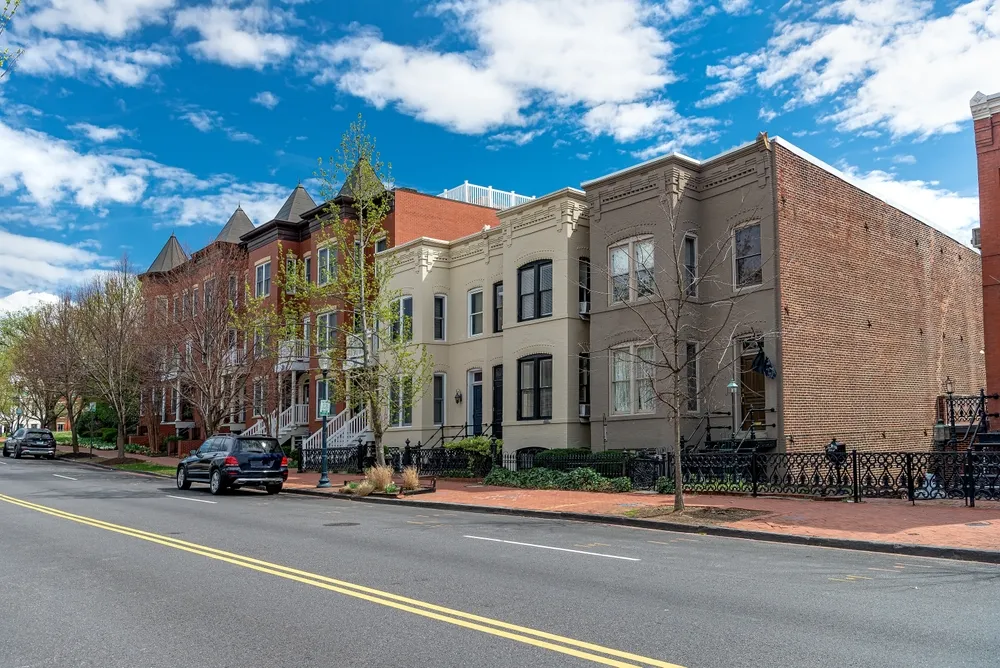
In a metro area long defined by the stability of federal employment, the Washington, D.C. real estate market is splitting along lines that track closely with buyer mobility. Single-family homes in the District’s upper northwest neighborhoods are still selling quickly. Condos in historically strong areas like Dupont Circle and Logan Circle are sitting. And roughly one in four listings taken by at least one veteran D.C. team are converting from sale attempts to rentals, a ratio that would have been nearly unthinkable a few years ago.
The divergence reflects a specific dynamic: the buyers most likely to leave the District are the ones the condo market depends on.
Who Stays and Who Goes
David Bediz, Founder & Team Leader of the Bediz Group, a 10-agent team operating across Maryland, D.C., Virginia, and Delaware with 22 years of experience, sees a clean split in buyer commitment based on life stage and professional ties.
Upper northwest single-family buyers tend to have children in local schools, two high-paying jobs difficult to replicate elsewhere, and deep social roots. “Those buyers have to stay in the neighborhood, have to stay in that price range, and essentially have to pay whatever the market will demand,” he says. That segment remains healthy and tilted toward sellers.
The condo buyer is a different profile: typically earlier in their career, often single, with fewer ties binding them to D.C. specifically. As Bediz puts it, a buyer like that who sees comparable opportunities in Nashville or Los Angeles or New York will “cancel their lease or sell their condo and move out, and they’re gone.” With fewer of those buyers in the pipeline, the condo market softens through straightforward supply and demand.
The Federal Employment Effect
The engine behind D.C.’s real estate stability has always been the federal government, a massive, reliable employer that insulated the metro area from the cyclical shocks hitting cities dependent on a single private industry. That insulation has weakened.
Federal job cuts under the current administration have reduced headcount directly, but Bediz points to a subtler second-order effect: a shift in sentiment among prospective residents who might otherwise have taken government or government-adjacent jobs. “We are experiencing a little bit of a brain drain where a lot of potential residents of our area have either decided to live somewhere else where they think that their job might be more secure, or we’re losing people that were here,” he says.
This combines with the lasting effects of remote work. With most workers no longer required in an office five days a week, the calculus of paying a premium for a central D.C. location has changed. A one-bedroom condo in the District competes against a two-bedroom with parking in the suburbs – at the same price – when the commute only happens once or twice a week. “There’s not a huge reason for people to pay double to live in the center of the city anymore,” Bediz says.
A Market That Requires Different Strategies on Each Side of the River
The Bediz Group operates across multiple states but within a single MLS, giving its agents a direct view of how buyer behavior shifts across short distances. The contrasts are sharp enough that the same buyer changes strategy depending on which jurisdiction they are shopping in.
In D.C., buyers have negotiation leverage, and price reductions have become standard. Bediz says almost every D.C. listing his team holds has had a price reduction, and sellers are agreeing to concessions that would not have been considered a couple of years ago. In Northern Virginia and at the Delaware beach, competition persists; some properties require offers above asking with minimal contingencies. Bediz describes a deal that closed the day before the interview: a friend buying a larger beach property had to move on it before it was publicly listed, pay over asking, and present an offer with few contingencies and a high deposit. “It honestly felt a lot like we were in the same market we’ve been in for most of my career, where buyers really have to be aggressive to win,” he says.
Meanwhile, his own rental property in D.C. has been listed for over a month. Interest is steady, but buyers are hesitant. “People really do want to buy it, and they want to live there,” Bediz says. “But buyers are skittish. They don’t know where the market will be in a year or two years.”
Where the Opportunity Sits
For investors willing to think in longer timeframes, Bediz sees a contrarian case in D.C. multifamily. Three- and five-unit apartment buildings have very few buyers right now because interest rates make the math difficult on a financed purchase. Buyers either need to find a steep discount, pay cash, or make a large down payment, and potentially invest in improvements to bring rents up. “You have no competition,” Bediz says of the current environment for all-cash buyers targeting that segment.
Bediz frames the broader correction as less alarming than it might appear in isolation. A property taking 90 days to sell is historically normal; the anomaly was the years of properties moving in a week. “At the end of the day, the 10% yearly increases in property values that we saw for periods of time in my career were amazing to live through,” he says. “But that cannot be sustained when wage growth and inflation are such that people can’t afford more every year to match the growth in housing prices.”
He sees potential catalysts that could shift the balance back toward the District: increased return-to-office enforcement, policy changes following midterm elections, and the possibility that rising costs in the suburbs, driven in part by data center development inflating Northern Virginia land values, could push buyers back into the city. “These things always change,” Bediz says. “And the pendulum might swing back the other way.”
About the Expert: David Bediz is Founder and Team Leader of the Bediz Group, operating across Maryland, D.C., Virginia, and Delaware, with 22 years of experience.
This article is based on information provided by the expert source cited above. It is intended for general informational purposes only and does not constitute legal, financial, or real estate advice. Readers should conduct their own research and consult qualified professionals before making any real estate or financial decisions.
Similar Articles
Explore similar articles from Our Team of Experts.