
Former U.S. Congressman Kwanza Hall has built a career in public service focused on delivering concrete results. Now, as the new chairman of Develop Fulton, one of the Southeast’s pree...

Pittsburgh Stays Steady While Other Markets Stall – and Out-of-State Buyers Are Taking Notice

Written by:
Date:
08 Sep 2026
Share via Facebook

Share via Linkedin

Share via X

Copy to clipboard

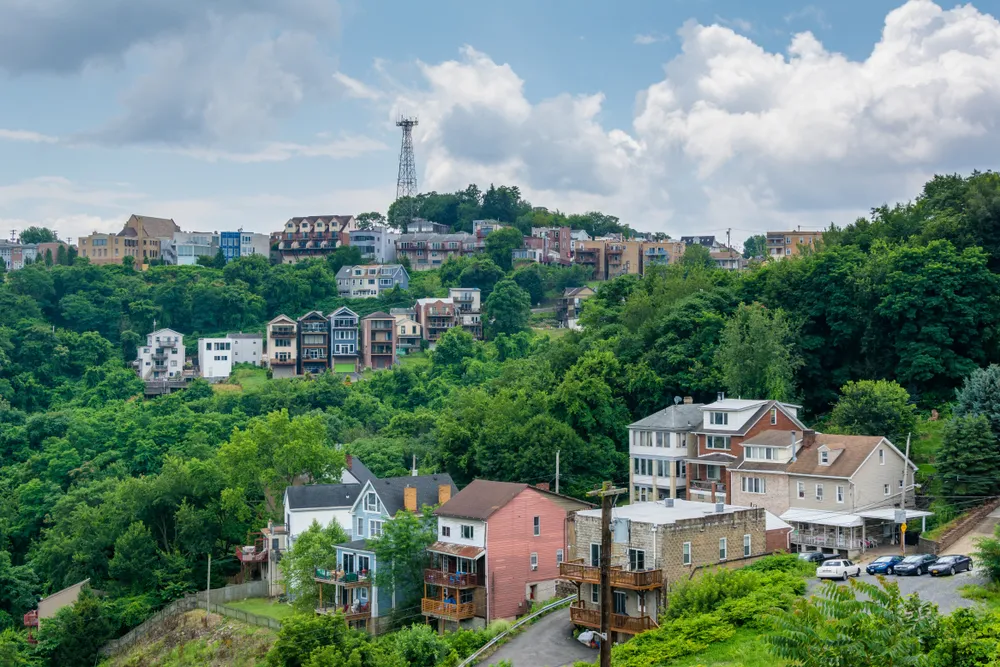
For years, the national conversation about real estate migration has centered on Sun Belt destinations. A different pattern is forming in western Pennsylvania. Pittsburgh’s combination of affordable housing, healthcare employment, and a growing tech sector is pulling buyers from states like Utah, Nevada, and California, not as a temporary relocation trend, but as a deliberate lifestyle decision. According to Michael Young, a Realtor with Engel & Völkers Sewickley, the buyers arriving now aren’t following job offers. They’re choosing Pittsburgh first, then sorting out employment, a sequence that would have been unusual a few years ago.
Young, who spent more than a decade in appraisal work before moving into sales nine years ago, says the inbound buyer profile has shifted noticeably over the past year. Many of these transplants are leaving markets that absorbed earlier waves of California migration and have since become crowded and expensive themselves.
A Migration Pattern Built on Two Incomes
The typical inbound household Young describes follows a specific structure: one spouse works remotely and can live anywhere, while the other is in healthcare and can plug directly into Pittsburgh’s hospital systems. “Every single one of them has told me there’s been this migration out of California into like Reno, Nevada, or southern Utah, that things are building up and now it’s really saturated with the population, and it’s just not the same,” he says.
Pittsburgh’s median sales price has been around $250,000, which gives these buyers significant purchasing power relative to the markets they left. One recent transaction involved a couple from southern Utah who made the move without a local job offer in hand. The healthcare spouse joined a downtown hospital. The other, who works in basketball marketing, found Pittsburgh’s central location, accessible to NBA cities across the Northeast, Midwest, and Mid-Atlantic, a practical advantage.
Young says this reverses a pattern he watched growing up. “When steel mills had closed, you’d always see people move out for a bigger opportunity,” he says. “It’s not necessarily like that at this point.”
Steady Sales in a Market Others Call Uncertain
While many U.S. markets are described as slow or uncertain in 2026, Pittsburgh has stayed on pace. Sales projections are tracking roughly in line with the past couple of years, according to Young, and he says he is not seeing buyer hesitation. “We’ve always been generally balanced, so we haven’t had really like a major boom during any sort of period,” he says. “And other than like the mid-1980s, we haven’t really had a bust either.”
That stability means buyers who have only lived in Pittsburgh may not appreciate how affordable it remains relative to national prices. Young says some longtime residents look at current prices and balk without realizing what comparable homes cost elsewhere.
Interest rate anxiety, meanwhile, appears to have faded, not because rates have dropped significantly, but because media coverage has moved on. “I don’t see people that are worried about it anymore because they’re not hearing about it as much,” Young says.
One development driving higher-value purchases is multigenerational household arrangements. Young describes a generational wealth transfer from boomers to Gen X and millennial buyers that is enabling cash transactions, particularly above the $500,000 mark. “You’d be surprised how many cash buyers there are” at that level, he says. He points to his own situation as an example: his family is purchasing a home near half a million dollars in cash, with his mother moving in after his father’s passing, pooling resources across generations to make the purchase work.
New Construction Sells Fast Despite Quality Complaints
New construction in the Pittsburgh area generally starts above $400,000, and despite persistent complaints about build quality from some national homebuilders, those homes continue to sell quickly. Young says average sales prices are up roughly six to seven percent, which he attributes partly to new construction activity rather than broad-based appreciation across all segments.
On the resale side, pricing discipline matters more than it did during the pandemic-era frenzy. The list-to-sale price ratio in the area remains in the upper 90s, meaning buyers are paying close to asking but not above it. Sellers who price aggressively are finding less tolerance than they may expect. “You have to price it correctly so they’re even in position to make an offer,” Young says. “People want to go 50 grand above thinking that someone’s going to automatically want to negotiate. It’s not generally how it works.”
Condition expectations have also tightened. Where a quick declutter once sufficed, sellers now need to address visible repairs, not full renovations, but enough to present a move-in-ready impression. Young says sellers who make those repairs are generally seeing that investment returned at sale.
Where Investors Should Look
For investors, Young sees continued viability in buy-and-hold and buy-and-flip strategies, though he says off-market inventory has been overpriced relative to the neighborhoods where it is offered. The area he flags for near-term potential is Pittsburgh’s north side, where a major riverfront development is underway. Neighborhoods like Marshall Shadeland and Perry Hilltop, he says, could benefit significantly over the next few years as that development takes shape. “Right now you could maybe scoop something in like a Marshall Shadeland neighborhood or even a Perry Hilltop, and it’d be golden in the next few years.”
Beyond investment, Pittsburgh’s draw for owner-occupants rests on factors that are harder to replicate elsewhere at this price level. Carnegie Mellon University has turned the city into an AI research hub, with tech companies clustering along what locals call “AI Avenue” in the East End. First-time buyers, meanwhile, have access to credits for purchasing within city limits, within certain zip codes, and through lender incentive programs, options Young says many buyers overlook because they rely on social media rather than consulting a professional.
The market Young describes is not booming. It is functioning, absorbing new residents, moving inventory at reasonable timelines, and holding prices steady enough that both buyers and sellers can find workable terms. For a city whose identity was once defined by the industries that left, the fact that people are now choosing to arrive may be the most telling indicator of where Pittsburgh stands.
About the Expert: Michael Young is a Realtor with Engel & Völkers Sewickley in the Pittsburgh, Pennsylvania area. He spent more than a decade in appraisal work before moving into sales nine years ago.
This article is based on information provided by the expert source cited above. It is intended for general informational purposes only and does not constitute legal, financial, or real estate advice. Readers should conduct their own research and consult qualified professionals before making any real estate or financial decisions.
Similar Articles
Explore similar articles from Our Team of Experts.