

VergeSense has redefined workplace analytics in an industry long limited to manual studies and badge swipes. Their remarkable growth – now powering decisions for over 200 global enterp...

In Queens, New York, the Financing Decision Has Become as Important as the Property Itself

Written by:
Date:
09 Sep 2026
Share via Facebook

Share via Linkedin

Share via X

Copy to clipboard

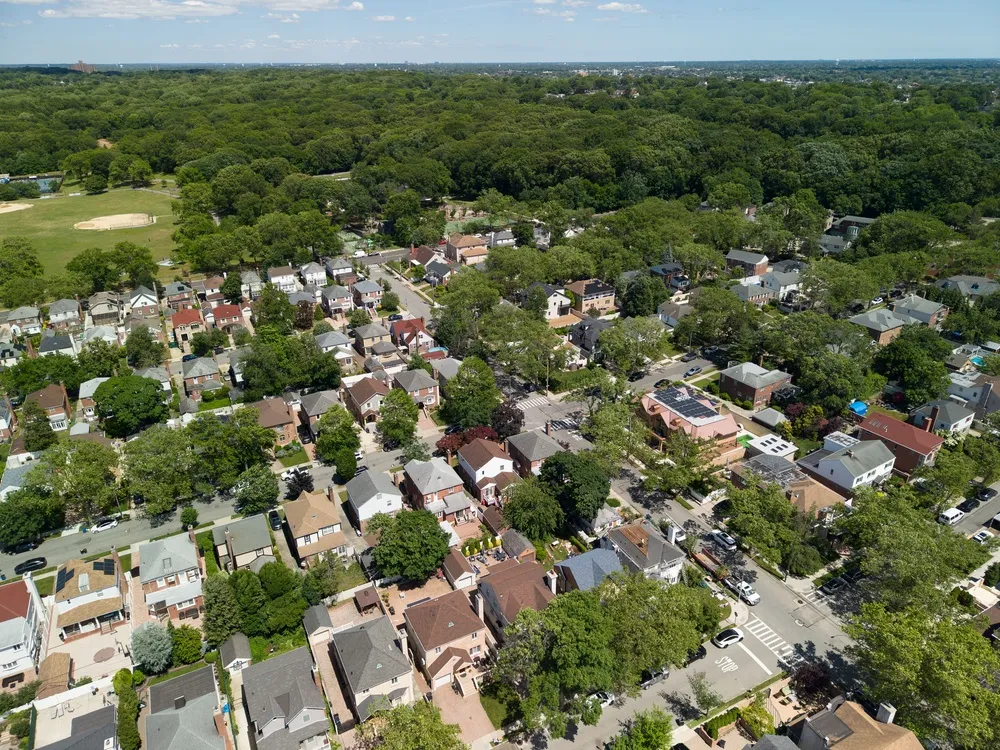
For most of the past decade, buyers in New York City’s outer boroughs focused first on finding a home they could afford, then figured out how to pay for it. In Queens, that sequence is reversing, according to Jonathan Ettricks, a Realtor with Berkshire Hathaway HomeServices Laffey International Realty who works across Queens, Brooklyn, the Bronx, and Manhattan. Buyers are now leading with financing, talking through interest rates, down payments, closing costs, and assistance programs before they ever step inside a listing.
“Before they see a single property with me, we’re talking about interest rates, down payments, monthly payments, closing costs, taxes, even assistance programs,” Ettricks says. His role, as he describes it, is to ask the right questions early enough to connect buyers with the right lender, lawyer, or program before a property search creates expectations the buyer’s financing cannot support.
A Borough That Is Not One Market
Queens is often treated as a single real estate market. According to Ettricks, it is not. Neighborhoods, property types, and even neighboring blocks behave differently enough that generalizing across the borough misses the picture entirely. “People are surprised how diverse Queens is,” he says.
Buyer motivations split along geographic lines. Relocating professionals, many arriving for job opportunities, gravitate toward northwest Queens: Astoria and Long Island City, areas that are walkable and close to Manhattan, and priced accordingly. Buyers less focused on proximity look at Forest Hills and Kew Gardens in central Queens, where prices are lower, but transportation still provides easy access to Manhattan. Transit infrastructure anchors both groups’ decisions, even when their budgets differ substantially.
The borough is also drawing interest from outside New York. Most of his current buyers are local, while he is also seeing meaningful interest from buyers relocating from other states. “People think of Manhattan first and maybe Brooklyn, but they’re looking at Queens now too, because there are many opportunities here,” he says.
The Affordability Myth
One of the more persistent assumptions about New York City real estate, that it is uniformly unaffordable, does not hold up in parts of Queens and the surrounding boroughs. Ettricks points to two recent closings. In Bayside, a young couple expecting a child purchased a co-op townhouse for $400,000 in a neighborhood with good schools. In the Bronx, he closed a one-bedroom co-op apartment for $150,000 – to a buyer relocating from Manhattan’s East Side.
“There’s this myth that New York City is completely unaffordable, and that’s not the reality,” Ettricks says. Entry-level options exist, particularly in the co-op segment, though co-op transactions come with their own friction. Board approval processes can extend timelines dramatically; Ettricks says he has closed co-op deals that took a year.
Meanwhile, in Queens Village, where Ettricks’s office is located, single-family homes listed at $600,000 to $900,000 are still attracting buyers. Ettricks says the key is demonstrating genuine value at the listed price. “If you have a property and you can show a buyer genuine value, even at $600,000, $700,000, $800,000, it’s an opportunity for them to purchase,” he says.
Seller Financing Is Getting More Visible
With traditional mortgage qualifying criteria tightening and rates remaining elevated, alternative deal structures are surfacing more frequently. Ettricks says he is seeing more brokers advertise seller financing than at any point he can recall. In a seller-financed deal, the seller holds the debt rather than a bank, a structure that does not work for every seller but can move transactions that traditional financing would stall.
“Alternative financing doesn’t make a bad deal good,” he says. “But in the right situation, the terms can become as important as the price, and you can still execute on that.” Lease-to-own arrangements are also part of the mix, according to Ettricks. Buyers and agents who limit themselves to conventional bank financing may be passing over viable transactions.
Low Inventory Does Not Mean Easy Sales
Despite limited housing supply in Queens, the assumption that any property will sell at any price is wrong. Ettricks is direct: “There’s this idea that you can just put anything on the market and it will sell at any price point. This is not the case.” The first 30 days on the market remain critical, and pricing and presentation matter more now than they did in looser conditions.
When homes sit longer than expected, I usually start with pricing and presentation. Occasionally an issue surfaces during inspection, a structural problem or something previously unknown about the property, but those are exceptions. Ettricks says buyers are paying closer attention to both price accuracy and how a listing is marketed, which means preparation before listing matters more in a low-inventory environment, not less.
Multifamily and the Investor Calculus
For investors considering Queens, multifamily housing still offers opportunity, but with caveats Ettricks is candid about. Legal changes at the state level have altered the economics of owning rental property, and some investors have concluded the segment is no longer worth the risk. Ettricks disagrees, with a qualification: “It can still be profitable if you know what you’re doing, you go in with your eyes wide open, and you know how to manage the risk.”
He describes the current investor landscape as one where flexibility in deal structure matters as much as property selection. Investors willing to explore seller financing or other structures may find transactions that work where conventional approaches do not.
What Ettricks Is Watching
Looking ahead, Ettricks expects continued demand for well-priced properties and more time spent on transaction structure rather than price alone. “The question isn’t simply whether it’s a good time to buy or sell,” he says. “The question is whether it’s a good time for you as the individual investor or residential buyer to buy or sell.”
About the Expert: Jonathan Ettricks is a Realtor with Berkshire Hathaway HomeServices Laffey International Realty, working across Queens, Brooklyn, the Bronx, and Manhattan.
This article is based on information provided by the expert source cited above. It is intended for general informational purposes only and does not constitute legal, financial, or real estate advice. Readers should conduct their own research and consult qualified professionals before making any real estate or financial decisions.
Similar Articles
Explore similar articles from Our Team of Experts.