
As investor competition accelerates in Essex County and neighboring areas, the gap between agreed-upon purchase prices and appraised values is causing more deals to fall through. This discon...

Tribal Housing Costs Twice What Urban Projects Do. State Funders Are Penalizing the Difference.

Written by:
Date:
10 Sep 2026
Share via Facebook

Share via Linkedin

Share via X

Copy to clipboard

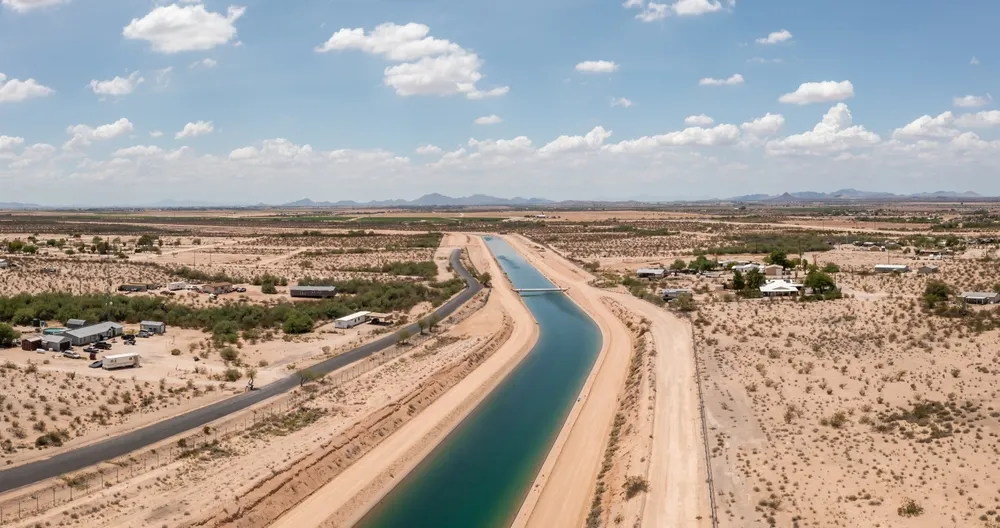
When a housing project costs $500,000 per unit, it looks like waste – unless half that money goes into building roads, water lines, and power infrastructure that most American communities already have. That distinction is at the heart of a funding dispute in southern Arizona, where the state denied a tribal housing authority’s tax credit application because infrastructure costs were too high – on a reservation that has no municipal utilities to connect to.
Alexandra Terry, Deputy Director of Administration and Development at the Tohono O’odham Ki:Ki Association (TOKA), the housing authority for the Tohono O’odham Nation, says the denial landed on a district that has not seen new housing construction since the mid-1980s. The nation’s reservation is roughly the size of Connecticut, sits on 100-year FEMA floodplain, and has one grocery store. TOKA serves roughly 35,000 tribal members and employs about 100 people, approximately 90% of whom are tribal members.
Why Per-Unit Costs Look Inflated
Every TOKA project starts on completely raw, undeveloped land. There is no city water to tap into, no sewer system, no electric grid at the curb. The nation operates its own utility authority because it cannot access municipal services like Tucson Electric Power. New water sources, new power lines, new roads – all must be built before a single wall goes up.
“The infrastructure often costs us up to 50% of a project,” Terry says. A project with a $500,000 per-unit total may involve only $250,000 in actual home construction.
Terry is direct about the perception problem: “We are not building $500,000 half million dollar homes. That’s not what we’re doing.” A developer in Tucson can buy a parcel, tap into a water line, and start building. TOKA cannot. The desert climate adds costs – homes must be built on raised pads with additional fill to meet floodplain requirements, and TOKA uses block construction rather than stick framing so homes last across multiple generations of occupancy. Federal procurement rules and Davis-Bacon wage requirements push costs higher still, but Terry identifies infrastructure as the dominant cost driver.
A District That Waited Over 20 Years
The denied project would have served the Strictoac District, located about 65 miles outside Tucson next to the Tohono O’odham Community College. TOKA had secured federal funding through HUD’s Indian Housing Community Block Grant competitive fund for 10 homes, plus additional money from Pima County. The Low-Income Housing Tax Credit application was meant to complete the funding stack.
The state offered to award funding if TOKA reduced its infrastructure request – which would have meant TOKA covering the difference. Terry says the association had already taken out loans for other projects and did not have the funds. The project is moving forward with its HUD and Pima County grants, but without the state dollars, the scope is narrower.
On a reservation where infrastructure must be built from zero, those first homes create the roads, water lines, and power connections that make additional construction progressively less expensive. A smaller first phase means that cost curve takes longer to bend.
The Evaluation Gap
The deeper issue, according to Terry, is that evaluators unfamiliar with tribal development default to urban cost comparisons. “If they say, oh, they got $5 million to build, you know, eight homes, it’s like you’re really missing a lot of the picture.”
Cost per unit is the standard metric funders use to compare applications. But when one applicant builds on land with existing municipal services and another builds on land with none, the metric compares fundamentally different scopes of work. One applicant is building homes. The other is building the infrastructure that makes homes possible.
Terry says TOKA plans to reapply for LIHTC funding next year and wants to maintain its working relationship with the state. But the 2026 denial illustrates how evaluation criteria designed for urban or suburban development can systematically disadvantage communities with the greatest housing need.
TOKA’s waiting list reflects that need. Terry says just under a thousand people are on the active list, with additional families on an inactive list – people who stopped updating their applications because the wait became too long. TOKA keeps those original application dates on file. “They just simply kind of give up faith and hope that they will ever get a home,” Terry says.
The association has maintained 18 consecutive years of clean audits with no findings and no areas of concern, according to Terry – a track record that suggests the cost issue is not a capacity or oversight problem but a structural one rooted in geography and land status.
About the Expert: Alexandra Terry is Deputy Director of Administration and Development at the Tohono O’odham Ki:Ki Association (TOKA), the housing authority for the Tohono O’odham Nation in southern Arizona.
This article is intended for informational purposes only and does not constitute legal, financial, or investment advice. The views and opinions expressed herein reflect those of the individuals quoted and do not represent an endorsement of any company, product, or service mentioned. Readers should conduct their own due diligence and consult qualified professionals before making any investment decisions.
Similar Articles
Explore similar articles from Our Team of Experts.


Perspectives, Commercial Real Estate, Market Analysis & Policy, Real Estate Investment, Industry News, Featured Articles
Property expert says economic development initiatives are creating unexpected retail opportunities in secondary markets. A wave of semiconductor manufacturing investment is reshaping the ret...