

Ron Kutas, CEO of OneWall Communities, on what AI actually changes in property management, and what it still can’t touch. The conversation around AI in property management tends to lan...

In the Florida Keys, Market-Wide Price Data Is Masking Two Very Different Segments

Written by:
Date:
31 Aug 2026
Share via Facebook

Share via Linkedin

Share via X

Copy to clipboard

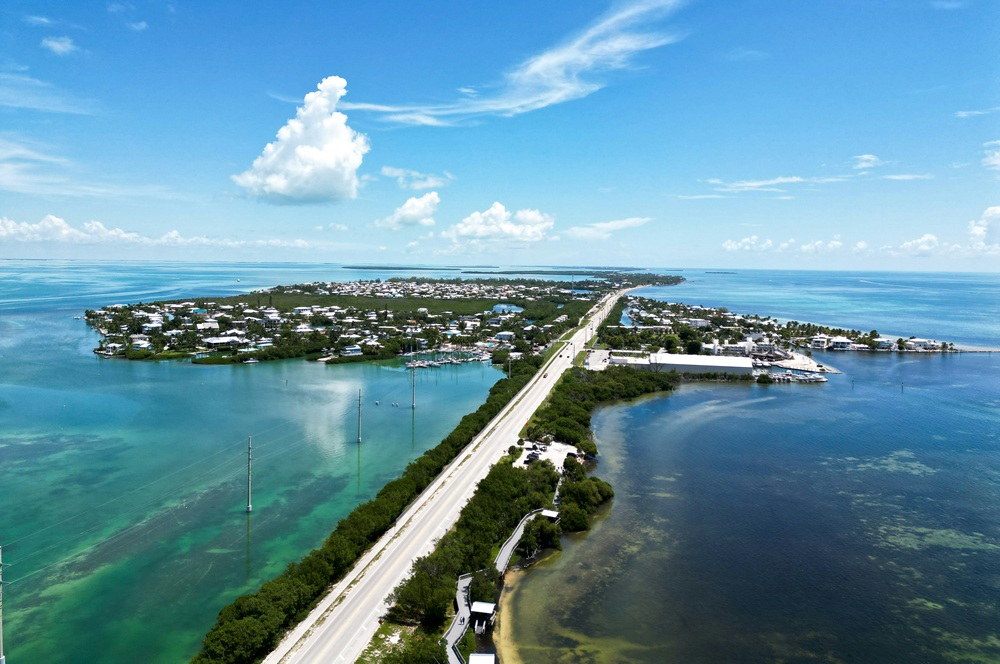
Aggregate price figures for the Florida Keys currently describe a market that almost nobody is actually transacting in. A small number of record sales at the top of the range have pulled averages and medians sharply upward. At the same time, a large and slower-moving band of older canal homes has been correcting downward. Averaged together, the two produce a number that fits neither.
Sandy Tuttle, founder of Island Welcome Real Estate, works primarily in unincorporated Monroe County in the Lower Florida Keys and sees the gap from both sides of it. She describes the current statistical picture as one of the harder things for an out-of-state buyer to interpret without local context.
A Market Built On One Product
For most of its history, the Florida Keys housing stock was fairly uniform. The islands catered to fishermen and weekend boaters, and the properties reflected that. Average home size sat near 1,000 square feet for decades, and two-bedroom, two-bathroom construction was the norm. Nobody was building large vacation estates.
That changed over the past ten years. New construction has introduced homes in the 4,000 to 10,000 square foot range, built to current code, with wind ratings in excess of 180 miles per hour. The result is not just larger houses but an entirely new product category in a market that previously did not have one.
The Effect Of Outlier Sales
As that inventory has begun to trade, it has produced transaction prices with no historical precedent in the region. Tuttle points to single-family sales in the Lower Keys at the $12 million and $13 million marks within the past five years. Islamorada has recorded sales in the $20 million to $22 million range over the past year.
“We are constantly crushing ceilings that the Florida Keys have always had,” Tuttle said.
Those transactions represent a genuine and growing segment. They are also statistically disruptive in a market where the dominant average sale price sits closer to $1.5 million. A handful of eight-figure closings materially moves both the mean and the median for the entire chain, which is then reported back to consumers as market appreciation.
The Segment Moving In The Other Direction
Below that, conditions look different. Canal homes priced under $1 million are largely 1980s and 1990s construction, smaller two-bedroom layouts built to earlier code. Inventory in that band is high, buyer demand is comparatively soft, and competition among sellers has produced real price corrections rather than appreciation.
“You cannot talk to that seller and tell them the market moved five to seven percent last year,” Tuttle said. Days on market in that segment also run substantially longer than the reported average, though for different reasons than at the very top, where the buyer pool is simply smaller.
Segment Level Analysis
The practical consequence is that consumer-facing valuation tools, which apply broad price-per-square-foot methodology across the chain, produce output that can mislead buyers and sellers in opposite directions simultaneously. A seller in the sub-million-dollar canal band reads a headline appreciation figure and prices accordingly. A buyer in the same band assumes they are entering a rapidly rising market.
Tuttle’s approach is to strip the analysis down to the price range the client is actually operating in, then look at absorption, days on market, and pricing behavior within that band alone. Sellers whose properties fall outside the current high demand profile are counseled on realistic positioning. Buyers are shown where pricing is aggressive, fair, or inflated relative to comparable inventory in their range rather than relative to the market as a whole.
As older ground-level stock continues converting to new construction, the spread between the two segments is likely to widen further before it narrows, which will make chain-wide averages less useful as a guide, not more.
About the Expert: Sandy Tuttle is the founder of Island Welcome Real Estate, a boutique waterfront brokerage based on Summerland Key in the Lower Florida Keys. She has lived in the Florida Keys since 1997 and has worked in Keys real estate for approximately 20 years. Her practice focuses on canal-front and waterfront residential property in unincorporated Monroe County.
This article is based on information provided by the expert source cited above. It is intended for general informational purposes only and does not constitute legal, financial, or real estate advice. Readers should conduct their own research and consult qualified professionals before making any real estate or financial decisions.
Disclosure: Individuals or companies mentioned may have a commercial relationship with KeyCrew.
Similar Articles
Explore similar articles from Our Team of Experts.