

Cristia Brockway’s interest in urban planning began in childhood, when she built miniature cities from paper in her bedroom. Now, as Director of Economic Development for Farmington Hills, ...

In Central Collin County, Texas, a Pricing Gap Is Splitting the Luxury Market

Written by:
Date:
08 Sep 2026
Share via Facebook

Share via Linkedin

Share via X

Copy to clipboard

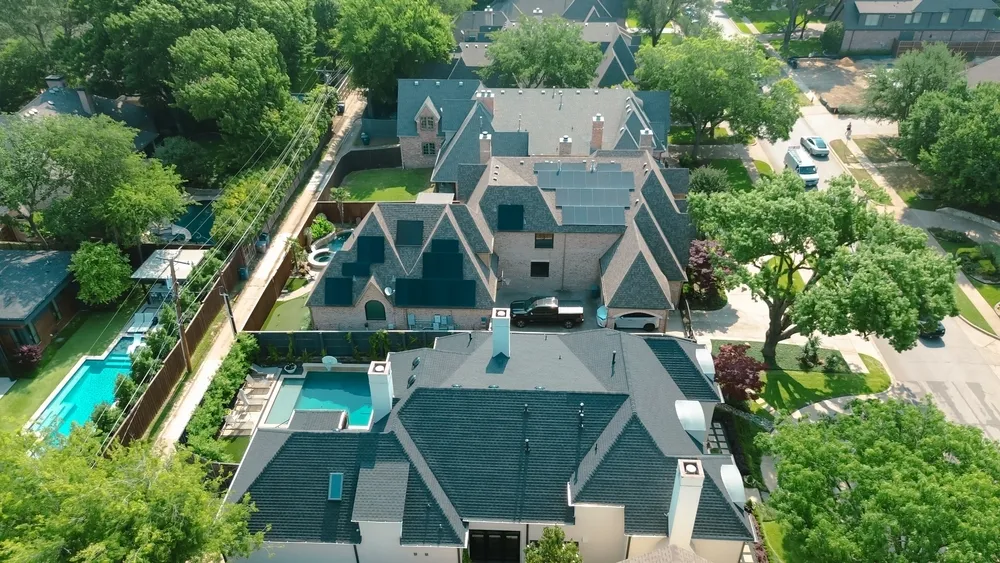
The north Dallas suburbs have long attracted affluent families willing to pay a premium for large lots, top-rated schools, and proximity to a major metro. But in the communities of Fairview, Lucas, and Parker, a cluster of towns in central Collin County, Texas, a gap in buyer behavior is creating a soft spot in the middle of the luxury price range that neither entry-level nor ultra-high-end buyers are filling.
The $1.3 million to $1.6 million segment, once among the fastest-moving inventory in these zip codes, has become notably harder to move. Younger families who might have stretched into that range two years ago are now landing closer to $1.1 million. Meanwhile, buyers shopping at $2 million and above remain active, less sensitive to mortgage rate fluctuations and more driven by stock market performance and personal liquidity.
“The people who are going to spend two, three million on a home don’t really care as much about mortgage rates,” says Sean Elliott, Team Leader of the Grisak Group at Keller Williams Allen, which has operated in central Collin County for roughly 25 years. “The two million-plus range is still pretty healthy in our area. And the 1.1 and under is still pretty healthy. But right in that mid-range, it’s a little bit more of a saturated market.”
Why the Mid-Range Stalls
Rising costs have compressed purchasing power at the upper end of what younger buyers can afford. A family that could stretch to $1.3 million during the rate environment of 2021 now caps out lower. At the same time, the ultra-luxury buyer shopping for a $2 million property has no reason to settle for $1.6 million; different homes, different expectations.
The result is a band of homes competing largely with each other for a thinner pool of qualified buyers. These aren’t distressed properties or poorly maintained listings. They’re solid homes that happen to sit in a price tier caught between two buyer populations moving in opposite directions.
Elliott notes that median price data in the area has drifted slightly lower this year, but attributes the shift to composition rather than depreciation. “More people are buying the lower-priced options. So when you put those averages together, the average is going to be a little bit lower. It doesn’t mean that home values have really fallen.”
Condition and Privacy Are Sorting Inventory Fast
Within the area’s custom-home stock, where every lot differs in size, tree coverage, and road proximity, condition and setting are determining days on market more than almost any other variable.
Elliott describes two recent transactions that illustrate the gap. A renovated home from the early 1980s, located on a busier road and lacking a pool, took roughly three months to sell at around $1 million despite updated cosmetics. An $1.8 million home on a private, tree-lined lot moved in two weeks despite still needing some updates.
“We know that one with those trees and that privacy, we can push the pedal to the metal on price,” Elliott says. “A different one where most buyers are going to want to come in and add the pool, and it doesn’t have the privacy and the layout they want, we have to register those things too.”
The pattern is consistent: turnkey homes with pools, updated interiors, and private lots priced appropriately are selling quickly. Homes requiring projects, lacking outdoor amenities, or priced above what their condition supports are lingering.
Seller Expectations Are Still Catching Up
A persistent challenge is recalibrating seller expectations away from 2021-2022 conditions. Elliott is direct about the comparison: “What we saw from 2020 to 2022 was like nothing DFW had ever seen before, and we probably will never see again. To try and compare today to that time period is a mistake.”
He frames the current environment not as a downturn but as a return to historical norms, noting that well-maintained homes in Collin County have historically appreciated between three and five percent annually. The team’s approach to pricing centers on transparency. “If somebody wants a number that we truly can’t stand behind and we think it’s going to be a waste of their time, then what good are we doing them?”
For sellers weighing how aggressively to price, the data in this market points in one direction: homes priced above what their condition and setting support are taking months rather than weeks, while correctly priced turnkey properties still move fast.
A Market Shaped by Infrastructure Decisions Made Decades Ago
Central Collin County’s character traces back to a foundational zoning choice: Fairview and Lucas declined to run sewer lines into their communities. That single decision prevented apartment construction and large-scale commercial development, preserving the area as large-acreage residential with custom builds. The scarcity is structural and permanent; no rezoning wave is coming to add density.
Combined with Lovejoy Independent School District, consistently ranked among the top two or three districts in Texas, according to Elliott, the area operates on a reliable demographic cycle. Families move in for the schools, stay through their children’s education, then often leave when they no longer need two acres and six thousand square feet. The next cohort of young families fills the gap.
For buyers, this cycle means inventory turnover is steady but limited. Properties in prime locations with mature trees and privacy rarely sit long regardless of broader market conditions; the structural constraints on supply ensure consistent demand for the best lots.
Continued Growth on the Horizon
Early 2026 brought optimism: sellers adjusting to the normalized market, mortgage rates back in the upper fives, buyers re-engaging. Geopolitical disruption pushed rates back up and slowed March activity, but Elliott says sentiment has since stabilized.
Longer term, the growth case for Collin County rests on continued corporate relocation and population gains. The PGA relocated its headquarters to Frisco. Universal opened a children’s theme park there. A new concert venue is under construction in McKinney. The county’s population sits at roughly 1.3 million and is projected to cross over 2 million within the next few decades, according to Elliott.
“There are a lot of reasons that businesses want to be in North Texas, and Collin County is kind of right in the heart of that,” Elliott says. “The trend is continued growth.”
That growth reinforces both the opportunity and the pricing discipline the current market demands. Homes in central Collin County will likely continue appreciating over time, but sellers who price as though 2021 conditions still apply will wait months for a correction the market has already made.
About the Expert: Sean Elliott is Team Leader of the Grisak Group at Keller Williams Allen, serving central Collin County, Texas.
This article is based on information provided by the expert source cited above. It is intended for general informational purposes only and does not constitute legal, financial, or real estate advice. Readers should conduct their own research and consult qualified professionals before making any real estate or financial decisions.
Similar Articles
Explore similar articles from Our Team of Experts.