
Central Florida’s luxury real estate market has remained stable over the past year, even as rising interest rates and global uncertainty have slowed activity in lower price brackets. A...

First-Time Buyers Are Finally Getting Back In Across Arizona's West Valley

Written by:
Date:
04 Sep 2026
Share via Facebook

Share via Linkedin

Share via X

Copy to clipboard

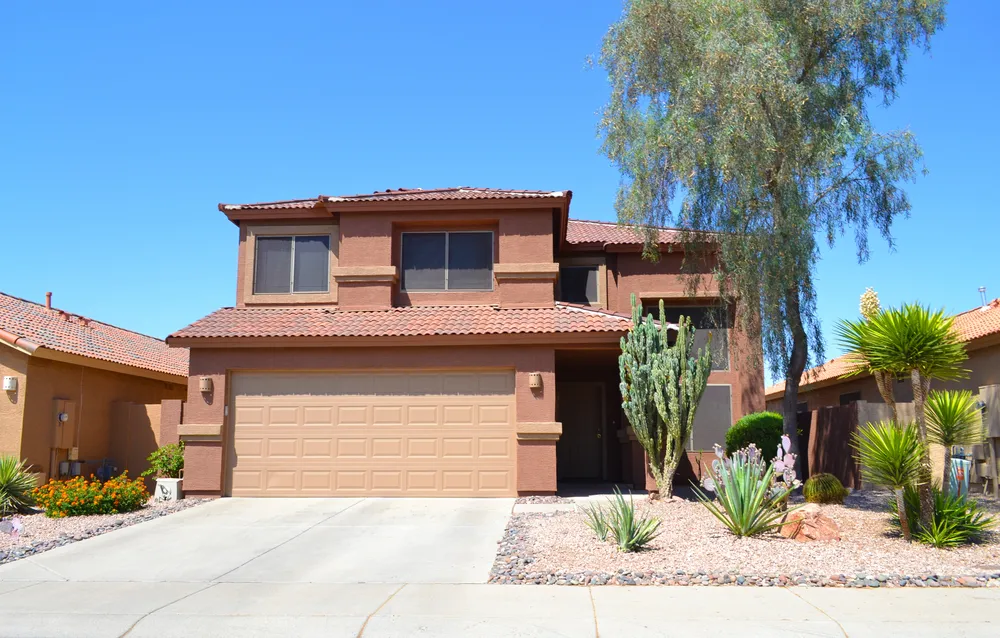
During the post-COVID frenzy, entry-level buyers in Arizona’s West Valley were effectively priced out, not always by the home itself, but by the terms surrounding it. Prices ran up, sellers refused to help with closing costs, and the math didn’t work for someone who’d scraped together a down payment but had nothing left over. According to Michelle Minik, Founding Partner & Team Lead of Team Minik at Realty of America, that dynamic is now reversing. Seller concessions have returned, and first-time buyers are re-entering a market that shut them out.
Minik has watched this shift unfold across the communities her team serves in Goodyear, Buckeye, Avondale, and surrounding areas. With 26 years in the West Valley market, she sees the return of concessions as the single biggest change for buyers at the lower end of the price spectrum, and she argues it matters not just for individual households but for the broader housing economy.
What Shut First-time Buyers Out
The problem was never only about home prices, Minik explains. During the most competitive stretch of the market, sellers had no reason to offer credits toward closing costs. Multiple offers arrived within days, often above asking price. Buyers who needed help covering those costs couldn’t compete with cash offers or conventional buyers willing to absorb every fee themselves.
For a first-time buyer using an FHA or VA loan, products that carry better interest rates but still come with upfront costs, the gap between having a down payment and actually closing was often thousands of dollars they didn’t have. “They can’t afford to pay all the closing costs,” Minik says. The down payment was achievable; everything else around it wasn’t.
The Concession Comeback
The market has loosened just enough that sellers need buyers more than they did during the frenzy. Inventory in the West Valley sits around three months of supply, still relatively tight, but enough to give buyers negotiating room. The result, according to Minik: sellers are again offering credits to help cover closing costs, rate buydowns, or other transaction expenses that first-time buyers couldn’t absorb alone.
Minik describes the current moment as “people getting out from under the suppression of the market.” A segment of buyers who were financially capable of homeownership but couldn’t clear the closing-cost hurdle is now finding that hurdle lowered by seller participation.
Prices in the West Valley haven’t dropped; Minik cites 4.4 percent year-over-year appreciation. Buyers entering now are paying more for the house itself than they would have a year ago. But the overall transaction cost, the gap between what a buyer has in the bank and what they need to close, has come back down because sellers are contributing.
The Monthly Cost Question
Prices haven’t declined, and interest rates remain in the mid-to-high sixes. A first-time buyer getting a seller concession toward closing costs is still buying at today’s elevated price with a rate that produces a higher monthly payment than what was available several years ago. The concession gets a buyer in the door; it doesn’t reduce the ongoing cost of ownership.
Minik’s response: “You can always refi out of an interest rate, but you can’t go backward on price increases.” Her logic is that waiting costs more in the long run because home values keep climbing, while rates can be refinanced later if they drop.
What First-time Buyers Should Weigh
For someone considering a first home purchase in the West Valley right now, the practical question is whether the return of concessions changes their personal math enough to make closing feasible. If a buyer has saved a down payment but couldn’t cover the additional several thousand in closing costs, this is a meaningfully different environment than what existed during the seller-dominated market.
Minik notes that builders have also pulled back on incentives compared to earlier this year. At the beginning of 2025, builders were offering aggressive credits and perks. Now, according to Minik, buyers might see a couple of points or some appliances, “but not like we were seeing it at the beginning.” For first-time buyers weighing resale versus new construction, individual resale sellers currently appear more willing to negotiate on closing costs than builders are.
The broader stakes, in Minik’s view, extend beyond individual transactions. Homeowners pay property taxes, participate in local economies, and sustain the communities around them. When entry-level buyers are locked out, that participation disappears. The return of concessions doesn’t fix affordability entirely, but it reopens a path that was closed for years.
About the Expert: Michelle Minik is Founding Partner and Team Lead at Team Minik with Realty of America, covering the West Valley of Phoenix, Arizona.
This article is intended for informational purposes only and does not constitute legal, financial, or investment advice. The views and opinions expressed herein reflect those of the individuals quoted and do not represent an endorsement of any company, product, or service mentioned. Readers should conduct their own due diligence and consult qualified professionals before making any investment decisions.
Similar Articles
Explore similar articles from Our Team of Experts.