The Phoenix metro area has earned a reputation for softness in 2026, but individual submarkets tell a different story. In the East Valley, spanning Gilbert, Chandler, Mesa, Queen Creek, and San Tan Valley, the constraint is not a lack of buyers. It is a pricing standoff between sellers anchored to 2021-era expectations and buyers squeezed by persistent interest rates and rising closing costs.
Lynette Clemens, Founder of the AZ Value Builders Team at Keller Williams Realty Sonoran Living, has worked this market since 2004. Her read on the current dynamic: the team has more buyers than sellers right now, and what looks like softness is actually sellers refusing to adjust. “I don’t think it’s as soft as people think,” Clemens says. “The sellers are still having to come to the realization that they might have to adjust their price.”
The pain point is concentrated in a specific price band. Homes listed between $500,000 and $700,000 are sitting longest, caught between buyers who need closing-cost assistance to make payments work and sellers reluctant to concede on price while also contributing to buyer costs.
Above that range, cash buyers absorb much of the inventory without the same friction. Below it, manufactured homes on fee-simple land, where the buyer owns the land outright, and smaller properties are moving as affordability-driven purchases. The middle is where the standoff lives.
“The average American is usually in that five or six hundred thousand dollar range, and they’re on a budget,” Clemens says. “Those houses seem to sit a little bit longer.”
First-time buyers are entering the market in meaningful numbers, but their ability to transact depends almost entirely on seller concessions. Clemens says many first-time buyers understand the down payment but not the closing costs, and getting them into a home requires sellers to cover those costs. Sellers increasingly understand this dynamic, but that understanding does not eliminate the gap between what they want and what buyers can pay.
New Construction as a Pricing Ceiling
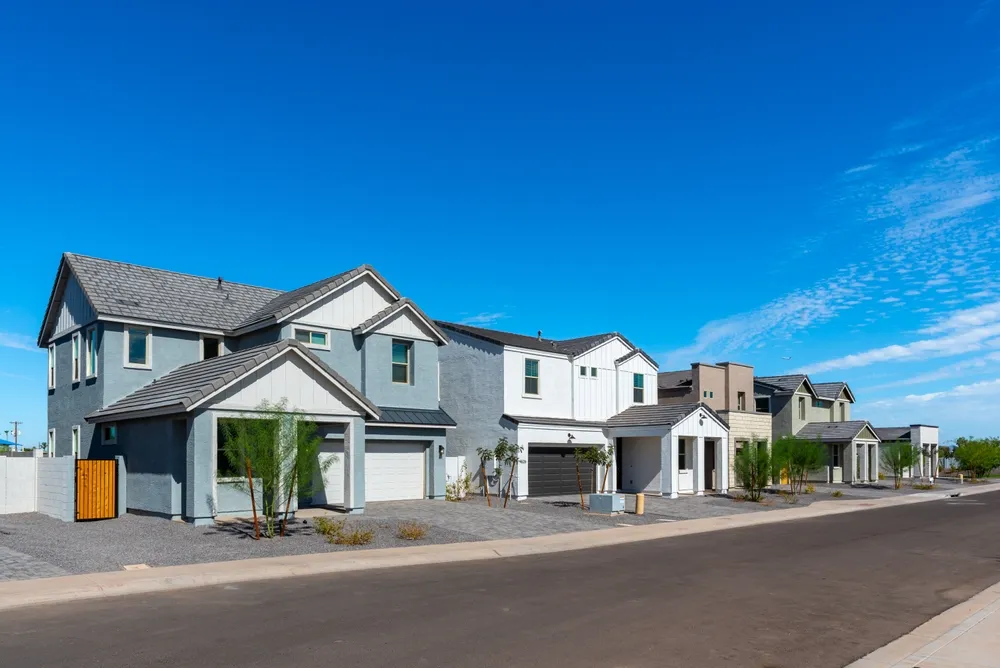
Resale homes near new-build communities face a distinct competitive problem. Builders are buying down mortgage rates to levels between 3.75% and 4.99%, according to Clemens, a financing advantage no resale seller can match without significant price reductions.
“If you’re surrounded by new builds, we’re watching these prices have to reduce to get to a place where the buyer can see the reason for buying an improved home,” she says. The resale advantage, existing landscaping, window treatments, and ceiling fans still register with buyers, but monthly payment math tends to override those considerations. Buyers compare mortgage amounts regardless of what comes with the home.
Active Adult Communities Are the Exception
One segment is behaving differently. Active adult communities like Sun Lakes in Chandler are generating bidding wars even in August, well before snowbird season begins. Clemens attributes the activity to gated security, golf amenities, and a buyer pool less sensitive to financing constraints. “Those homes are definitely continuing to sell at a better pace than some of the other areas,” she says.
The contrast is sharp: homes in the $600,000–$700,000 range sit while age-restricted communities produce multiple offers. Gated communities more broadly are drawing interest from buyers who prioritize security, according to Clemens.
Local Move-Ups Have Replaced Relocation Traffic
The buyer composition has shifted noticeably. After years of heavy California-to-Arizona migration, Clemens says the dominant pattern is now local movement, families adding a bedroom, downsizing retirees, or workers shortening a commute.
“We’re starting to see people who are just moving down the street,” she says. One recent transaction involved a family selling and buying on the same day, moving to the neighborhood directly across the street for one additional bedroom. Some California buyers still appear, but the volume has shifted toward people already living in the same county.
Where Investors Are Finding Opportunity
For capital looking to deploy in the East Valley, Clemens points to Apache Junction, older pockets of Mesa, and Tempe as areas where renovation economics still work. Apache Junction offers mountain views and low entry prices on aging housing stock that builders and flippers are actively converting. “The prices are still low enough that you can make a pretty good profit there,” she says.
Mesa has solid brick homes with shingle roofs that need interior updates. Tempe is landlocked; no new construction is possible, which gives renovated homes a structural pricing advantage near Arizona State University.
Maricopa, further out, is gaining attention as infrastructure improves. The town’s single access road has limited its appeal for commuters, but a planned expansion should relieve that bottleneck. “Their prices are phenomenal, and there’s still new builds out there,” Clemens says.
Water Awareness as a Due-Diligence Factor
One longer-term consideration Clemens flags for buyers and investors is water infrastructure. Some properties north of Scottsdale rely on hauled water rather than municipal supply, and well-dependent parcels carry their own risks. “Being aware of your water situation, knowing if you’re going to have water or not, is a big deal,” she says.
For buyers focused on the East Valley’s core cities, municipal water is standard. But anyone looking at outlying areas or larger parcels should verify the water source before committing, according to Clemens.
What Moves the Market From Here
The East Valley’s inventory problem is not oversupply or vanishing demand. It is a mismatch in expectations. Sellers who price to 2021 comparables sit; sellers who accept current conditions close. First-time buyers can transact when sellers cover closing costs. Buyers with cash or access to builder rate buydowns face little friction at all.
If interest rates remain elevated, which Clemens expects, the sellers who adjust first will capture the buyers already in the market. Those who wait risk watching their listings age while new construction continues to offer financing terms resale cannot match.
About the Expert: Lynette Clemens is Founder of the AZ Value Builders Team at Keller Williams Realty Sonoran Living, covering the East Valley of Phoenix, Arizona, since 2004.
This article is based on information provided by the expert source cited above. It is intended for general informational purposes only and does not constitute legal, financial, or real estate advice. Readers should conduct their own research and consult qualified professionals before making any real estate or financial decisions.
The Maui real estate market is undergoing a reset as new regulations, rising costs, and the aftermath of the August 2023 wildfires reshape the buying and selling process. Emergency responses...
The Atlanta residential market is experiencing a notable shift as homes linger longer on the market, creating new opportunities for professional staging services. This change reflects broade...
When Austin’s housing market peaked in 2021, thousands of homeowners watched their property values climb to heights that felt permanent. Then came the correction — sharp, fast, and h...
Phoenix’s Camelback corridor and surrounding luxury neighborhoods are experiencing a surge in high-end real estate transactions, fueled by the technology sector’s expansion and an on...
The Memphis real estate market stands out for its mix of accessible pricing and neighborhood diversity. High-end homes can sit just blocks from affordable starter properties, giving buyers a...
Long Island’s residential real estate market is regaining momentum as buyers and sellers adapt to a post-pandemic environment shaped by higher interest rates and more realistic pricing. Th...