
“This program, together with 485x, will significantly reshape the landscape for the next decade,” says David Shamshovich, discussing the city’s newest housing incentives wi...

New Jersey's Shore Market Is Splitting Along Clear Lines. Single-Family Homes and Condos Tell Two Different Stories.

Written by:
Date:
03 Sep 2026
Share via Facebook

Share via Linkedin

Share via X

Copy to clipboard

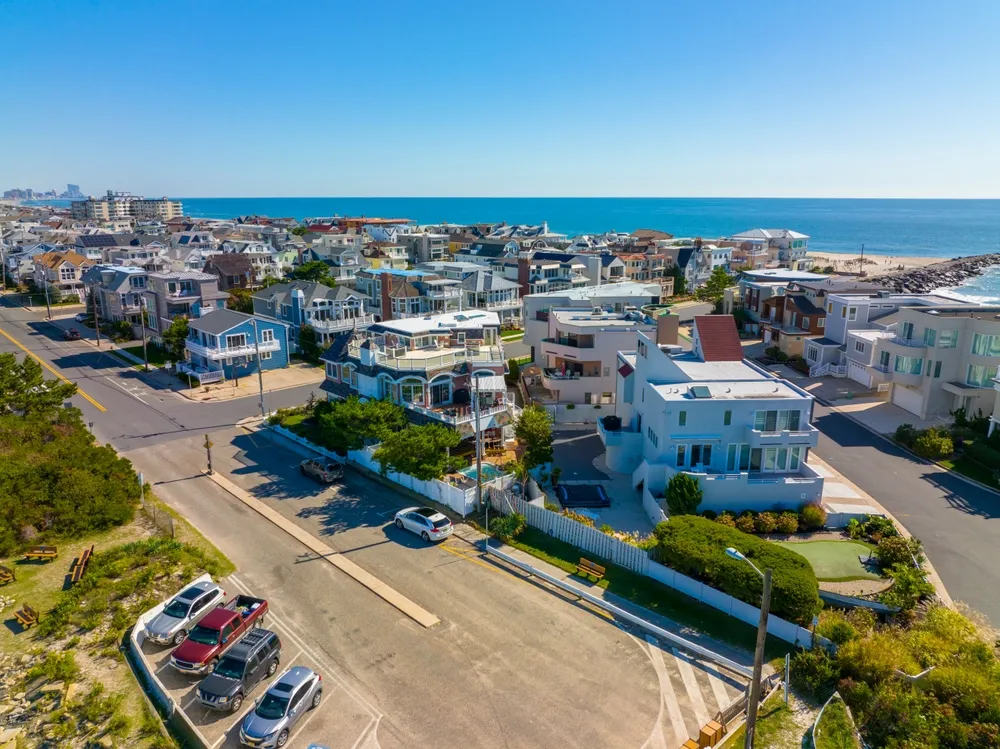
The New Jersey coast has been one of the country’s most consistently strong residential markets for nearly two decades. But in 2026, a divergence is emerging that complicates the simple “hot market” narrative: single-family homes along the shore remain firmly in seller territory, while condos and townhomes, particularly in Ocean County, are seeing inventory build, prices adjust downward, and days on market stretch past 30, 60, and even 90 days with multiple price reductions.
The split maps closely to buyer demographics, according to Darren Tietsworth, a Realtor with The Coyle Team at RE/MAX Select who covers coastal Monmouth and Ocean counties. The luxury second-home buyer, typically purchasing a single-family coastal property with cash or substantial equity, remains active and undeterred. The first-time or entry-level buyer, more likely shopping condos and townhomes at lower price points, is pulling back – squeezed by interest rates that were supposed to decline this year but have instead reversed course.
“We’re seeing rates that were trending down initially now trending back up,” Tietsworth says. “That’s what’s causing some of the consternation amongst buyers: these rates, which had been heading down, and people were told, ‘Oh yeah, you’re going to have a lower rate, just stay put, just wait.’ Now we’re seeing those rates trend back up.”
Two Counties, Two Conditions
Even within the shore market, conditions vary by county. Monmouth County remains more seller-friendly, with prices stable or increasing and days on market staying low. Ocean County has shifted more favorably toward buyers, particularly in the 55-and-older adult communities that represent a significant share of inventory there.
Tietsworth posts monthly reports tracking both counties, separating single-family data from condo and townhome data. The pattern is consistent: single-family homes attract high demand across both counties, while the condo and townhome segment is saturated with listings that increase month over month.
“The condo and townhome market largely caters to the first-time homebuyer because the prices are lower than the single-family homes,” Tietsworth says. “I think that’s why we see the softness in that market; it’s due to the interest rates.”
The luxury coastal segment operates on different economics entirely. Properties in some shore areas approach $15 to $20 million. Buyers in this tier are less rate-sensitive, often purchasing second homes for seasonal use between Memorial Day and Labor Day. In the most competitive pockets, homes still go under contract their first weekend on the market after agents conduct an open house and receive multiple offers.
The Remote-Work Residency Shift
The buyer pool along the coast has changed composition since the pandemic. What was once a predominantly seasonal, second-home market has absorbed a growing number of full-time residents, professionals who discovered during remote work that they could live at the shore year-round rather than commuting from northern New Jersey or New York City.
That shift has added demand for primary-residence stock, but it also means more buyers in the market are now sensitive to employment conditions, mortgage rates, and broader economic uncertainty in ways that pure second-home buyers are not. Tietsworth describes a cautious contingent worried about rates, job security, and geopolitical conflict, concerns that don’t register for the luxury vacation buyer.
“It’s really a tale of two markets in New Jersey,” he says. “The first-time homebuyer, maybe the upsizer, maybe even the downsizer, those people are trending more cautiously. The second-home vacation-home buyers, it’s as strong as it’s ever been.”
A Difficult State for Investors
For capital looking to deploy into New Jersey residential real estate, the picture is constrained. Tietsworth, who has invested in New Jersey real estate for nearly 25 years, says he is no longer putting capital into the state, directing it instead to Texas, Iowa, South Carolina, and Ohio.
The barriers are structural: high property taxes, heavy regulation, and a shortage of investor-suitable inventory. He describes working with investors for years trying to locate suitable acquisitions, a timeline incompatible with anyone needing to place capital quickly.
“It’s not something where you can tell me you have money to spend and you need to spend it in a month and we’re going to find something for you,” he says. His advice to investors considering New Jersey: broaden the search criteria, avoid being too specific about requirements, and prepare to wait.
What Sustains the Market Long-Term
Despite near-term headwinds in certain segments, Tietsworth sees the structural case for New Jersey’s shore market as intact, contingent on interest rates eventually declining enough to bring entry-level buyers back. The state’s proximity to New York City remains the primary economic engine. As long as the city drives wealth creation in finance and related industries, that wealth radiates into surrounding markets, including the Jersey Shore.
He also points to what he describes as some of the best public school systems in the country as a durable draw for families considering permanent relocation to coastal communities. And the physical environment itself, fresher air, ocean beaches, boardwalks, boating, and fishing, continues to pull buyers who want outdoor access that the more developed areas closer to New York City cannot offer.
“As long as New York City stays healthy, New Jersey will stay healthy,” Tietsworth says. “New York City is the epicenter, and it emanates into southern New York State, Long Island, and New Jersey.”
For buyers watching this market, the practical implication is clear: the entry-level coastal segment, condos and townhomes, particularly in Ocean County, offers more negotiating room and less competition than it has in years. But the single-family shore market remains as competitive as ever, with no signs that luxury demand is softening.
About the Expert: Darren Tietsworth is a Realtor with The Coyle Team at RE/MAX Select, covering coastal Monmouth and Ocean counties, New Jersey, and has invested in New Jersey real estate for nearly 25 years.
This article is based on information provided by the expert source cited above. It is intended for general informational purposes only and does not constitute legal, financial, or real estate advice. Readers should conduct their own research and consult qualified professionals before making any real estate or financial decisions.
Similar Articles
Explore similar articles from Our Team of Experts.