

The independent hotel sector faces mounting pressure as major chains continue consolidating and operational costs rise across the industry. For boutique properties that want to maintain thei...

West Austin's Real Estate Market Is a Collection of Neighborhoods Moving at Different Speeds

Written by:
Date:
28 Aug 2026
Share via Facebook

Share via Linkedin

Share via X

Copy to clipboard

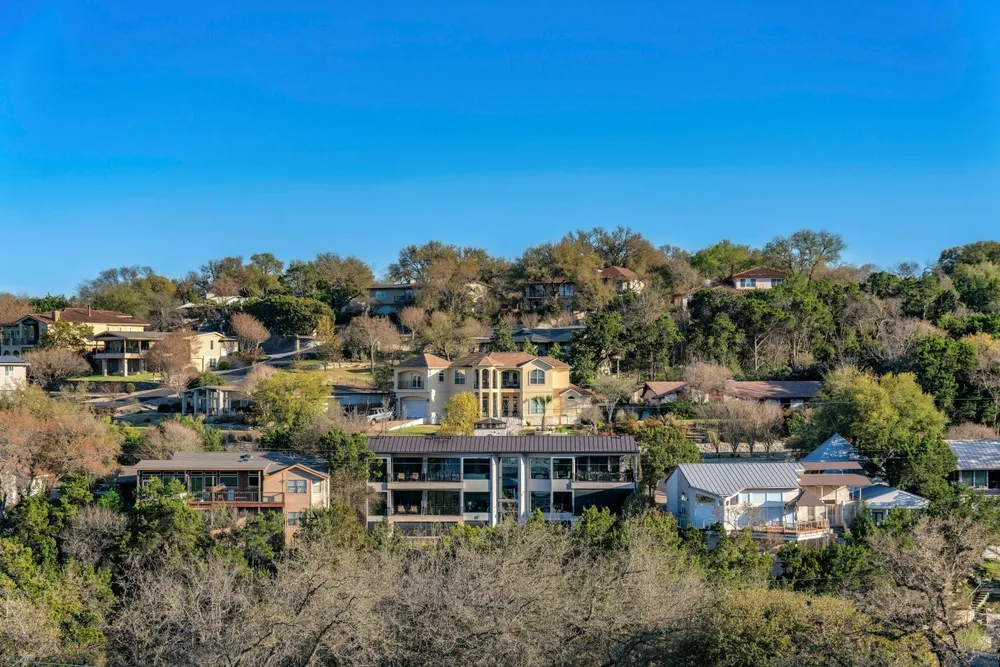
The prevailing narrative about Austin, Texas, real estate in 2026 is that it’s a buyer’s market. National coverage has emphasized cooling prices, rising inventory, and a correction from pandemic-era peaks. But in West Austin, the cluster of communities including Bee Cave, Lakeway, Westlake, and Spicewood, the picture is considerably more fragmented. Depending on the neighborhood and price point, conditions range from stagnant to competitive, sometimes within the same zip code.
Two Different Markets Under One Label
The split is visible at the price level. Properties below $500,000 are moving slowly. But the luxury segment, roughly $1.5 million to $6 million, has been performing with more urgency than many expected.
According to Cynthia Mattiza, a Real Estate Advisor with Kuper Sotheby’s International Realty who has specialized in West Austin for over 16 years, the two tiers are behaving like separate markets. “Things in the 500 and under aren’t moving as fast, while things in the 1.5 to 6 million are moving a little bit faster than expected,” she says.
The average price in West Austin sits around $1.1 to $1.2 million, which places much of the area’s inventory in the bracket that’s seeing activity. The buyer pool is largely relocation-driven, professionals moving from the East Coast, West Coast, and Chicago who find they can get significantly more house for their money in Texas’s tax-friendly environment. These buyers are typically not purchasing their first property, according to Mattiza.
Pricing as the Market’s Sorting Mechanism
What separates properties that sell in a weekend from those that sit for two months comes down to pricing discipline. Mattiza describes two listings in the same Bee Cave neighborhood that illustrate the gap. One, priced approximately 5% below market value, went under contract during its first weekend. Another, priced less aggressively in the same community, has been on the market nearly two months without a serious offer.
“Buyers are way too savvy these days to contract on something that in their mind is overpriced,” she says.
For sellers who purchased in 2021 or 2022, this dynamic is particularly uncomfortable. Mattiza notes that this cohort is feeling “the emotional repercussions and financial repercussions of those purchases” as profit margins have narrowed or disappeared by the time they go to sell.
The pricing calculation is straightforward: homes that are priced at or slightly below what comparable recent sales support will attract offers within a reasonable timeframe. Homes priced above that threshold, even well-presented, staged, move-in-ready properties, will sit.
Neighborhood-Level Inventory Shifts
Even within West Austin’s luxury tier, conditions vary block by block. Spanish Oaks, a community Mattiza tracks closely, had elevated inventory earlier in the year. That inventory has since been absorbed, shifting buyer behavior from leisurely browsing to quicker decision-making.
“Where they had tons of options to choose from, now there aren’t as many,” Mattiza says. “They’re jumping on opportunities quicker because they don’t have as many options to choose from.”
This summer has also produced more multiple-offer situations than the prior year, a signal that at least some pockets of the market are tightening. Mattiza characterizes the direction as movement toward a more balanced market, noting that multiple offers have become more common this past summer than at any point in the previous year.
For buyers relocating to the area, this neighborhood-level variation means that broad market narratives about Austin being a buyer’s market may not apply to the specific community they’re targeting. A neighborhood with absorbed inventory and competing offers behaves nothing like the citywide statistics suggest.
Development Activity in Spicewood
Further west, new luxury development is expanding the market’s footprint. Several golf and resort communities are under construction or actively selling lots in the Spicewood area. Travis Club has been selling lots successfully; Lora Loma is another active project, and Canyon Ranch, a fractional-ownership development attached to a luxury ranch hotel, has chosen West Austin as its location.
This development corridor sits between Bee Cave and the lakes, where land remains available, unlike the stretch between Bee Cave and downtown Austin, which is largely built out. Mattiza describes the growth as good for the overall economy of the area, while acknowledging it comes with some downsides for existing residents.
What’s Driving Deals Apart
When contracts fall through, the cause tends to be psychological rather than structural. Mattiza points to buyer confidence, anxiety about interest rates or job security, as the primary factor in failed deals she’s personally witnessed.
“They’re making rash decisions, or they’re making emotional decisions in the sense of what their confidence levels are,” she says.
The rise of AI-powered research tools has added complexity. Buyers arrive better-informed than ever, but the data these tools surface doesn’t always capture hyperlocal conditions, pricing nuances, neighborhood-specific inventory dynamics, or the lifestyle factors that drive purchase decisions in communities built around schools, privacy, and proximity to nature.
Mattiza says buyers increasingly use AI tools for data points, but those tools cannot replicate what a hyperlocal agent knows about specific neighborhoods. “Data points don’t really necessarily describe lifestyle,” she says. “It’s really getting plugged into the community, knowing your neighbors and feeling like a sense of belonging.”
Why Buyers Choose West Austin
The communities Mattiza specializes in – Bee Cave, Lakeway, Westlake – attract buyers primarily because of school quality and proximity to downtown Austin. The highest-rated school districts in the area sit within gated luxury communities that offer pools, sport courts, and a degree of privacy, all within a 20- to 30-minute commute to downtown.
Recent transactions illustrate the range. Mattiza closed a deal near Lake Austin at $8 million where the buyer prioritized proximity to the lake and a large lot surrounded by nature. A separate deal at $2 million involved a family relocating from Colorado who chose West Austin for the commute and the neighborhood format. Both buyers chose this area over other parts of Austin for reasons that don’t show up in price-per-square-foot data.
For buyers weighing West Austin against other parts of the metro, the decision ultimately rests on whether the lifestyle factors, school districts, green space, and community structure justify the premium over areas where inventory is more plentiful and pricing pressure is lower.
About the Expert: Cynthia Mattiza is a Real Estate Advisor with Kuper Sotheby’s International Realty, who has specialized in West Austin, Texas, for over 16 years.
This article is based on information provided by the expert source cited above. It is intended for general informational purposes only and does not constitute legal, financial, or real estate advice. Readers should conduct their own research and consult qualified professionals before making any real estate or financial decisions.
Similar Articles
Explore similar articles from Our Team of Experts.


The Psychology of Home Staging How Strategic Design Drives Real Estate Success in the Piedmont Triad
The real estate market in North Carolina’s Piedmont Triad is experiencing a shift that many agents and sellers haven’t fully recognized. While the region maintains a balanced mar...