
The Colorado State Land Board manages about 3 million acres of land across the state using an investment philosophy that stands apart from typical real estate investors. As a trust entity es...

Baltimore City's Block-by-Block Redevelopment Is Creating a New Class of Homebuyer – But Funding Timelines Are the Hidden Risk

Written by:
Date:
01 Sep 2026
Share via Facebook

Share via Linkedin

Share via X

Copy to clipboard

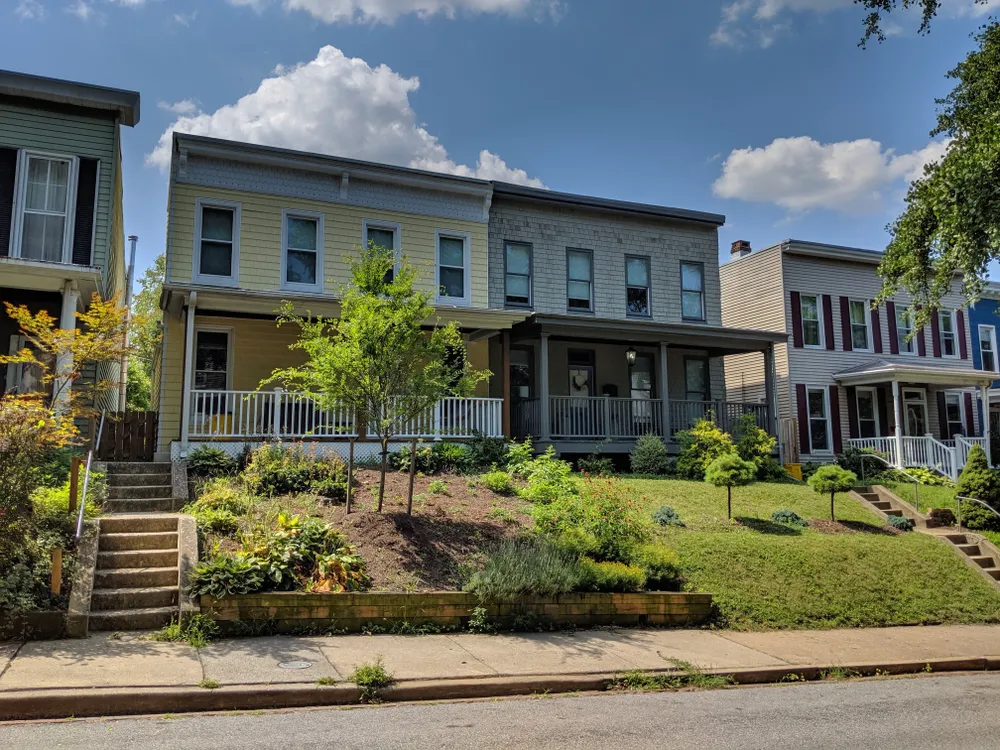
In Baltimore City, a property that sat vacant for 25 years with no roof and trees growing inside can become a fully rehabbed home selling to a buyer relocating from California or D.C. That transition is happening block by block, driven by coordination between developers, community associations, and city and state agencies that channels funding into specific distressed neighborhoods. But the gap between when funding is approved and when it actually arrives creates a financial exposure that developers must plan around from day one.
Who’s Buying in Baltimore City
The buyer pool in Baltimore City is shaped by geography and remote work. The city sits roughly an hour and a half from the D.C. metropolitan area, borders Pennsylvania, and offers home prices that can run $100,000 to $200,000 below comparable properties in D.C. or Virginia.
According to Salinda Adams, a Realtor at United Real Estate Executives who is also a licensed home improvement contractor and developer focused on East Baltimore City, the rise of remote work has expanded buyers’ geographic options. She has sold homes to buyers relocating from California, D.C., and Waldorf, Maryland, people choosing a lower cost of living while maintaining commuting distance to their employers. “People are able to telework more; they have more versatility on where they can purchase homes and still do their jobs,” Adams says.
At the same time, existing residents are being served by down payment assistance programs and lender-provided reduced interest rates designed to help them afford the rising prices that come with neighborhood redevelopment.
How Deals Come Together
Adams has completed six rehab projects on a single block in East Baltimore City, with three more in her pipeline. That concentration allows her to work closely with the community association on buyer attraction strategies.
In one recent transaction, a buyer liked a fully rehabbed property, formerly vacant for 25 years, but was uncertain about the neighborhood and began looking elsewhere. Adams connected with the community association, which identified $15,000 in available down payment assistance. That incentive brought the buyer back to close the deal.
“That incentive was enough to change the outcome of the project,” she says.
This kind of real-time coordination, matching available funding to specific buyer hesitations, is what moves properties in neighborhoods where the homes are new, but the surroundings are still transitioning.
Why Properties Sit Longer Than Expected
As more rehabs come to market, prices rise, and the buyer pool narrows to those who are financially prepared. Adams says the main reason homes sit longer is affordability; the homes have value, but fewer buyers can afford them at current prices.
Developers in the area have responded by coordinating with city and state agencies on down payment assistance and working with lenders who offer reduced interest rates. In neighborhoods with organized buyer pipelines, where community associations and agencies are actively preparing eligible buyers before properties are completed, homes move faster.
The Block-Level Variability Investors Miss
For outside investors considering Baltimore City, Adams is direct about the granularity required: “You can’t really say West Baltimore or East Baltimore. You have to be zip code specific. And honestly, even street name specific.”
One block can be actively transitioning with coordinated investment, while the adjacent block remains what Adams calls a “dead zone.” The difference often comes down to whether a community association has an active planning strategy and whether collaborative funding initiatives are targeting that specific area.
Community buy-in also determines what’s feasible. Adams has seen projects stall because a developer planned rental conversions in a neighborhood where residents preferred homeowners, making zoning approvals or community support unavailable.
The Real Risk Is Timing, Not Demand
The most underappreciated risk in Baltimore City development is not finding buyers; it is the lag between funding approval and disbursement. Adams identifies this as the central operational challenge.
“It’s one thing to be approved as an organization to say you’ll have this money to contribute to construction or down payment assistance, but sometimes it takes a long time for you to actually receive the money,” she says.
Her approach is to line up independent financing, bridge loans, private lending, and bank relationships sufficient to complete a project without the grant funding. “Whatever grant funding or other subsidy I get is just to offset the cost, basically,” Adams says. Developers who structure their projects around subsidy arrival dates risk delays that compound costs.
Political turnover adds another layer. If a delegate or senator supporting a project changes office or shifts priorities, the funding authorization behind a project can change mid-execution. Planned commercial developments like schools that informed a project’s thesis can also be canceled, forcing developers to pivot.
Where Opportunity Concentrates
Funding is becoming most available in the city’s most distressed neighborhoods, the areas with the highest vacancy rates and greatest need. Adams notes that developers do not need nonprofit status to access these programs, which broadens participation. The focus across agencies is reducing vacant properties, a priority she describes as “a nationwide topic at this point.”
For developers evaluating entry, Adams recommends starting with community connections rather than property searches: “Connect with the residents, with the community association to really get an idea on what they are planning, what their community planning strategy is, what they prefer.” A neighborhood where visible rehab activity, organized community planning, and active funding initiatives are already underway signals lower execution risk than entering a block cold.
“If you build a quality property, your chances improve on finding that buyer,” Adams says.
About the Expert: Salinda Adams is a Realtor at United Real Estate Executives, a licensed home improvement contractor and developer focused on East Baltimore City.
This article is based on information provided by the expert source cited above. It is intended for general informational purposes only and does not constitute legal, financial, or real estate advice. Readers should conduct their own research and consult qualified professionals before making any real estate or financial decisions.
Similar Articles
Explore similar articles from Our Team of Experts.