

In New York City’s challenging housing landscape, one organization stands out with a clear vision: transforming lives through affordable homeownership. Since July 2024, Sabrina Lippman...

Chicago's Older Housing Stock Is Creating an Opening for All-Electric, High-Performance Builders

Written by:
Date:
28 Aug 2026
Share via Facebook

Share via Linkedin

Share via X

Copy to clipboard

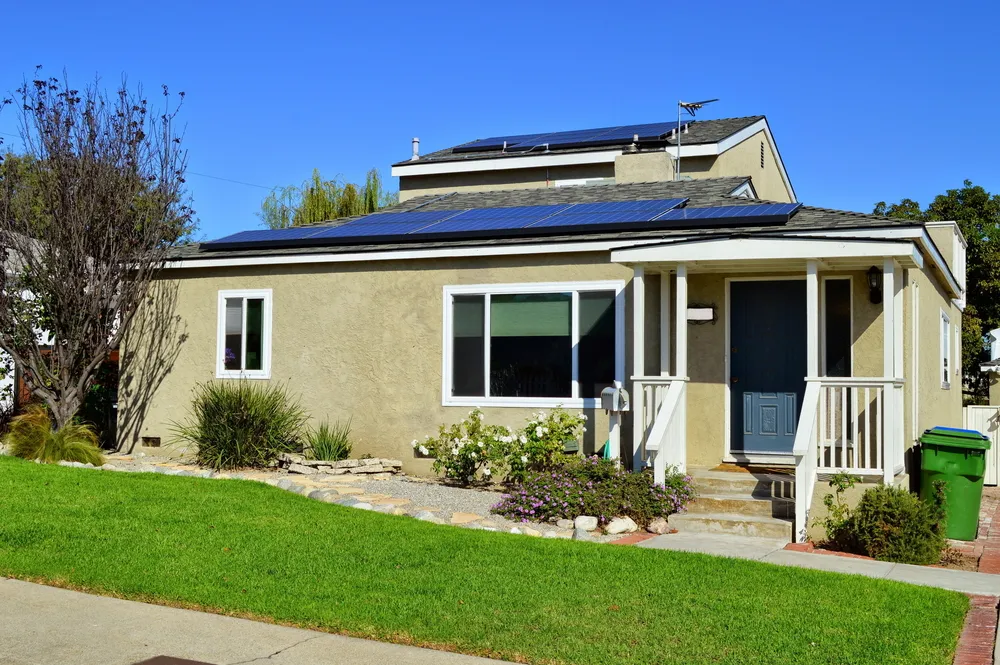
In a city where 95 to 98 percent of residential transactions involve homes roughly a century old, new construction doesn’t need to do much to stand out. But a small group of Chicago builders is pushing well past that low bar – delivering all-electric, high-performance homes into neighborhoods with significant vacant land, and finding that buyers respond to the economics as much as the environmentalism.
According to Wayne Beals, Managing Broker & Realtor at The Beals Group at EXIT Strategy Realty in Chicago, the gap between what Chicago’s building code requires and what high-performance construction delivers is wide enough to function as both a market opportunity and a competitive moat. Builders willing to invest in the learning curve now are positioning themselves ahead of code changes that will eventually force the rest of the industry to catch up.
The Cost Argument Doesn’t Hold Up
The conventional wisdom that sustainable homes carry a price premium hard to justify in a high-rate environment doesn’t hold up cleanly in practice, according to Beals, who has focused on sustainable housing since 2013.
“I don’t think that a more sustainable building has to be a more expensive building,” he says. “I think it’s just a matter of decision.” His argument to buyers is straightforward: if a home saves $3,000 a year in utility costs, paying an extra $100 or $200 per month in mortgage cost delivers a net improvement in lifestyle, better air quality, more comfort, lower maintenance, and greater resilience to events like wildfire smoke.
The Beals Group’s most recent sale illustrates the approach. A property in Chicago’s Woodlawn community combined a single-family home with an ADU-style one-bedroom apartment, classified as a two-unit building by zoning but functioning as multigenerational housing. The ADU component addressed affordability by creating rental income that helps offset the mortgage. The home itself was all-electric, well-insulated, airtight, equipped with a fresh air exchange system, and included solar PV. “It asked you to make no compromises to your life whatsoever,” Beals says. Buyers could move in, have healthier air, lower utility bills, less maintenance, and rental income or space for extended family, without trading away anything in daily life.
Indoor Air Quality Is the Feature Moving the Market
Among available sustainability features, one is generating the most buyer interest in Chicago right now: indoor air quality. Repeated Canadian wildfire smoke events have made the issue tangible in a way that abstract energy-efficiency numbers sometimes don’t.
“Right on the heels of the COVID pandemic, we’re thinking about our health inside our homes again,” Beals says. “We can’t be outside on those days. And then you start questioning how resilient your house is to this poor outdoor air quality condition.”
Improving the airtightness of a building envelope simultaneously reduces infiltration of outdoor pollutants and cuts energy loss from the interior, one upgrade solving two problems at once. Beals says buyers are starting to ask more of the envelope of their homes as a result of these repeated smoke events.
Why Most Chicago Builders Haven’t Made the Shift
Despite the market logic, the vast majority of Chicago’s home builders have not moved toward high-performance construction. Beals attributes this to a combination of factors: the education required to retrain, the perception of risk in changing established methods, and the fact that code still permits low-quality construction that sells adequately in normal conditions.
“You can kind of look at code as the cheapest home the law will allow you to build,” he says. Most builders assume that being new is enough of an advantage over the existing hundred-year-old stock. But that assumption carries risk in a downturn. “If something were to happen in the economy, who’s at risk? The person sitting on a high-quality piece of inventory or the person sitting on a low-quality piece of inventory?”
The builders who have made the shift remain a small group, by Beals’ account, a handful of developers willing to absorb the learning curve of all-electric, high-performance construction while the rest of the market waits for code to force the issue. He sees that gap as temporary: as building codes tighten, the practices these early movers have already adopted will become baseline requirements rather than differentiators.
Where movement is happening more broadly is at the subcontractor level. Younger HVAC contractors are interested in heat pumps. Insulators are seeing competitive advantage in airtightness services. The trades are moving before the general contractors and developers have followed.
Transaction Friction Still Exists
Green home transactions are not without complications. Solar renewable energy credits in Illinois can add language complexity that title companies and real estate attorneys find unfamiliar. Appraisals remain an area where Beals sees unfinished work, specifically, the failure to account for total cost of ownership rather than just purchase price. “If we were able to do that, then I think between loan programs and appraisals, we could remove that friction,” he says.
Beals finds that transactions on high-performance homes are generally more stable than conventional ones. When a home inspector visits a building that has been commissioned and verified by a HERS score, the level of construction detail is apparent, because building to that standard requires attention throughout the entire process. For buyers, this means fewer surprises during due diligence and fewer post-closing callbacks for builders.
Retrofits Face a Provider Shortage
Consumer interest in electrification and deep retrofits of existing homes is growing, but few contractors can deliver the work. Beals says the number of people capable of consulting on taking an existing building and making it perform like a high-performance home is very small. He describes the cost as comparable in some cases to a kitchen renovation, covering the move from gas to electric, from uncomfortable to comfortable, and from poor indoor air quality to excellent.
The bottleneck is not demand or cost but the absence of providers who know how to execute. Beals compares a home to a fish tank: without the right design, systems, and maintenance, the environment inside degrades. Homeowners living with carbon monoxide, wildfire smoke infiltration, or extreme heat and humidity don’t have to accept those conditions, but the industry has not made the alternative accessible enough.
Tariffs and Workforce as Near-Term Headwinds
Looking ahead, Beals identifies two concerns for the green building space in Chicago: tariffs on materials driving already-high construction costs higher, and a workforce shortage that lacks both domestic pipeline and immigration policy to address it. “I’m deeply worried about tariffs. I’m deeply worried about workforce,” he says.
His broader message to builders and investors is that the transition to sustainable construction aligns with business interest rather than conflicting with it. “People really need to reevaluate their transition from the way they’re currently doing things to become more sustainable,” Beals says, “so that they can make their construction businesses and their home building businesses ready to meet the needs of that next generation and to keep themselves profitable.”
About the Expert: Wayne Beals is Managing Broker and Realtor at The Beals Group at EXIT Strategy Realty in Chicago, focused on sustainable housing since 2013.
This article is based on information provided by the expert source cited above. It is intended for general informational purposes only and does not constitute legal, financial, or real estate advice. Readers should conduct their own research and consult qualified professionals before making any real estate or financial decisions.
Similar Articles
Explore similar articles from Our Team of Experts.