
You found the house. It is 10:30 on a Tuesday night; you are scrolling through listing photos on your phone, and you have three questions you want answered right now. You fill out a contact ...

Buying a Home in Chattanooga, Tennessee? Your Commute Corridor Matters More Than Your Neighborhood

Written by:
Date:
27 Aug 2026
Share via Facebook

Share via Linkedin

Share via X

Copy to clipboard

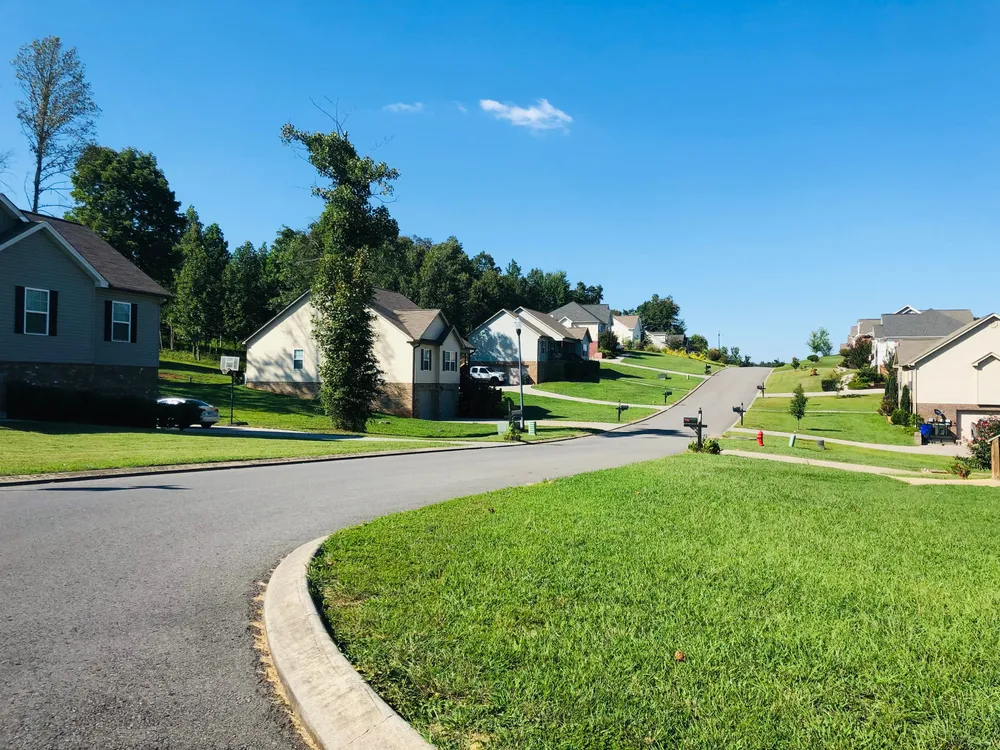
When buyers relocate to a mid-size city like Chattanooga, they choose a home based on price, lot size, and proximity to restaurants or schools. Traffic rarely makes the short list – the whole appeal of a smaller market is that you leave gridlock behind. But in a city growing as fast as Chattanooga, the highway corridor you live off of affects both daily quality of life and long-term property value, according to Grace Frank, Broker / Team Lead of the Grace Frank Group.
Frank has been advising relocating buyers in this market since 2006. She is licensed in Tennessee, Georgia, and Alabama and works with everyone from first-time buyers to national developers. One of the first conversations she now has with relocation clients is not about neighborhoods – it is about which highways they will use every day.
A Trucking Hub With Residential Consequences
Chattanooga sits at a geographic crossroads. Its position in the southeast corner of Tennessee – 20 minutes to Georgia, 30 minutes to Alabama – makes it a natural logistics hub. That same geography that attracts industrial warehouse developers and distribution centers also routes an enormous volume of commercial truck traffic through the city daily.
Frank says Chattanooga functions as a diverging point where trucks arrive from multiple directions and fan out to serve the broader Southeast. The result is that Interstates 24 and 75 experience significant bottlenecking during peak hours, while other corridors remain comparatively clear.
For buyers, this has a direct consequence: a home with easy access to I-24 or I-75 may come with a commute that looks nothing like what you experienced visiting on a Saturday afternoon.
The Highway 27 Factor
Frank specifically steers relocation buyers toward properties accessible from Highway 27, which she describes as a cleaner, less congested alternative. “If you can find something you really love off of Highway 27, which is very clean and easy to work off of, versus all these traffic problems on 75 and 24, I would look at that,” she tells clients.
Frank extends this logic to builders, developers, and investors as well, arguing that identifying areas with easy traffic flow and finding opportunities there represents a smart strategy for anyone putting capital into Chattanooga real estate. “Traffic flow is key,” she says.
As Chattanooga continues to grow – with new construction a strong segment of the market and multifamily developers arriving from across the Southeast – infrastructure strain will intensify. Frank identifies road capacity as one of the primary headwinds facing the market, noting that while Chattanooga’s internet infrastructure is excellent, its road network has not kept pace with population growth.
What Steady Appreciation Looks Like Here
The traffic question sits within a broader market that Frank characterizes as slow and steady. Chattanooga typically appreciates at about 3% annually – a rate Frank contrasts with the volatile swings seen in Miami, Los Angeles, or New York. During COVID, the market saw unusual 20% appreciation, but that was an outlier.
Frank says the market never experienced the severe pullback that hit other cities in 2009 and 2010. Investors who arrived during that period “were shocked,” she says. “They felt like they were coming back to Cinderella because everywhere else they were at it was very depressing.”
That stability cuts both ways for buyers today. Sellers have been slow to acknowledge that the strong seller’s market has cooled, Frank says, and many price too aggressively. When properties sit without showings or offers, sellers eventually reduce – and Frank reports those reductions are coming sooner than they did six months ago.
For buyers, Frank’s advice is direct: “The only time you make your money is when you buy. You don’t make your money when you sell.” If a property is overvalued relative to recent comparable sales, she tells clients to wait rather than overpay.
Practical Considerations for Relocating Buyers
Drive your likely commute on a weekday during morning and evening hours before making an offer. Weekend visits will not reveal the truck traffic patterns that define daily life on certain corridors.
A property 25 minutes from downtown on a clear corridor may get you to work faster than one 10 minutes away on a congested interstate. Frank notes that available land for new construction is becoming scarcer, pushing development farther out – which will add more vehicles to roads already under strain.
In a market where the average home price sits around $375,000, Frank says buyers arriving from higher-cost cities can afford to be selective about location relative to traffic corridors. The outdoor recreation, restaurant culture, and pace of life that attract people to Chattanooga depend on not spending that recovered time sitting behind trucks on an interstate.
About the Expert: Grace Frank is Broker and Team Lead of the Grace Frank Group, working across Tennessee, Georgia, and Alabama in the Chattanooga metro area since 2006.
This article is intended for informational purposes only and does not constitute legal, financial, or investment advice. The views and opinions expressed herein reflect those of the individuals quoted and do not represent an endorsement of any company, product, or service mentioned. Readers should conduct their own due diligence and consult qualified professionals before making any investment decisions.
Similar Articles
Explore similar articles from Our Team of Experts.

Jersey Shore Homes Are Taking Longer to Sell, But Prices Remain High. Here’s What’s Really Happening
Across Spring Lake and the wider Jersey Shore, the real estate market is sending mixed signals. Homes are sitting on the market longer than last year, and price reductions are appearing more...