

The common perception of Florida’s cash buyers often involves wealthy out-of-state newcomers fleeing high-tax states, bringing Silicon Valley fortunes with them. However, Shane Burgman...

Jersey City Buyers Should Be Watching Brooklyn, Not Manhattan, for Price Signals

Written by:
Date:
25 Aug 2026
Share via Facebook

Share via Linkedin

Share via X

Copy to clipboard

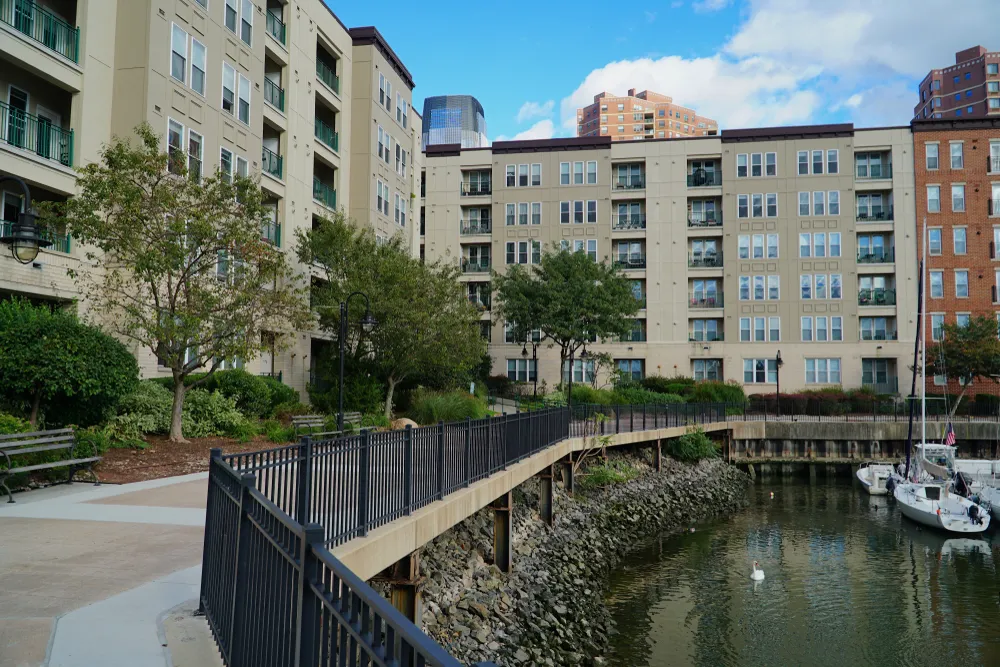
When buyers cross the Hudson River from New York to Jersey City, most calculate their discount against Manhattan pricing, how much less per square foot they’ll pay compared to the island they just left. According to Patrick Southern, team leader at SERHANT (Properties by Southern) and a broker active in Jersey City since 2003, Manhattan is the wrong benchmark. The market that actually predicts where Jersey City is headed is Brooklyn.
“If I’m going to generalize any market in New York, to us, we’re typically about one cycle behind,” Southern says. The cycle he’s tracking isn’t Manhattan’s. It’s Brooklyn’s.
Brooklyn as the Leading Indicator
Southern’s argument rests on observable patterns in building scale and buyer migration. Jersey City’s development has followed Brooklyn’s playbook with a lag. The high-rise condo towers now emerging in Jersey City mirror what Brooklyn produced roughly seven years ago. “If you look at the Brooklyn market from seven years ago, that’s where a lot of the high-rise stuff started to come out,” he says.
Brooklyn’s trajectory from mid-rise neighborhoods to tower-scale condo development came with substantial price appreciation. If Jersey City is replicating that pattern on a delay, buyers today are purchasing into a market that may still have room to appreciate, but one where the comparison point keeps moving upward.
The Intentional Gap
Jersey City isn’t trying to close the gap with New York. Southern is explicit: “Jersey City does not want to compete with New York. We don’t want to try to compete with New York.” The positioning is deliberate. Jersey City markets itself as what Southern calls “the affordable option that’s a smaller city, that’s more containable, that feels more small-townish.”
That self-imposed ceiling creates a tension. Buyers get genuine value – Southern notes “you’d be hard pressed to spend $5 million here” – but the market’s refusal to position itself as a peer to Brooklyn or Manhattan means price growth may be structurally limited. If the identity is “affordable alternative,” there’s an implied cap on how expensive things can get before that identity breaks.
For buyers, this cuts both ways. On the upside, you’re buying into a market with a clear value gap and a visible trajectory. On the downside, you’re betting that a market which defines itself by its discount will continue appreciating, which requires that the reference markets keep climbing too. If Brooklyn prices flatten, Jersey City’s one-cycle-behind positioning means that stagnation arrives on a delay rather than being avoided.
The Two-Step Collapse
Southern describes a historical pattern where buyers migrated from Manhattan to Brooklyn first, then eventually to Jersey City, a two-step process. More recently, particularly around COVID, some buyers began skipping Brooklyn entirely. Southern says that was when his team noticed “the biggest shift of getting New York attention because it was always a two-step process.”
He describes couples living in Manhattan condos worth $5 million or $6 million who came directly to Jersey City, bought brownstones for $2.5 million, then purchased beach houses elsewhere in New Jersey with the difference. That influx improved pricing, which improved the quality of renovations, which attracted more buyers.
Whether that direct-migration pattern holds or the two-step process reasserts itself will determine how quickly Jersey City’s development cycle advances. If it reverts, the market remains tethered to Brooklyn’s pace rather than leapfrogging it.
The Waterfront Premium Structure
For buyers trying to map this practically, Southern describes pricing that peaks at the waterfront, where top-end new construction blends around $1,500 per square foot – and decreases westward as distance from transit and water views increases. That gradient creates distinct price pockets throughout the city, with affordability increasing as you move inland.
Southern also points to tight supply as a factor supporting current pricing. Downtown Jersey City currently sits at a three-month absorption rate, meaning if nothing new came on the market, existing inventory would sell out in three months. But Southern estimates roughly one-third of that inventory is what he calls “trouble property,” units with bad layouts, low ceilings, or other drawbacks, making the effective supply of competitive housing closer to two months.
That scarcity gives new construction room to absorb into the market without flooding it. For buyers weighing timing, the combination of limited competitive supply and a development cycle that is still ramping up suggests that today’s waterfront pricing may look modest in hindsight, or it may represent the ceiling that the market’s “affordable alternative” identity won’t allow it to breach.
About the Expert: Patrick Southern is a Team Leader at SERHANT and has sold real estate in Jersey City, New Jersey, since 2003.
This article is intended for informational purposes only and does not constitute legal, financial, or investment advice. The views and opinions expressed herein reflect those of the individuals quoted and do not represent an endorsement of any company, product, or service mentioned. Readers should conduct their own due diligence and consult qualified professionals before making any investment decisions.
Similar Articles
Explore similar articles from Our Team of Experts.