

The lakefront city of St. Joseph, Michigan, is positioning itself as a destination for real estate investment and development, actively pursuing growth initiatives to address regional housin...

Jersey City's Condo Towers Are a New Product Type for Hudson County. The Market Is Absorbing Them Fast.

Written by:
Date:
24 Aug 2026
Share via Facebook

Share via Linkedin

Share via X

Copy to clipboard

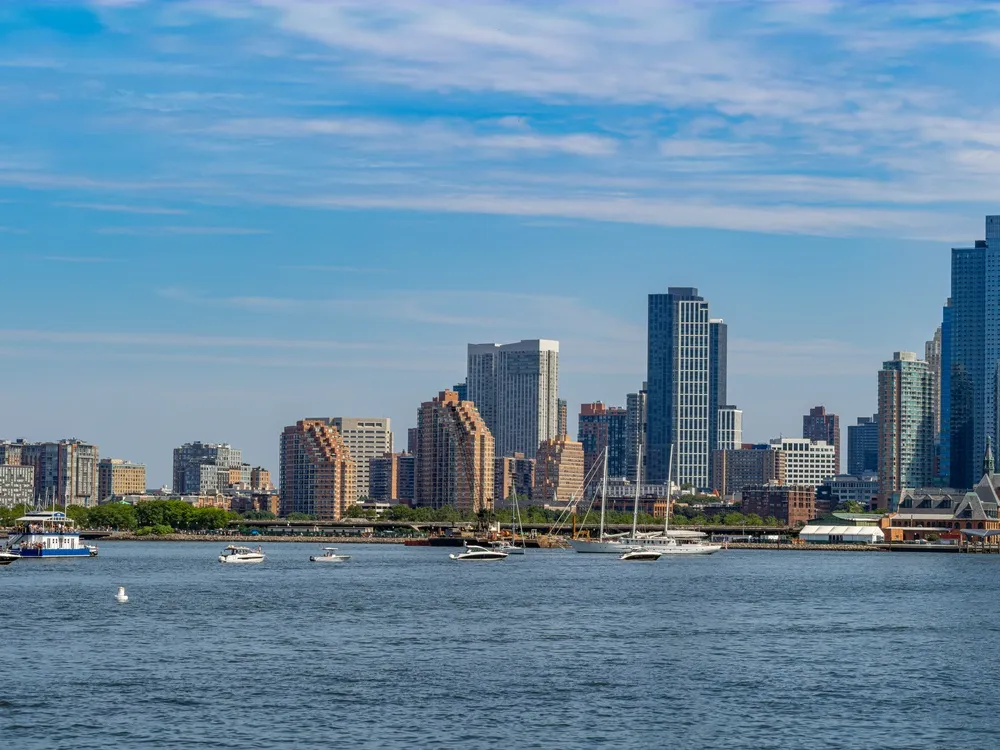
Downtown Jersey City sits at a three-month absorption rate for resale condos, and once problem listings are removed (bad layouts, low ceilings, overpriced units), the effective supply drops closer to two months. That’s the backdrop against which a new wave of high-rise condo development is arriving in Hudson County, New Jersey, a building type that has long existed in Manhattan and Brooklyn but is only now reaching the west side of the Hudson River.
Patrick Southern, Team Leader at SERHANT who has sold real estate in Jersey City since 2003, completed 376 transactions in the market last year. Much of that volume comes from new development projects, where his role extends well beyond listing and showing units.
The Sell-Out Starts Four Years Before the First Showing
The distinction Southern draws is between selling units and shaping what gets built. On a recent 50-unit project at 139 Christopher Columbus in Jersey City, the team sold out the first phase of the development in 11 weeks with five price increases, a result he attributes to four years of pre-sales work on unit mix, sizing, and pricing strategy.
Southern says the sales process begins with breaking down unit counts across studios, one-bedrooms, two-bedrooms, and three-bedrooms, then backing into size and efficiency based on a target gross price. The goal is releasing each unit type at a level the market will absorb quickly.
The financial logic is straightforward for each project depending on the developer’s financing methods. For many, construction loans get expensive at the tail end of a project. Front-loading contracts before a certificate of occupancy arrives means the developer’s debt gets retired faster, improving overall profitability. Getting that timing right requires understanding both market direction and construction financing mechanics.
“It’s really hard to get that just from Excel spreadsheets and reports,” he says. “You have to be on the street level with people and understanding what it is and feeling what the change is.”
A Market One Cycle Behind Brooklyn
Jersey City’s relationship to New York is not competitive; it’s sequential. Southern describes the market as roughly one development cycle behind Brooklyn, where high-rise condo construction began emerging about seven years ago. That same building type is now arriving in Hudson County as construction shifts from stick-frame to masonry and buildings scale upward.
The pricing gradient is clear: waterfront units with views and transit access top out around $1,500 per square foot, then decline westward as distance from transportation and the waterfront increases. Even at the high end, the numbers remain well below Manhattan.
“You’d be hard pressed to spend $5 million here,” Southern says, a fact that still surprises buyers crossing from New York.
Southern says Jersey City does not want to compete with New York. “We want to be the affordable option that’s a smaller city, that’s more containable, that feels more small-townish as far as the city goes compared to Manhattan,” he says. The new construction available in Jersey City costs substantially less per square foot than what buyers would find across the river.
The demand pipeline has also shifted. For years, the path from Manhattan to Jersey City was a two-step process: buyers would move to Brooklyn first, then eventually cross the river. Around the pandemic period, Southern observed buyers coming directly from Manhattan for the first time.
“A couple living in a condo during COVID that was worth $5 million or $6 million in Manhattan would come over to Jersey City, buy an incredible brownstone for two and a half million dollars, and then go down to Spring Lake, New Jersey, and buy a beach house for three and a half million,” he says. That direct migration improved pricing, which improved renovations, which attracted more development capital.
What “Elevated” Means in Practice
The new projects arriving in Jersey City reflect a material upgrade in construction quality. Southern points to floor-to-ceiling seamless glass, curated hardware and door details, higher-efficiency heating systems, and cabinetry selected for a specific aesthetic rather than a spec-sheet checkbox. Amenity packages are shifting too, away from standard lounges and movie theaters toward wellness-oriented spaces including racket sports and active programming.
Much of this is a function of cost curves: techniques and finishes that start as expensive craftsmanship in higher-price-per-foot markets eventually get replicated more efficiently, then migrate to markets like Jersey City where developers can adopt them at a lower cost basis. Southern describes this as a pattern where people “figure out how to do it a little more effectively on a mass level,” at which point his market starts adopting those finishes.
The market is also attracting developers from outside the local area, drawn by tight supply, proven absorption, and a buyer pool that continues to grow. Southern says Manhattan and Brooklyn have the lowest inventory of new construction they’ve seen in 15 years, pressure that pushes both buyers and developers toward Hudson County.
What’s Ahead
New Jersey’s DCA regulations prevent Southern from promoting specific projects before they receive condo validation, but he says several new condo developments are in the pipeline for the second half of 2026. For buyers watching Jersey City, the market’s two-month effective supply of quality resale inventory means new developments represent the primary path to ownership in downtown, and each project that sells out quickly confirms the pricing trajectory for the next one.
About the Expert: Patrick Southern is a Team Leader at SERHANT and has sold real estate in Jersey City, New Jersey, since 2003.
This article is based on information provided by the expert source cited above. It is intended for general informational purposes only and does not constitute legal, financial, or real estate advice. Readers should conduct their own research and consult qualified professionals before making any real estate or financial decisions.
Similar Articles
Explore similar articles from Our Team of Experts.