
The real estate industry runs on conviction. But conviction, more often than not, is just emotion wearing a suit. The developers who consistently outperform aren’t the loudest voices i...

Convert Or Build New: What Actually Costs Less For A Midwest Data Center?

Written by:
Date:
20 Aug 2026
Share via Facebook

Share via Linkedin

Share via X

Copy to clipboard

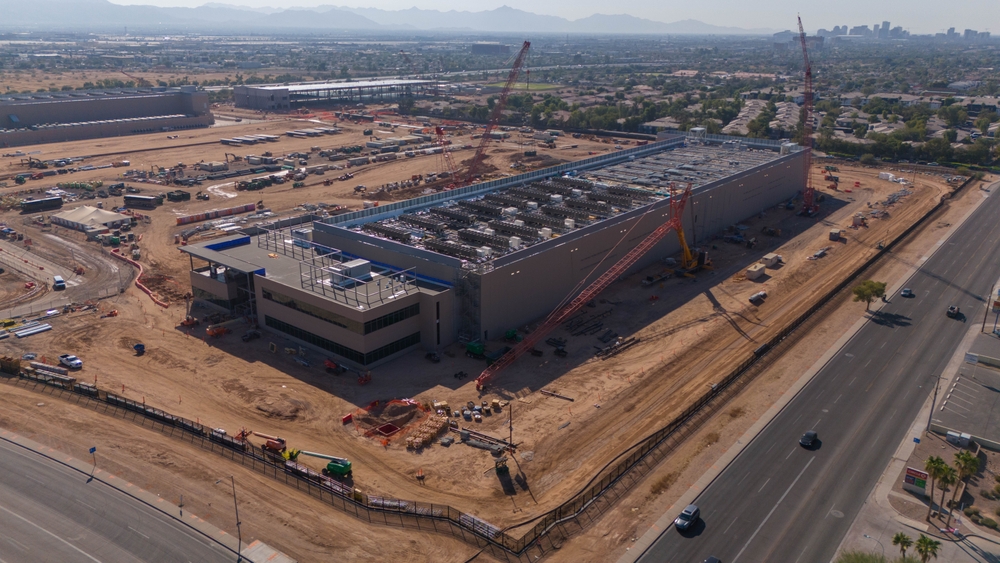
Developers looking at the Midwest for their next data center site keep running into the same question. Is it faster and cheaper to buy and convert an existing industrial building, or is it better to build new from the ground up? Logan Freeman, managing broker at Midwest CRE Advisors, says the answer depends less on price per square foot than most people assume, and he recently broke down exactly where the savings come from and where they run out.
What An Existing Building Actually Saves You
According to Freeman, the time savings in a conversion do not come from the building as a whole. They come from specific, reusable pieces of infrastructure: existing utility service, switchgear rooms, conduit paths, an equipment yard, truck access, a security perimeter, and in some cases existing backup generation or a cooling backbone already in place. Those elements can cut real time off the early civil and site development phase of a project.
What does not disappear is the need to validate that the building’s systems can actually carry the target load. Developers still have to confirm the electrical and mechanical infrastructure can support what they need, and they still have to replace anything undersized or obsolete. Freeman is clear that a conversion does not eliminate the technical work; it just removes the multi-year wait for grid capacity that a greenfield site would require.
When The Time Advantage Disappears
There is a point where the math flips. Freeman describes it as the moment a conversion becomes a disguised new build inside an old envelope. That happens when a site needs major structural reinforcement, a full roof replacement, a rebuilt yard, stormwater solved from scratch, environmental remediation, and still faces a significant wait on utility work. At that point, the project has lost the speed advantage that made conversion attractive in the first place.
That is also, Freeman notes, typically when a reuse story loses its edge: once the real target becomes a large-scale campus rather than a 5- to 10-megawatt enterprise or edge deployment, a developer starts underwriting substation-level capacity rather than the existing structure – and a greenfield build starts to make more sense.
The Real Question To Ask First
Freeman says most developers open a build versus convert conversation by asking about purchase price or cost per square foot. He suggests a different starting point.
“The all-in cost per commissioned critical megawatt, and the number of months until that megawatt is actually usable – that’s the sharpest question in the entire decision, because it’s the one number that actually reflects what a developer is paying for.” – Logan Freeman, Managing Broker, Midwest CRE Advisors
A brownfield site that looks inexpensive on a per square foot basis can still be the more expensive option if the capital and timeline needed to reach usable power run longer than a comparable new build.
For developers evaluating sites in the Kansas City metro and the broader Midwest, current listings and available industrial property can be found on the firm’s listings page.
Midwest CRE Advisors is a commercial real estate brokerage and advisory firm specializing in data center site selection, industrial outdoor storage, and traditional commercial investment across Kansas, Missouri, and the broader Midwest. Founded by managing broker Logan Freeman, the firm has carved out a specific niche identifying brownfield industrial sites and stranded power capacity for AI infrastructure deployment – a space the large national brokers are not focused on. Active in secondary markets including Kansas City, Oklahoma City, Arkansas, Iowa, and Nebraska, the firm serves AI infrastructure companies, colocation operators, and regional developers evaluating Midwest sites, as well as local and regional investors pursuing industrial, flex, land, multifamily, senior housing, and single-tenant commercial acquisitions and dispositions.
This article is based on information provided by the expert source cited above. It is intended for general informational purposes only and does not constitute legal, financial, or real estate advice. Readers should conduct their own research and consult qualified professionals before making any real estate or financial decisions.
Disclosure: Individuals or companies mentioned may have a commercial relationship with KeyCrew.
Similar Articles
Explore similar articles from Our Team of Experts.