
Buyers relocating to Santa Fe County’s Eldorado community almost always arrive with the same assumption: that their money will go further in New Mexico than it did back home. According...

A Gas Price Spike Froze Dallas Fort Worth's Early 2026 Housing Momentum

Written by:
Date:
25 Aug 2026
Share via Facebook

Share via Linkedin

Share via X

Copy to clipboard

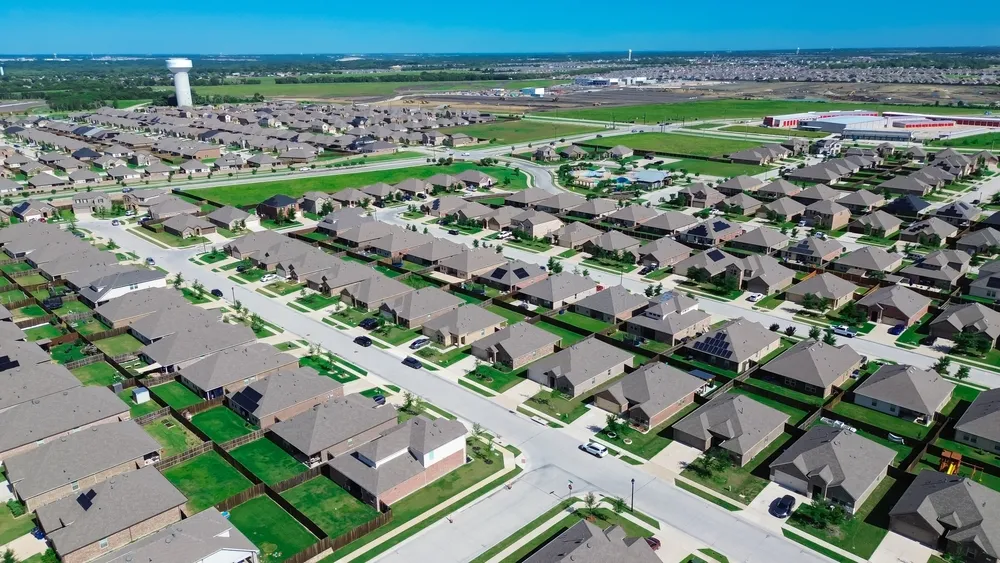
Housing markets are supposed to move on big forces – interest rates, job growth, inventory levels. But in Dallas Fort Worth, the momentum building through early 2026 broke not because of a rate hike or a recession, but because gas jumped from $2.60 to $4 a gallon seemingly overnight. For buyers already stretched to their qualifying limits, that everyday cost increase was enough to freeze decisions.
Matthew Brown, Team Lead of The Dynamic Group at Coldwell Banker Apex, runs a team of six to seven agents across North Texas averaging around 100 deals a year. His team had strong volume heading into February 2026, then watched the mood shift sharply when fuel costs spiked alongside geopolitical uncertainty earlier this year.
Buyers at the Edge of Qualification
The mechanism Brown describes is simple. Many buyers in the DFW market are qualifying for mortgages at the absolute ceiling of their debt-to-income ratios. When a lender underwrites a loan, they account for all monthly obligations. A buyer approved at a specific payment has no slack built into the number – their entire financial picture was calculated to that limit.
Now add a sharp increase in monthly fuel costs that was not there when they started shopping. That alone can tip a ratio past the qualifying threshold. Brown puts it bluntly: “They can’t buy a cheeseburger. If they buy a cheeseburger, their DTI, they don’t qualify.” That is not the case for every buyer, but it illustrates how thin the margins have become for a meaningful share of the purchase-ready pool.
Why This is Different From a Rate Shock
A rate increase is predictable. Buyers and their agents can see it coming, adjust price ranges, or wait for better terms. A sudden cost-of-living spike – fuel, groceries, insurance – hits differently because it changes qualification math without changing the sticker price of the home or the rate on the loan. The buyer is looking at the same house at the same price and suddenly cannot qualify for it, through no change in the housing market itself.
Brown says the DFW market had real momentum in early 2026. Then gas prices surged alongside military action abroad, and buyer confidence stalled. The pause was not about housing fundamentals – it was about household budgets absorbing a shock that lenders immediately reflect in qualification calculations. As Brown describes the broader environment, “The rope that we’re walking across is just getting thinner and thinner and thinner” from both political and economic pressures.
Deals Are Still Happening
Brown’s team has not stopped closing. According to their own internal numbers, they recorded 10 closings last month, eight the month before, and 13 the month before that. But the effort required per transaction has increased. Sellers need more concessions. Buyers need more creative structuring – rate buy-downs funded through price adjustments, closing cost credits, and careful explanation of how small price changes translate to minimal monthly differences.
Brown says every thousand dollars added to a home’s price changes the payment roughly six dollars a month on a 30-year mortgage. He uses that math to show buyers that raising the price $10,000 to receive $10,000 back in closing cost credits or a rate buy-down costs far less than it appears – divided across 360 payments, the difference is manageable.
What has changed is that “everybody that we’re working with does need a little bit more handholding.” The confidence that existed in January and February has been replaced by hesitation, and converting that hesitation into a closed deal takes longer and demands more patience from all sides.
The Vulnerability This Reveals
The deeper concern for anyone buying or selling in DFW is what this episode exposes about the market’s fragility. When buyers are qualifying at their absolute limits, any external cost shock – not just rates, but insurance, property taxes, fuel, food – can pull demand out of the market overnight. The pipeline does not dry up because people stop wanting homes. It dries up because their monthly budget no longer passes underwriting.
Brown expects that if school-year patterns hold, some pre-owned inventory will come off the market in the coming weeks as sellers who listed in spring pull back. That seasonal thinning could help rebalance supply. But the underlying condition – buyers stretched so thin that a routine cost increase can disqualify them – has not changed. For sellers pricing a home today, the relevant question is not just what comparable homes sold for, but whether the buyers who would want their home can still qualify after absorbing months of higher everyday costs.
About the Expert: Matthew Brown is Team Lead at The Dynamic Group with Coldwell Banker Apex, covering North Texas counties including Collin County and the northern Dallas-Fort Worth suburbs.
This article is intended for informational purposes only and does not constitute legal, financial, or investment advice. The views and opinions expressed herein reflect those of the individuals quoted and do not represent an endorsement of any company, product, or service mentioned. Readers should conduct their own due diligence and consult qualified professionals before making any investment decisions.
Similar Articles
Explore similar articles from Our Team of Experts.