
Buyers who keep losing out on move-in-ready homes in the DC-Maryland-Virginia market are often fighting the wrong battle. The competition for updated, turnkey properties is intense enough th...

In Miami-Dade, the Ugliest Properties Are Producing the Best Returns

Written by:
Date:
19 Aug 2026
Share via Facebook

Share via Linkedin

Share via X

Copy to clipboard

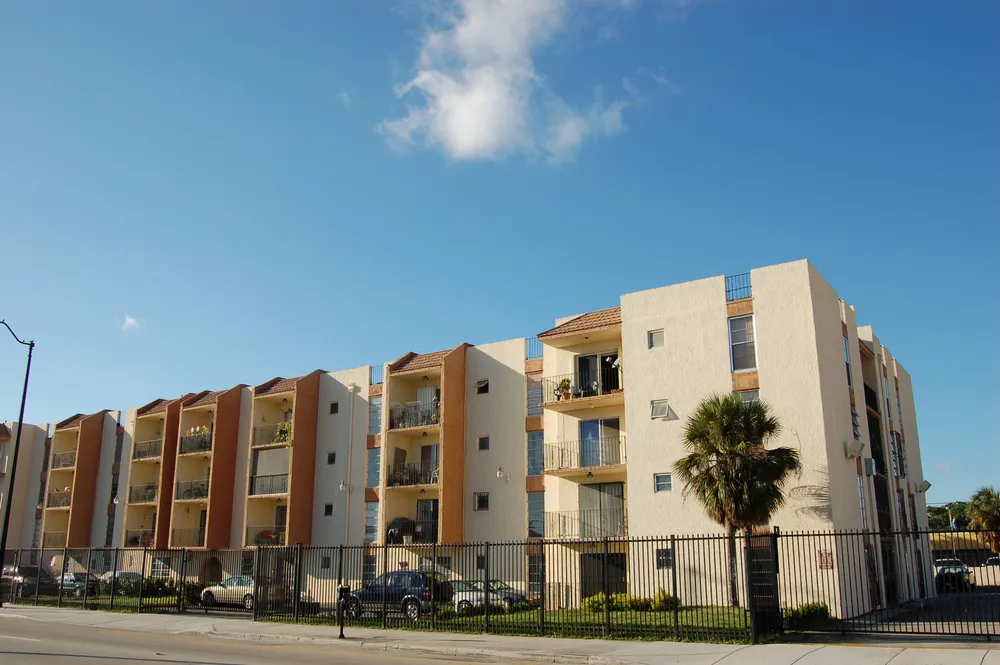
The properties generating the strongest cash flow in South Florida are not the ones most investors notice first. Polished Class A buildings, waterfront luxury units, and newly built complexes attract attention but compress returns. Experienced investors working in Miami-Dade and Broward County are instead buying mobile home parks, working-class rental portfolios, and properties in neighborhoods that still look rough around the edges.
Lawrence Resnick, a Realtor with The Paz Group who specializes in commercial and multifamily deals across Broward and Miami-Dade County, works primarily with full-time investors who buy portfolios. “All the stuff that’s not pretty is all the stuff that makes money,” Resnick says.
Why Class A Underperforms on Yield
A polished, well-located property offers lower vacancy risk, easier management, and tenants who pay on time. But Resnick notes these advantages come at a cost: compressed returns. Premium assets command premium prices, and the ratio of income to purchase price shrinks as quality rises.
For investors who measure success by cash-on-cash return rather than appreciation alone, the distinction is significant. A luxury condo that appreciates steadily but throws off minimal monthly income looks very different on a spreadsheet than a working-class rental building generating consistent cash flow from day one, even if the latter requires more active management.
Resnick’s recent deals illustrate the scale his investor clients operate at: a $10.5 million mobile home park in Georgia and a $16.8 million portfolio of over 100 affordable rental units across more than 50 buildings in Broward County. These are not passive investments. They demand attention, systems, and tolerance for operational complexity. “The things that take a little bit of effort end up yielding the highest return,” Resnick says.
The Neighborhoods Investors Are Targeting
Within Miami-Dade, Resnick identifies several pockets where his investor clients are concentrating capital: Hialeah for working-class rentals with reliable tenant bases, and a cluster that includes Little Haiti, Little Havana, Little River, and Buena Vista for properties in gentrifying corridors. In Broward County, he points to Sistrunk and Oakland Park.
These are not neighborhoods that appear on lifestyle magazine lists. They are areas where property values have risen sharply in a short window. Resnick notes that the Buena Vista and surrounding Miami pocket was visibly run-down just a few years ago. “Now you can’t get an unlivable property for under a million dollars,” he says.
That rapid appreciation cuts both ways for investors entering now. The prices that made these areas compelling three or four years ago are gone. An investor entering today pays significantly more and accepts lower yields than early movers received, while taking on the same operational demands.
The Effort Tax is Real
This is the piece that investors with day jobs who want to park capital passively tend to underestimate. Resnick’s clients do this full time. They are not doctors or professionals looking for a low-maintenance place to deploy savings. They are operators who treat portfolio management as their primary occupation.
For a smaller investor considering a first rental property in one of these Miami-Dade neighborhoods, the returns Resnick describes come with a corresponding level of involvement: tenant management, maintenance, turnover, and the legal logistics of operating rental housing. Florida’s landlord-friendly legal framework helps; Resnick notes that eviction timelines run 30 to 60 days, compared to states like Pennsylvania, where he started his career and where the process can be far more drawn out. But faster evictions do not eliminate the daily work of managing tenants and buildings.
The pricing gap between Class A yields and working-class asset yields remains wide enough to attract capital. But the barrier to entry is no longer price alone; it is bandwidth, operational skill, and realistic expectations about what “not pretty” demands of an owner on a weekly basis.
A Stabilizing Market Favors Operators
Resnick sees the broader Miami-Dade market as having settled after the post-COVID price surge. Sellers who remain anchored to 2022 prices are sitting on the market, he cites a residential listing originally priced at $5 million that has dropped to $4.2 million, while properly priced properties move within weeks. For investors, this stabilization means fewer bidding wars and more room to negotiate, particularly on the unglamorous asset types where fewer buyers compete.
Florida’s continued population growth reinforces the demand side. Resnick cites a statistic he recently encountered: over 500 new residents arriving daily while New York loses just over 100 per day. “That can’t mean anything bad,” he says. “The prices will continue to stay stable or may go up a little bit because of supply and demand.”
For operators willing to do the work, that population pressure supports rental income across the working-class properties where Resnick’s clients concentrate. The opportunity is real, but so is the operational cost of capturing it.
About the Expert: Lawrence Resnick is a Realtor at The Paz Group, focusing on commercial and multifamily transactions across Miami-Dade and Broward County. He began his real estate career in Philadelphia 12 years ago.
This article is intended for informational purposes only and does not constitute legal, financial, or investment advice. The views and opinions expressed herein reflect those of the individuals quoted and do not represent an endorsement of any company, product, or service mentioned. Readers should conduct their own due diligence and consult qualified professionals before making any investment decisions.
Similar Articles
Explore similar articles from Our Team of Experts.