
In today’s residential construction market, real estate professionals are increasingly stepping in to catch functional flaws in home designs, problems that often go unnoticed by archit...

In Dallas-Fort Worth's Outer Suburbs, Buying a Home Means Committing for a Decade

Written by:
Date:
19 Aug 2026
Share via Facebook

Share via Linkedin

Share via X

Copy to clipboard

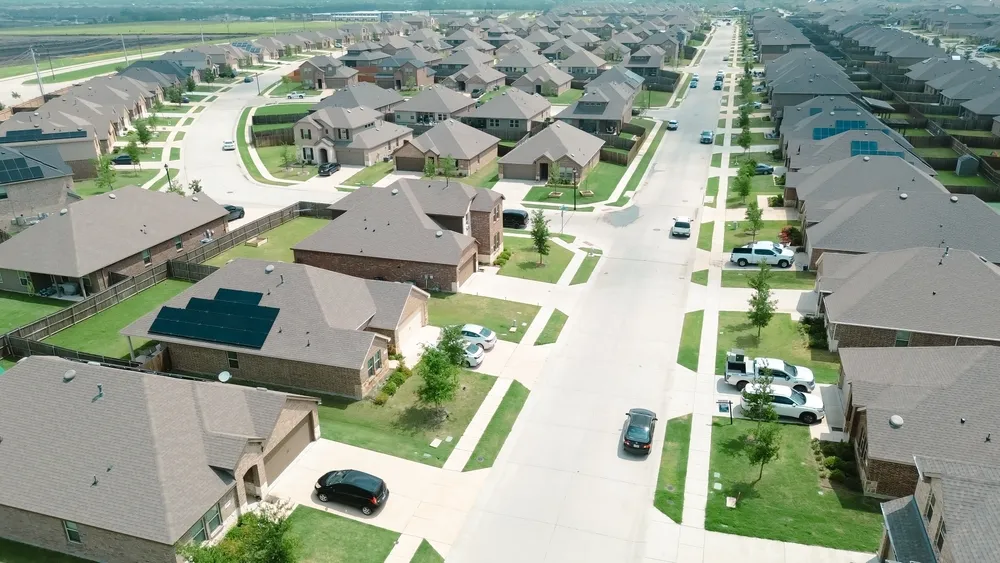
If you’re shopping for a home in one of the fast-growing communities on the edges of the Dallas-Fort Worth metroplex, the math on building equity looks very different than it did a few years ago. The typical three-to-five-year ownership timeline, long considered enough to build a cushion before selling, may leave you competing directly against brand-new builder inventory when it’s time to list. In these outer suburbs, you may need to stay put twice as long.
Skyler McKinley, a Realtor with eXp Realty who has spent over 12 years working in north Collin County and the surrounding Dallas-Fort Worth area, says the dynamic is reshaping how she counsels buyers considering communities like Anna, Melissa, Princeton, and Prosper. These are areas where national builders are actively constructing homes, and that pipeline isn’t slowing down.
Why Builders Hold the Upper Hand
Builders can absorb costs that individual homeowners cannot. They buy down interest rates aggressively, cover closing costs, and lower their margins to move inventory. A homeowner who purchased in 2020 or 2021 and wants to sell today doesn’t have the financial flexibility to match those incentives.
McKinley describes the situation bluntly: “You’re competing with builders with monopoly money who can buy down rates super competitively.” A resale home in these outer suburbs – no matter how well-staged or photographed – faces a structural pricing disadvantage against a brand-new home next door offering lower upfront costs.
The result is visible in days on market. In more established areas like Wiley, where new construction is limited, McKinley says listings are moving within about a month. In the outer suburbs with heavy builder activity, homes that don’t sell in that first window tend to linger far longer. If a listing doesn’t move quickly, she says, “buckle up, buttercup, you’re going to be here for a minute.”
The Hold-time Calculation Changes
This dynamic directly affects how long a buyer needs to plan on staying. In a typical market, owning for three to five years gives most homeowners enough equity appreciation to cover transaction costs and come out ahead. But in areas where new construction will continue for years, McKinley says that timeline isn’t realistic.
Her guidance is more conservative: “We really want you to try and hang out 8 to 10 years” in these outer suburbs. Builder competition won’t disappear in five years; these areas are still expanding, still attracting new construction. A homeowner who sells at the five-year mark will likely still be listing against brand-new homes with rate buydowns and fresh appliances.
That’s a meaningful commitment, and it doesn’t suit every buyer. Someone who isn’t settled in their career, isn’t sure they’ll stay in the area, or anticipates a life change within five years may find that renting makes more financial sense than buying in these communities. McKinley notes that renting removes the risk of being forced to compete with builders on the sell side before you’ve built meaningful equity.
What This Means if You’re Deciding Between Suburbs
The distinction isn’t between buying and not buying – it’s between where you buy and how long you’re prepared to stay. Established suburbs closer to the center of the metroplex, where new construction is limited and the housing stock is varied, still offer a more traditional equity-building timeline. The outer ring demands a longer commitment.
For buyers drawn to these growing communities by lower prices, the trade-off is concrete. You may get more house for less money upfront, but your exit strategy narrows considerably. The risk isn’t that the home will lose value permanently; it’s that for the better part of a decade, your competition on resale will be a builder offering incentives you can’t match.
McKinley notes that pricing in these outer areas has been a moving target through 2026, with sellers needing repeated price adjustments to find where the market will respond. That instability adds another layer of uncertainty for anyone planning a shorter hold.
In communities where builders like Lennar and D.R. Horton’s Express line are producing homes in the high $100,000s to low $200,000s, the sheer volume of similar inventory makes it difficult for any single resale listing to stand out, even years from now. An investor or owner-occupant buying at those price points enters a market where dozens of nearly identical homes will be listed alongside theirs whenever they decide to sell.
For buyers who can commit to the timeline, these communities offer real value, lower entry costs, new school districts, and growing infrastructure. But the decision to buy here is inseparable from the decision to stay. Anyone treating these outer suburbs like a stepping-stone purchase is underestimating how long the builder competition will last.
About the Expert: Skyler McKinley is a Realtor with eXp Realty, working primarily in Collin and Denton Counties in the Dallas-Fort Worth metroplex.
This article is intended for informational purposes only and does not constitute legal, financial, or investment advice. The views and opinions expressed herein reflect those of the individuals quoted and do not represent an endorsement of any company, product, or service mentioned. Readers should conduct their own due diligence and consult qualified professionals before making any investment decisions.
Similar Articles
Explore similar articles from Our Team of Experts.