

The conventional wisdom for fixing troubled public spaces has long centered on massive capital expenditures, tear everything down and rebuild from scratch. But Dan Biederman, President of th...

In North Texas, New Construction Is Reshaping the Math for Resale Sellers

Written by:
Date:
19 Aug 2026
Share via Facebook

Share via Linkedin

Share via X

Copy to clipboard

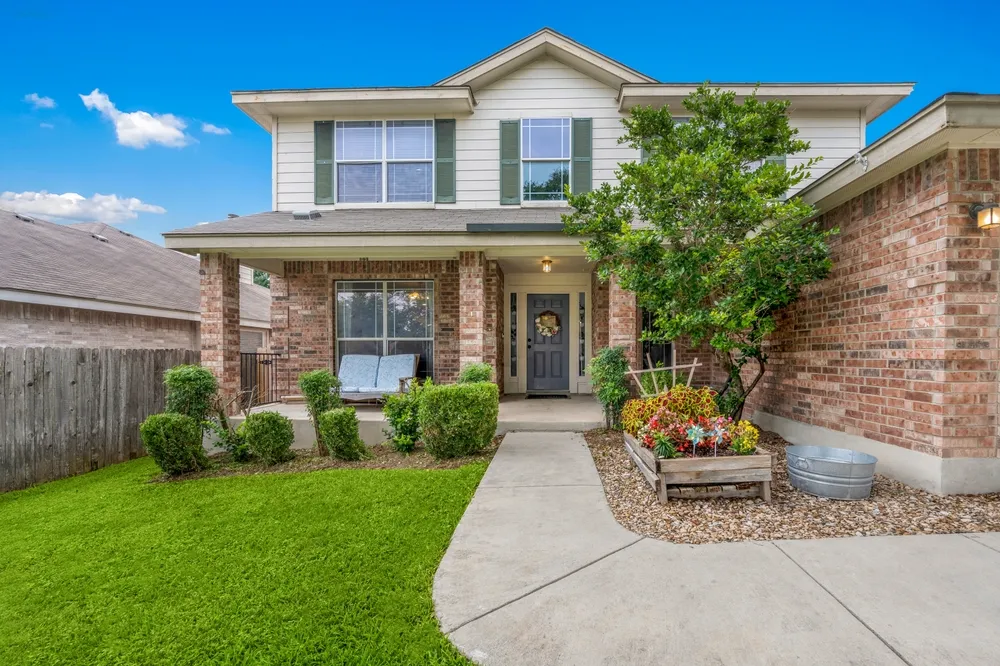
The Dallas-Fort Worth metroplex has more than 200 cities and suburbs, and it continues to expand outward. That expansion has flooded outer suburbs with new construction inventory, and the downstream effects are now visible in longer days on market, price corrections, and a shifting calculus for both resale sellers and rental investors trying to compete.
The dynamic is straightforward: builders can buy down interest rates, cover closing costs, and reduce margins in ways that individual homeowners cannot. Resale sellers in suburbs where new construction is concentrated face an asymmetric competition they weren’t prepared for.
“You have to be cognizant that you’re competing with builders with monopoly money who can buy down rates super competitively, that can cover all the closing costs, and that can lower the price of their product and just lower their margins,” says Skyler McKinley, a Realtor with eXp Realty who works primarily in Collin and Denton Counties. Homeowners who purchased between 2020 and today lack the equity or financial flexibility to match those incentives.
Where Geography Determines Velocity
Market performance across the metroplex splits along geographic lines. More established suburbs, McKinley cites Wiley as an example, are still moving homes within about a month. These areas have less new construction competition, which means resale listings compete primarily against other resale listings rather than against builder incentives.
The outer suburbs tell a different story. Areas like Prosper, Celina, Anna, Melissa, and Princeton, where builders like Lennar and D.R. Horton’s Express line are producing homes in the high $100,000s to low $200,000s, have seen days on market stretch considerably. Sellers in these areas are lowering prices and offering rate buydowns to stay competitive. “If you aren’t selling within the first month, then buckle up, you’re going to be here for a minute,” McKinley says.
The pricing challenge has been compounded by buyers broadening their search areas. Where a buyer might previously have focused on a single school district, they’re now looking across 30-mile stretches. That wider search radius means more competition for every listing and more time for buyers to deliberate.
The Investor Trap in Outer Suburbs
For investors considering rental properties, the same geographic logic applies, and the risk of ignoring it is significant. The affordable new construction that attracts investors to outer suburbs attracts many of them simultaneously, creating a glut of nearly identical rental inventory.
“There are a lot of rentals. If it’s very affordable, we’re seeing this in Princeton,” McKinley says. “Investors can swipe them up. And there’s too much of it. There’s nothing that makes you stand out.”
McKinley’s guidance for investors seeking rental property: focus on established suburbs like Plano, Allen, or Frisco, where proximity to highways and shorter commute times create a broader tenant pool. In outer suburbs, a renter’s options are geographically constrained; they need to specifically want that area. In centrally located suburbs, a tenant can commute west or south without doubling their drive time, which widens the pool of potential occupants.
The priority for rental condition is practical rather than aesthetic. “I would not worry about flashy. You want clean, you want sealed up, you want a place that feels safe,” McKinley says.
A Market Paused by Uncertainty
The broader cooling, which McKinley calls a stabilization rather than a downturn, stems from two forces. Supply has outpaced demand as new construction continues while buyer urgency has diminished. And global uncertainty has made buyers who don’t need to move reluctant to commit.
“Whenever people are uncertain about the economy or about war or the future, whether it’s conscious or unconscious, we tend to find that people just, if they don’t have to move, are going to sit still for a second and figure out what’s happening next,” she says.
The year started with momentum. McKinley says the first quarter or two of 2026 felt stronger than 2025. Then geopolitical events and interest rates that didn’t decline as expected stalled that trajectory. She notes she’s still seen multiple offers across every price point this year; the market is active, just operating at a different pace.
What’s Working for Resale Sellers
In areas with less new construction pressure, preparation before listing is making the difference. McKinley describes recent listings in Wiley where sellers replaced HVAC systems, roofs, range ovens, and carpet before going to market. Those homes sold without significant price concessions.
The logic: in established suburbs, the competition is other pre-owned homes, and condition becomes the differentiator rather than builder incentives. In areas near new builds, the tactics shift to price reductions and rate buydowns. The approach is entirely location-dependent; in this metroplex, market conditions can vary substantially within a few miles.
New Construction Also Favors Buyers
McKinley sees the current environment as particularly favorable for first-time buyers. Seller concessions can often cover upfront costs – something that wasn’t available for much of the past decade. “This is one of the most affordable times to get into a home as far as upfront cost goes,” she says.
But buyers considering outer suburbs where new construction dominates need to plan for longer hold periods. Because resale homes in those areas will compete against builders for years, McKinley suggests buyers be prepared to stay eight to ten years rather than the typical three to five. Shorter ownership periods risk selling back into the same builder competition that currently depresses resale prices.
For buyers uncertain about committing to an area for that long, McKinley recommends renting as a deliberate strategy rather than a fallback, particularly while builders continue to expand outward and pricing in those corridors remains in flux.
About the Expert: Skyler McKinley is a Realtor with eXp Realty, working primarily in Collin and Denton Counties in the Dallas-Fort Worth metroplex.
This article is based on information provided by the expert source cited above. It is intended for general informational purposes only and does not constitute legal, financial, or real estate advice. Readers should conduct their own research and consult qualified professionals before making any real estate or financial decisions.
Similar Articles
Explore similar articles from Our Team of Experts.