

If you’ve toured a property, applied for a loan, or signed a lease recently, you likely interacted with artificial intelligence (AI) without realizing it. In commercial real estate, AI now...

In Katy, Texas, Getting Pre-Approved for $350K Doesn't Mean You Should Spend It

Written by:
Date:
21 Aug 2026
Share via Facebook

Share via Linkedin

Share via X

Copy to clipboard

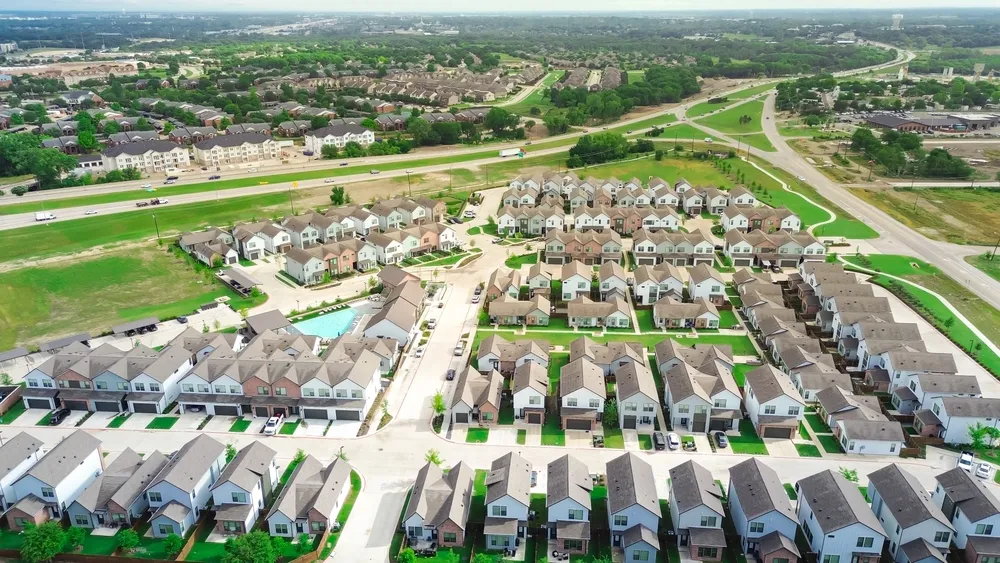
A lender tells you that you qualify for $350,000. You start browsing listings at that number. Within weeks, you are under contract on a home that stretches your monthly budget past the point of comfort. In the affordable Houston suburbs, this pattern is playing out repeatedly in 2026 – and the borrowers most at risk are first-time buyers who confuse a qualification ceiling with a spending target.
Rickey Chavez, Team Lead of the Rickey Chavez Team at Better Homes and Gardens Real Estate Gary Greene, covers the Katy, Cypress, and Tomball markets northwest of Houston. He describes a recent first-time buyer who was pre-approved for $350,000 but whose comfortable monthly payment did not support that purchase price. “We don’t want him to be house poor,” Chavez says. The team’s priority was making sure the buyer could still afford life beyond the mortgage – savings, maintenance, extras.
The disconnect between what a lender approves and what a buyer can sustainably afford is not new. But Chavez argues it has grown more dangerous in a market where affordability looks good relative to coastal cities, interest rates run above six and a half percent, and builder incentives create the appearance of lower costs without reducing the underlying loan balance.
The Gap Between Qualified and Comfortable
Pre-approval letters are underwriting calculations. They assess debt-to-income ratio, credit score, and verified income. They do not assess whether the resulting payment leaves enough margin for property taxes that rise after the first year, maintenance once a builder warranty expires, or lifestyle spending a buyer is unwilling to give up.
In the Houston suburbs, where a $350,000 home is genuinely attainable for many dual-income households, the temptation is to stretch to the maximum because the monthly number does not look alarming compared to rent in other metros. Chavez says buyers “really aren’t as educated as they were before” about what total homeownership costs look like beyond principal and interest.
He describes working with the young buyer to identify a monthly obligation that left breathing room – where “they’re not locked into a house that they are hand to mouth now.” That meant shopping below the pre-approval ceiling, which required the buyer to recalibrate expectations about square footage, finishes, or neighborhood.
Why This Matters More in a High-Inventory Market
The Katy and Cypress areas currently have elevated resale inventory and aggressive new-construction incentives. According to Chavez, builders are offering substantial packages – up to $80,000 in flex spending from one builder, $40,000 in design upgrades from another – to motivate buyers to choose new construction over resale. When a builder offers a bought-down interest rate as low as 4.99 percent alongside these incentives, the monthly payment on a more expensive home can look deceptively manageable.
But the base loan amount has not changed. The taxes have not changed. A buyer who stretches to $350,000 using a temporarily bought-down rate may find their payment resets upward when the buydown period ends. The monthly math that felt comfortable at signing can tighten quickly.
Chavez notes that new construction is competing directly with resale homes – a $625,000 new build with incentives can match the effective cost of a $600,000 resale. That comparison makes new construction appealing, but it also pulls buyers toward higher price points than they originally intended.
This is not an argument against buying. The Houston suburbs remain among the more affordable large-metro markets in the country, and a buyer who prices conservatively is in a strong position. The argument is against treating a pre-approval letter as a shopping floor rather than an absolute ceiling.
What to Pressure-test Before Committing
Chavez’s approach with that first-time buyer involved working backward from a comfortable monthly payment to a purchase price, rather than forward from a qualification amount to a home. That meant starting with what the buyer could pay each month without stress, subtracting estimated taxes, insurance, and HOA fees, and only then identifying the loan amount the number supported.
For buyers in the Katy and Cypress markets, the relevant costs to pressure-test include property tax rates in the specific MUD or utility district, homeowner’s insurance quotes, and HOA fees that in master-planned communities can run several hundred dollars monthly. A pre-approval letter accounts for none of those at the granular level a buyer needs.
Chavez frames the stakes simply: buyers who max out their qualification amount lose the ability to absorb unexpected costs – a rate adjustment, a tax reassessment, a repair the warranty does not cover. The ones who buy below their ceiling keep options open.
About the Expert: Rickey Chavez is Team Lead of The Rickey Chavez Team at Better Homes and Gardens Real Estate Gary Greene, covering the Katy, Cypress, Tomball, and Hockley areas of Houston. His team speaks seven languages and works extensively with international relocations through the firm’s relocation program.
This article is intended for informational purposes only and does not constitute legal, financial, or investment advice. The views and opinions expressed herein reflect those of the individuals quoted and do not represent an endorsement of any company, product, or service mentioned. Readers should conduct their own due diligence and consult qualified professionals before making any investment decisions.
Similar Articles
Explore similar articles from Our Team of Experts.