

“We’re experiencing a strong buyer’s market with abundant inventory. There’s an imbalance—many sellers, fewer buyers,” explains Todd Siegrist, a seasoned Real...

South Jersey's Price Advantage Is Drawing North Jersey Investors Southward

Written by:
Date:
18 Aug 2026
Share via Facebook

Share via Linkedin

Share via X

Copy to clipboard

For years, South Jersey sat below the radar of most New Jersey real estate investors. Price points were low relative to the rest of the state, appreciation was modest, and attention flowed northward toward denser, higher-value markets closer to New York City. That dynamic has changed substantially since 2020, according to Shelby Morgan, Broker/Owner of Morgan Capital Real Estate in Blackwood, New Jersey. The region’s relative affordability, once a sign of being overlooked, has become the primary driver of capital flowing in from more expensive parts of the state.
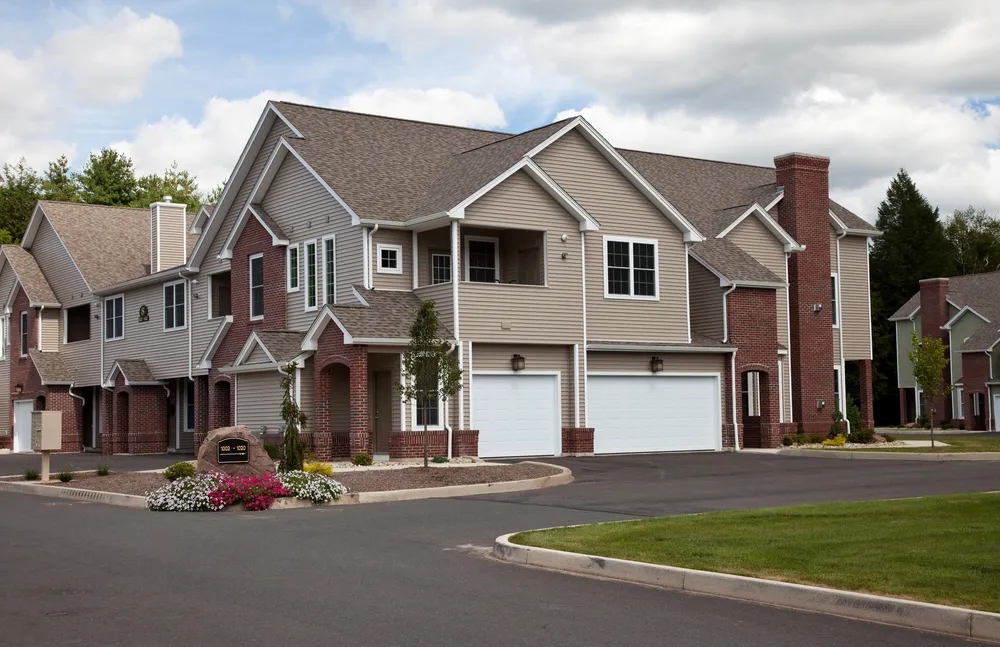
The pattern is visible in individual transactions. Morgan describes a regular client who lives in North Jersey and purchases rental properties in the southern part of the state specifically because of the price differential. The client recently bought a townhome in Marlton for $355,000. “If she were to purchase this exact property in her neighborhood, it would be closer to $500,000,” Morgan says.
That spread between comparable properties in southern and northern New Jersey is what makes the region attractive to investors seeking rental yield or equity through rehab-and-sell strategies. But the gap has been compressing. Morgan points to a townhome community in Atlantic City where units sold for $70,000 to $90,000 in 2019 and now trade above $300,000, a more than threefold increase in roughly six years.
Who’s Buying and Why
The buyer mix in South Jersey reflects the region’s dual identity as both an affordable family market and an investor destination. Families are drawn by school districts, suburban density, and proximity to multiple employment centers; Philadelphia is 30 minutes from the Marlton area, the state capital is roughly the same, and shore communities are within an hour.
Investors span several strategies. “If you want to buy and sell, there are still some underdeveloped areas where there’s equity available,” Morgan says. “If you want to go to the rental market, there are areas with a high rental market. If you want to build, there’s farmland all over.”
The Affordability Squeeze on First-Time Buyers
Despite being one of the state’s lower-cost markets, South Jersey faces the same affordability pressures that have defined the past two years. High interest rates have made single-family homes difficult to reach for certain income brackets, and buyers who shift to townhomes face homeowner association fees that eat into their monthly budgets.
Morgan, who also works as a mortgage loan originator with Acre Mortgage in Marlton, says New Jersey’s first-time homeowner programs are a critical tool. Some offer between $10,000 and $22,000 toward down payment and closing costs, depending on the program and borrower eligibility. “We just evaluate each case and fit them in the best place possible,” she says.
On the origination side, Morgan attributes deal stability to front-loading documentation. Her practice is to collect all necessary documents and verify that a buyer meets Freddie Mac or Fannie Mae guidelines before issuing any approval. “If for some reason they don’t meet the guidelines, we work with them to get them ready,” she says. Morgan says front-loading the review process helps identify and address potential eligibility issues before the file reaches underwriting.
Sellers Are Adjusting, Slowly
The seller’s market that dominated for roughly five years is beginning to soften, though Morgan describes it as a gradual phase rather than a correction. Pricing strategy has become more nuanced as a result.
Morgan’s approach is to discuss potential costs, seller concessions, buyer agent commissions, and repairs before setting a list price, so both sides can be served without mid-transaction surprises. She prices properties with those contingencies already factored in, calibrated to the area, the condition of the home, and the most likely buyer profile.
The rate environment compounds the adjustment. Sellers locked into mortgages at 3, 4, or 5 percent face a practical dilemma: selling means buying again at 7 percent. “It creates a problem for them as well,” Morgan notes. That lock-in effect constrains inventory, which in turn keeps prices elevated even as buyer demand softens at the margins.
What to Watch
Morgan identifies interest rates as the single most important variable for the South Jersey market over the next year. “We’ve had a spike, really the largest spike in interest rates in at least a year,” she says. “Hopefully it will stabilize and give buyers and sellers more opportunity.”
The region’s performance through this rate environment has been notable. South Jersey overall has remained resilient in home values over the past five or six years, according to Morgan, even as rates reached their highest levels. She attributes this resilience to the fact that the area was undervalued relative to the rest of the state before appreciation began accelerating after 2020.
For buyers weighing South Jersey against more expensive parts of the state, the calculus remains favorable but increasingly time-sensitive. Prices that once signaled an overlooked market now reflect sustained demand from both local families and outside investors. The entry point is higher than it was even two years ago, and if rates stabilize, Morgan expects activity from both buyers and sellers to increase, which could push prices further before any meaningful supply catches up.
About the Expert: Shelby Morgan is a Broker/Owner of Morgan Capital Real Estate in Blackwood, New Jersey, and also works as a mortgage loan originator with Acre Mortgage in Marlton, New Jersey.
This article is based on information provided by the expert source cited above. It is intended for general informational purposes only and does not constitute legal, financial, or real estate advice. Readers should conduct their own research and consult qualified professionals before making any real estate or financial decisions.
Similar Articles
Explore similar articles from Our Team of Experts.