

The story of people leaving big cities for Montana took hold during the early 2020s and became familiar shorthand for a certain kind of relocation. What is less understood from outside the s...

South Jersey Looks Affordable Until You See the Property Tax Bill

Written by:
Date:
13 Aug 2026
Share via Facebook

Share via Linkedin

Share via X

Copy to clipboard

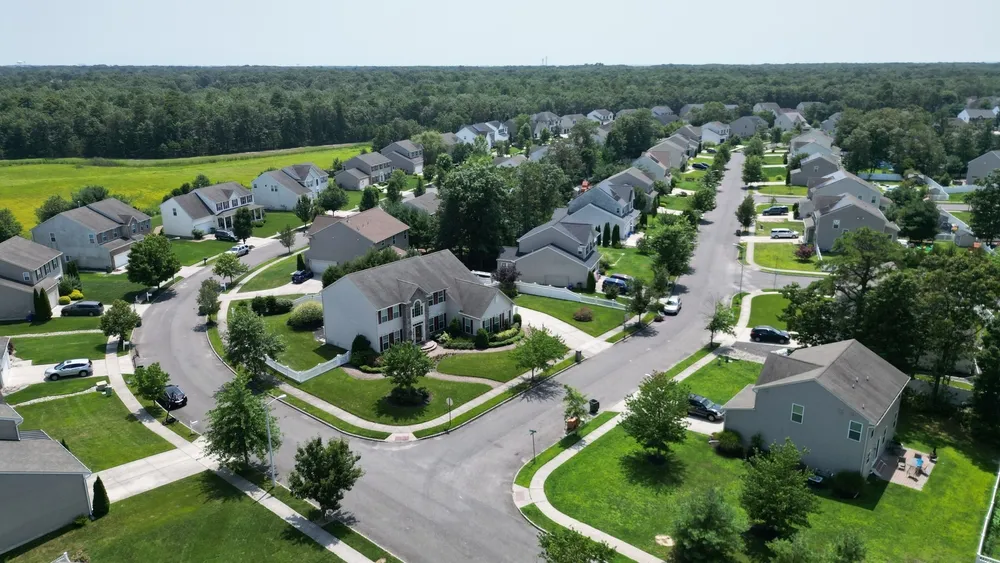
Buyers relocating to South Jersey from New York or North Jersey often arrive expecting a bargain. Home prices are lower, lots are bigger, and commute access to Philadelphia remains strong. But the sticker price is only half the equation, and property taxes blindside people who haven’t done their homework, according to Maria Robles, a Realtor Associate Broker with Real Broker, LLC, who has worked in South Jersey for 21 years.
Out-of-state buyers routinely underestimate what they’ll owe annually. They arrive with budgets built around their current state’s tax rates and discover that New Jersey operates on an entirely different scale.
The Gap Between Expectation and Reality
Robles describes a common scenario: buyers coming from markets where $4,000 to $5,000 a year in property taxes feels normal. They assume South Jersey will land in a similar range since home prices are lower than where they’re coming from. The reality is different. According to Robles, “the average is probably around 8 to 9,000, I would say for New Jersey,” and depending on the municipality, the number can climb beyond that.
On a monthly basis, the difference between a $5,000 annual tax bill and a $9,000 one adds roughly $330 to the housing payment. For a buyer already stretching to reach South Jersey’s entry-level range of $350,000 to $400,000, that gap can disqualify homes they thought were within reach.
Reassessments Add Uncertainty
The tax picture has grown more complicated recently. Robles notes that South Jersey has recently seen a lot of reassessments, meaning the tax bill a seller paid last year may not reflect what a new buyer will owe. Reassessments can push annual taxes higher, particularly in towns where home values rose sharply but official assessments lagged behind.
For buyers, this means the property tax figure listed on a home’s MLS sheet may already be outdated. The only reliable step is to check whether the municipality has recently reassessed or plans to – information that doesn’t surface in a casual search.
Taxes Redraw the Map of Where Buyers Can Shop
Property taxes in South Jersey don’t just add cost; they narrow or expand a buyer’s geographic options depending on monthly budget. A buyer who can afford a $500,000 home in a low-tax municipality might only qualify for a lower price in a high-tax one, because lenders account for the full monthly obligation, including taxes.
Robles says she steers her investor clients away from some of the most expensive tax areas – places where annual bills climb high enough to erode rental returns or make resale harder. For owner-occupants, the calculation is similar: a home in a high-tax town may look like a deal on price alone, but the monthly reality tells a different story.
This tax awareness also shapes how Robles advises buyers on location. She directs them toward towns where she knows demand is strong but costs remain manageable, and away from areas where property taxes or negative school perceptions reduce resale appeal. “Your dollar stretches further here in South Jersey than it would in maybe North Jersey,” Robles says, but that stretch only works if taxes are factored in from the start.
Monthly Costs Now Drive Buyer Decisions
Robles says today’s buyers are more focused on total monthly expenses than on purchase price alone. Where previous generations of buyers fixated on negotiating the sale price down by a few thousand dollars, current buyers want to know what their electric, gas, water, and sewer bills will be, on top of the mortgage and taxes. That shift in attention makes property tax variation between towns even more consequential than it was five years ago.
For any out-of-state buyer considering South Jersey, one concrete step applies before touring a single property: look up the specific tax rate and most recent assessment date for every municipality on the short list. The variation between neighboring towns can be thousands of dollars annually, and no amount of curb appeal offsets a monthly payment that exceeds what a household can sustain.
About the Expert: Maria Robles is a Realtor Associate Broker with Real Broker, LLC, who has worked in South Jersey for 21 years.
This article is intended for informational purposes only and does not constitute legal, financial, or investment advice. The views and opinions expressed herein reflect those of the individuals quoted and do not represent an endorsement of any company, product, or service mentioned. Readers should conduct their own due diligence and consult qualified professionals before making any investment decisions.
Similar Articles
Explore similar articles from Our Team of Experts.