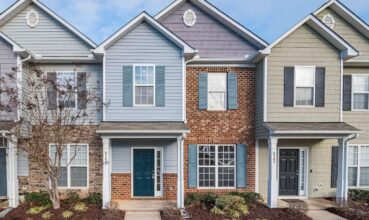

The real estate market in Conway, Arkansas, illustrates the challenges and adjustments now facing fast-growing communities across the country. As one of Arkansas’s most active housing mark...

Cleveland's B and C Class Multifamily Market Is Normalizing — and Some Owners Who Bought at the Peak Are Running Out of Room

Written by:
Date:
18 Aug 2026
Share via Facebook

Share via Linkedin

Share via X

Copy to clipboard


In Cleveland’s multifamily investment market, the frenzied pace of 2021 and 2022 has given way to something more measured. Properties that once drew multiple offers within days of listing are now sitting longer. Sellers who acquired buildings during the low-rate era are discovering that what they paid and what the market will bear today are two different numbers, and some are facing real financial pressure as a result.
Tal Tamir, Founder of Premier Cleveland Investing, a real estate team specializing in B and C class apartment buildings and portfolio sales, has facilitated approximately $230 million in transactions covering around 3,000 units since December 2017. His read on the current market: conditions have normalized, not collapsed, but the adjustment is painful for a specific cohort of owners.
“A lot of people bought three, four years ago at the peak of the market, the absolute lowest interest rates that we’ve seen in a long time,” Tamir says. “And now they’re trying to sell. And to do that, they’re in a very tight spot.”
The Spread That No Longer Works
The mechanical problem is simple. When debt was available at 3%, a property trading at a 6 or 7 cap rate generated meaningful positive leverage; the gap between the cost of capital and the return on the asset created profit. With financing now in the 6.5% range, according to Tamir, that spread has compressed to the point where leveraged returns on a 6 or 7 cap acquisition are minimal or nonexistent.
The result is a market where buyer expectations and seller needs have diverged. Buyers are underwriting conservatively, adjusting cap rate expectations upward. Sellers who purchased at peak pricing need to ask for more than current market value just to recover their basis. Neither side is irrational; they are operating from different reference points.
“Things have normalized a little bit,” Tamir says. “I like to see it more as almost like a normalization, getting back to reality post-Covid, post 3% interest rates.”
Distress Is Beginning to Surface
While the broader market has shifted gradually, a subset of owners is under acute pressure. Some face bank issues and foreclosure proceedings. Others are not in immediate distress but are stuck, unable to sell at a price that makes them whole and unwilling to accept the loss.
Tamir expects this dynamic to intensify over the next twelve months. “I do think there’s going to be more blood in the water,” he says. “There’s going to be more bank deals, more foreclosures, more people that actually have to sell even if they’re getting out at a loss.”
For buyers watching from higher-cost markets, this emerging distress creates an entry point. Cleveland’s B and C class properties still offer double-digit cash-on-cash returns, according to Tamir, drawing capital from investors in Seattle, New York, and California who cannot achieve comparable cash flow at home.
What Out-of-State Buyers Get Wrong
The primary mistake Tamir sees from distant investors is conflating price with value. A property listed at $40,000 per unit looks compelling on a spreadsheet, until you learn it sits in one of the city’s most challenging neighborhoods.
“On paper it looks great,” he says. “They’ll send me a deal like, ‘Oh, this looks amazing, it’s 40 grand a unit.’ I’m like, yeah, you’re in like the worst part of Cleveland hands down.”
The gap between what data shows and what conditions actually look like on the ground is wide enough to produce costly errors. Most of Premier Cleveland’s buyer clients are out of state or out of the country, arriving without a local team. Tamir says the real estate team connects them with property management, inspectors, and lenders, the full infrastructure required to operate remotely. When a buyer describes wanting B class properties but sends over a C minus deal, Tamir tells them directly that the property does not match their stated criteria and explains why.
Rents Holding in the B and C Segment
Despite the broader national conversation about softening rents, Tamir reports that rents in Cleveland’s B and C class properties remain strong. He attributes this partly to the Section 8 market, which provides a floor under rental income in many of the neighborhoods where his clients and his own portfolio operate.
“I was even looking at some comps the other day, and I’m just so surprised at how high the rents are compared to where they were three, four, five years ago,” he says.
This rent stability, combined with Cleveland’s relative affordability and institutional anchors – major healthcare systems, universities, and professional sports – underpins Tamir’s continued confidence in the market’s fundamentals.
How Deals Are Getting Done
The current environment rewards creativity on structure. Tamir describes a recent 130-unit deal near Lakewood, a popular Cleveland neighborhood, involving a converted hotel with a chopped-up layout, the kind of asset that sits on the market because conventional buyers cannot easily underwrite it. The buyer group came from Columbus, and the deal closed only after the seller agreed to hold some paper to bridge the gap between what financing would cover and what the seller needed.
Tamir says his team has gotten good at finding these difficult deals – unusual layouts, large portfolios, properties that have languished – and packaging them in ways that make sense to buyers willing to work through complexity.
On the syndication side, Tamir recently exited what he calls his last remaining deal in that format: a 90-unit property in Circleville, Ohio, purchased in May 2022 and sold two weeks before this conversation. The deal returned a low-20% average annual return to investors, with quarterly cash flow distributions throughout the hold period. Tamir now operates only properties he and his partner own directly, focused on Section 8 rentals and higher-equity deals.
The Year Ahead
Tamir’s outlook for the next twelve months is stability with pockets of forced selling. The market is not deteriorating broadly, but owners who overpaid or over-leveraged during the low-rate window will increasingly face a choice between accepting losses and losing their properties to lenders.
“Overall, I think the market’s gonna stay pretty similar to how it is right now,” he says.
For investors entering Cleveland from more expensive markets, the math still works on a cash-flow basis, but only if they distinguish between low price and actual value, and only if they have reliable local guidance to prevent the spreadsheet from overriding what the neighborhood actually delivers.
About the Expert: Tal Tamir is the founder of Premier Cleveland Investing, Northeast Ohio’s dedicated multifamily and portfolio team in the Cleveland, Ohio market.
This article is based on information provided by the expert source cited above. It is intended for general informational purposes only and does not constitute legal, financial, or real estate advice. Readers should conduct their own research and consult qualified professionals before making any real estate or financial decisions.
Similar Articles
Explore similar articles from Our Team of Experts.