

Wisconsin’s commercial real estate market is showing signs of stabilizing after several years of volatility, according to professionals active in the state’s key growth regions. ...

Construction Material Costs in Dallas-Fort Worth Have Risen 20 to 70 Percent Since 2022

Written by:
Date:
13 Aug 2026
Share via Facebook

Share via Linkedin

Share via X

Copy to clipboard

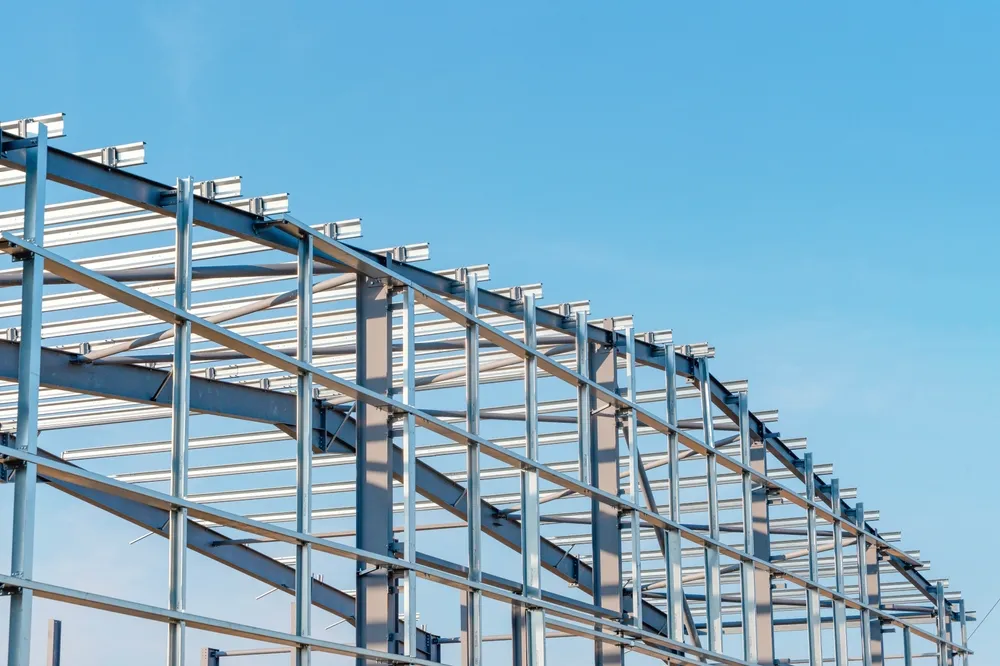
Home prices in the Dallas-Fort Worth metro are declining, but the cost of building anything continues to climb. That disconnect, cheaper finished homes, more expensive inputs, is compressing builder profits and creating budget surprises for owners who haven’t priced a project recently, according to Vamsi Emani, Chief Cost Estimator at Aguirre Project Resources (APR) in Dallas. With 15 years of estimating experience across projects ranging from $5 million to $1.8 billion, Emani tracks material and labor pricing across both public infrastructure and private development. The gap between what a building sells for and what it costs to construct has narrowed considerably since the pandemic, and anyone commissioning new construction in 2026 is working with a fundamentally different cost structure than four years ago.
Material Prices Are the Problem, Not Labor
The current cost environment has an unusual shape. Labor availability is adequate, contractors are willing to work, and competition for jobs is real. But material costs have surged. According to Emani, structural steel is up roughly 20 percent year over year. Copper wiring, which drives electrical costs, has jumped approximately 50 percent.
“People are ready to do the jobs,” Emani says. “But it’s the material price that’s way higher than in the previous years.”
Non-residential construction inputs are up more than 8 percent year over year, the sharpest increase since the pandemic, according to Emani. He attributes the increases to tariffs and geopolitical disruption. The result is that subcontractors are cutting their own profits to stay competitive during bidding, then filing change orders during construction to recover what they lost – a pattern that introduces cost uncertainty for owners even after a contract is signed.
“Contractors are struggling to get a good profit whenever a project is awarded to them,” he says. “They’ll have to file change orders or do something in order to get the profit for themselves.”
For owners and investors, this means a signed contract no longer locks in a final price. The bid number represents where costs stood on the day a subcontractor submitted it, not necessarily what the project will cost once construction is underway.
The 30-Percent Rule
One structural difference between public and private projects is when a cost estimator gets involved. Emani says public owners typically bring estimators on board at 30 percent design completion. Private developers often wait until design is 100 percent finished, and then discover they’re over budget.
The consequences of late involvement are specific. An owner who wants a glass elevator instead of a standard one is looking at $400,000 versus $100,000, according to Emani. That decision is best made at 30 percent design, when alternatives can still be substituted without reworking the entire plan.
“You don’t want to come up at a hundred percent and be out of budget already,” Emani says. “Hire us at 30 percent and get to know the cost and pick your alternatives at the early stage of the design so that you don’t have a surprise at the end.”
For private developers and real estate investors commissioning ground-up construction, this timing gap is a controllable risk. The estimate itself isn’t the problem; it’s when the estimate enters the process. At 30 percent design, an owner can swap materials, simplify systems, or eliminate features before those choices become embedded in finished drawings. At 100 percent, the same changes require redesign fees on top of the original overrun.
Unit Costs Are Moving Monthly
A common misconception Emani encounters is the assumption that subcontractor pricing remains stable for months at a time. In the current environment, material prices shift on a monthly basis, which means an estimate built with six-month-old unit costs can be significantly wrong by the time bids come in.
“The biggest misconception would be thinking the prices are really the same from the subcontractor that was like six months back,” he says. “Nowadays it’s changing on a monthly basis.”
This creates a practical problem for budget reconciliation. When an owner’s internal budget was set using older drawings or outdated pricing, comparing it against a current estimate produces gaps that look like errors but are actually timing differences. Emani says owners need to update their unit costs at least monthly to avoid this mismatch.
A Cooling Forecast for 2027
Emani adds escalation factors of 6 to 7 percent into current estimates – roughly double the general inflation rate – to account for material-specific price movement. But he expects construction costs to begin declining next year after several years of compounding increases since the pandemic.
“When these many jumps of escalations are there from the COVID time, I’m expecting it’s going to cool off at least the next year,” he says. “2027 is something; there might be lower construction costs.”
In the near term, he sees data centers as a growth driver in the DFW region, with electricity scarcity becoming a constraint as those projects multiply. For investors, he points to land acquisition in Texas paired with solar installations as a positioning strategy for the coming years. “Data centers are definitely something that’s going to boom in the next couple of years,” Emani says.
For owners planning ground-up construction in DFW, the immediate calculus is straightforward: material costs remain elevated, but the direction of those costs may reverse within 12 to 18 months. Projects that can defer procurement into 2027 without incurring delay costs may benefit from that cooling. Projects already underway face the current reality, monthly price movement, compressed subcontractor profits, and the change-order recovery pattern that follows.
About the Expert: Vamsi Emani is Chief Cost Estimator at Aguirre Project Resources (APR) in Dallas, with 15 years of experience in construction cost estimating across public infrastructure and private development projects.
This article is based on information provided by the expert source cited above. It is intended for general informational purposes only and does not constitute legal, financial, or real estate advice. Readers should conduct their own research and consult qualified professionals before making any real estate or financial decisions.
Similar Articles
Explore similar articles from Our Team of Experts.