

The self-storage industry has changed rapidly in recent years, forcing operators to adjust their strategies in response to rising interest rates, more complex market dynamics, and higher inv...

Bergen County, New Jersey, Is Pricing Out Its Own Buyer Pool. The Spillover Is Reshaping Neighboring Counties.

Written by:
Date:
12 Aug 2026
Share via Facebook

Share via Linkedin

Share via X

Copy to clipboard

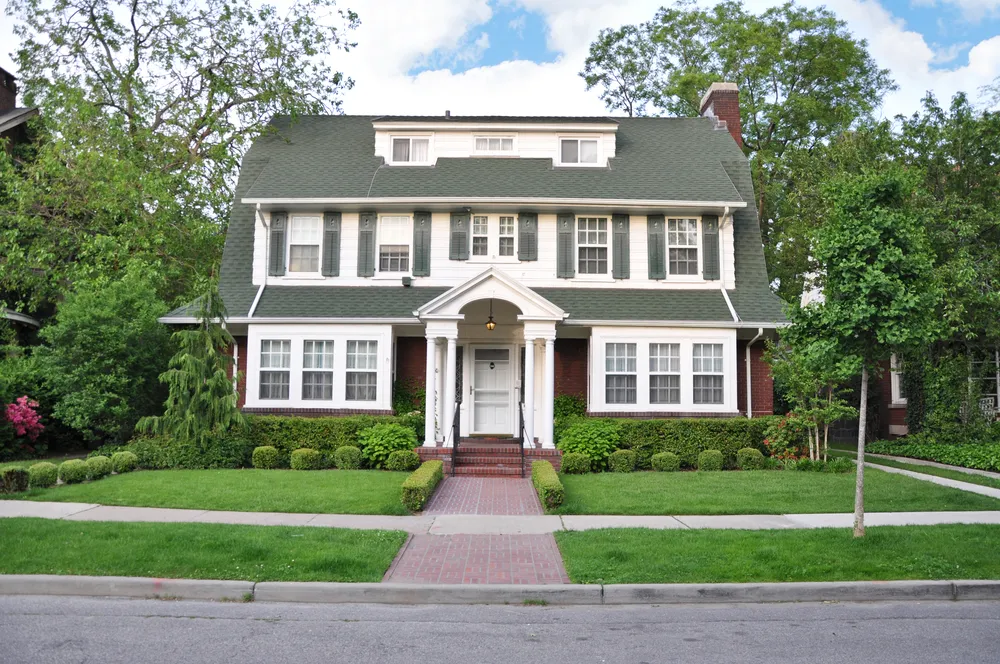
Bergen County has long been one of northern New Jersey’s most competitive residential markets; good schools, proximity to Manhattan, and distinct town-by-town character keep demand high. But affordability constraints and persistently tight inventory are now pushing a growing share of would-be Bergen buyers into Passaic, Essex, Morris, and Union counties, according to Heather Corrigan, a Realtor with RE/MAX Signature Homes who closes roughly 80 units a year across multiple northern New Jersey counties. Unless buyers can clear a certain price threshold, Bergen County often is not realistic. “Unless you can afford a certain price bracket in Bergen County and afford to go above a certain dollar amount, sometimes a lot of times we’ll have to take them outside Bergen County,” she says.
A Market Where Flood Zones Sell for $700,000
The tightness of Bergen County inventory shows up in surprising places. Corrigan is currently closing a property in Paramus – in a flood zone – for $700,000. An investor is purchasing it, plans to remodel, and will put it back on the market. That a flood-zone property commands that price illustrates how constrained supply has become.
Across her recent transactions, the range is wide but skews upward: a home in Saddlebrook listed at $949,000, a property in Oradell approaching $1 million, a Bergenfield sale at $590,000, a Hackensack condo at roughly $300,000. The entry point for single-family homes in desirable Bergen towns has effectively moved toward the million-dollar mark. “You could never get anything for three, four hundred thousand dollars, a house,” Corrigan says. “But you could get a one-bedroom condo, and what a great investment.”
For buyers who cannot reach single-family pricing, condos and townhouses represent the viable ownership path in Bergen County. Corrigan recently listed a townhouse in Lodi for $499,000, still a significant purchase, but well below what comparable single-family homes require.
The Rental-to-Ownership Pipeline
One pattern Corrigan identifies among her buyers is the transition from renting to purchasing – driven by the math becoming hard to ignore. She currently has a rental listing in Paramus at $5,400 per month.
“A lot of the time when it comes to renting, you’re paying pretty much what you would pay for a mortgage,” she says. “So a lot of times I’ll have people coming to me, they’re like, you know what, I’ve been renting for so many years. I’m ready to buy.”
The buyer pipeline also draws heavily from Hudson County, young professionals and families who purchased condos in Hoboken or Jersey City and are now ready to trade up. They sell the condo, use the equity, and attempt to land in Bergen County’s single-family market. Whether they succeed there or get redirected to a neighboring county depends largely on budget.
Rates as a Non-Event
On the question of whether higher interest rates have slowed Bergen County activity, Corrigan is direct: the concern is overstated. She points out that current rates in the 5-7% range are historically normal, and that the ultra-low rates during COVID were the anomaly. “People are always buying, selling, renting, investing, always,” she says. “So this is just what the climate is.”
Multiple-offer situations remain common. Corrigan describes still seeing buyers waive contingencies to make their offers more competitive, a seller’s-market behavior that has not unwound despite the rate environment. She recently submitted an offer for a client on a home in Verona at $850,000 under competitive conditions.
The Affordability Spillover
The forward-looking trend Corrigan is watching most closely is the continued outward migration of buyers who want Bergen County but cannot afford it. Remote work has accelerated this; buyers no longer need to be within a short commute of Manhattan, so Passaic, Morris, and even Hunterdon County become viable.
“Because of the affordability here in Bergen County and the lack of inventory, you’re going to see people going further out,” she says. “Passaic County, Essex County, Union County, Morris County, maybe even down in Hunterdon County, more south in New Jersey, maybe you get more for your money.”
New construction exists in Bergen County but remains limited. Corrigan notes she is seeing some new builds, “but there’s only so much of that you’re going to see as well.” Bergen’s towns are largely built out, and redevelopment opportunities are finite.
For investors evaluating northern New Jersey, the counties receiving Bergen’s overflow may offer better entry points while benefiting from the same demand drivers, school quality, transit access, and proximity to New York. Corrigan’s advice is practical: find a property where the rent covers the carrying costs, and consider multifamily. “A two-family is a wonderful investment. You live in one, you rent the other. That covers your mortgage.”
The redistribution is not a sign of Bergen County weakening; demand there remains intense enough to sustain flood-zone sales at $700,000 and multiple-offer scenarios on routine listings. The spillover instead reflects a market where sustained demand has outrun what available inventory can accommodate, sending buyers into adjacent counties that share many of Bergen’s advantages at lower price points.
About the Expert: Heather Corrigan is a Realtor with RE/MAX Signature Homes, closing approximately 80 units annually across multiple northern New Jersey counties including Bergen, Passaic, Essex, Morris, and Union.
This article is based on information provided by the expert source cited above. It is intended for general informational purposes only and does not constitute legal, financial, or real estate advice. Readers should conduct their own research and consult qualified professionals before making any real estate or financial decisions.
Similar Articles
Explore similar articles from Our Team of Experts.