
Santa Barbara’s real estate market is a study in contrasts, where headline-grabbing median prices only hint at the underlying complexity. The region’s overall numbers are increasingly sh...

Rate Lock Certificates Give Private Sellers the Same Financing Edge as National Builders

Written by:
Date:
11 Aug 2026
Share via Facebook

Share via Linkedin

Share via X

Copy to clipboard

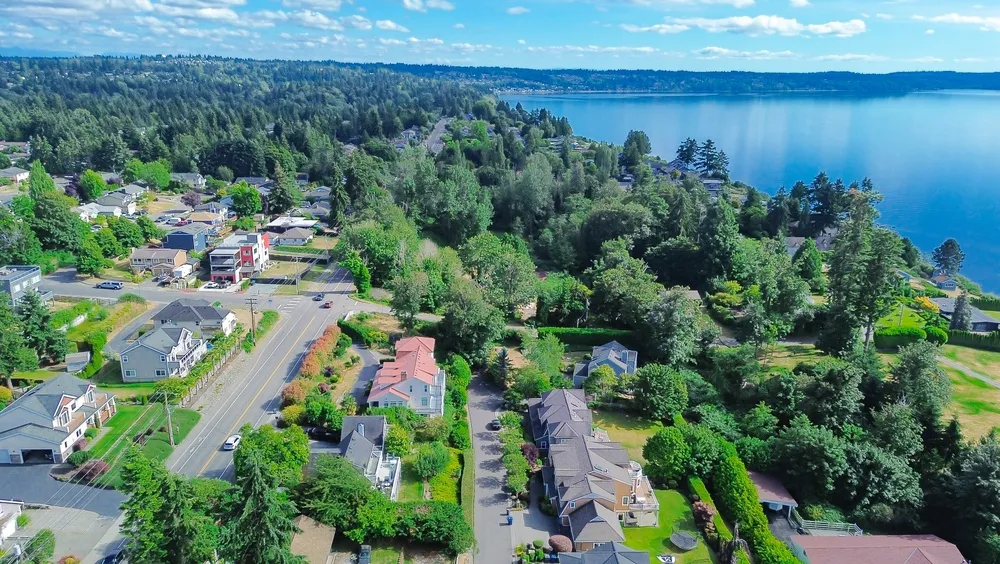
For months, publicly traded homebuilders like Lennar and Pulte have held an advantage over individual sellers in slower markets: the ability to offer buyers below-market mortgage rates. In Kitsap County, Washington – a military-anchored peninsula separated from Seattle by Puget Sound – a broker has adapted that mechanism for private resale listings, using rate lock certificates that function as call options on interest rate futures.
The strategy addresses a specific affordability problem. Housing prices in Kitsap County remain high relative to local incomes, with a median around $75,000. According to Jim Freeman, Managing Broker & Team Leader at the JP Freeman Team with Coldwell Banker Park Shore Real Estate, the housing affordability index has deteriorated to the point where only about 66% of potential buyers earning the median income can afford the median-priced home. Meanwhile, inventory has loosened, days on market have extended, and price reductions have become more common, particularly in the upper price quartiles.
“Two very important questions home buyers ask: how much down, and how much a month,” Freeman says. “And right now in my area, housing prices are too high.”
How Rate Lock Certificates Work for Private Sellers
Freeman arrived at the strategy by studying what was actually selling. National builders were offering 30-year fixed-rate financing at 4.99% when conventional rates sat between six and a half and seven percent. He found a partner lender willing to offer rate lock certificates to individual sellers, purchasable for around $1,000, locking in a rate for 90 days.
The cost to the seller can reach up to 6% of the selling price to fund the buy-down. On a $500,000 home, that amounts to $30,000. Sellers resist that figure, but Freeman frames it against the alternative: dropping the list price by 10% or more while still attracting fewer qualified buyers at prevailing rates.
“You don’t have to accept any offers at a 6% discount,” he tells sellers. “You can negotiate. It can be 4.99%, it can be five and a quarter, it can be five and a half. All you’ve done is created more leverage for you to negotiate on different points.”
His first test case – a listing that had sat for 60 days with declining showings – produced eight showings in the first week after adding the rate lock offer, followed by three competing offers. The competition allowed him to bid up the price and recover some of the buy-down cost. Buyers who qualified for FHA financing at the locked rate received an assumable loan, adding future resale value to the property.
What’s Selling and What Isn’t
Freeman divides the county’s inventory into quartiles by price. Upper-quartile homes are experiencing the steepest price drops and longest days on market. Lower-priced homes move faster, though they face similar percentage reductions. The segment performing best sits in the second and third quartiles, homes that have been rehabilitated and brought to current condition standards.
For investors, margins have compressed. Skilled trades charge roughly $185 per hour, materials costs remain elevated, and competition for acquisition inventory is stiff. Freeman points to a handful of local private lending groups – funds in the hundreds of millions – that have assembled teams including former Zillow employees, experienced brokers, and operations managers from large builders. These firms offer accredited investors fund participation alongside borrowing capacity, plus support services like deal sourcing, budgeting, and tax preparation.
A Regional Economy Under Pressure
Kitsap County’s economic base includes the Puget Sound Naval Shipyard, Naval Base Kitsap, and the Bangor submarine base, a military presence that provides income stability but at pay scales below what Seattle’s tech sector offered. That tech engine is weakening, Freeman says. Amazon alone has cut roughly 20,000 jobs in the Seattle area, and Boeing has invested a billion dollars in South Carolina facilities, shifting production away from Washington.
The state legislature’s proposed income tax – which Freeman describes as unconstitutional under state law but already producing effects – has accelerated business out-migration. He says he has personally helped three business owners sell everything and relocate to Florida, Arizona, and Idaho, with another half-dozen businesses employing six to twenty people each currently preparing to exit.
“Seattle used to rank very highly, sometimes number one, for startup funding for new businesses,” Freeman says. “We’ve now dropped to something like 19 or 20.”
Year over year, the median home price in Kitsap County is flat or down 1 to 2%, according to Freeman, a change from the post-pandemic period when annual increases of 2 to 5% were common. Buyer mood has shifted accordingly.
“Unless a home buyer just has an absolute need to get into a home now for whatever reason, they’re cautious – and rightly so,” Freeman says.
With median incomes around $75,000 and monthly housing costs reaching $3,000 to $6,000, buyers need either accumulated savings or above-median incomes to purchase at current prices. Freeman’s personal expectation is that the market could see price drops as severe as those during the 2007 financial crisis.
Why the Rate Lock Strategy Matters in This Environment
The rate lock certificate does not solve the affordability problem across the market. It does, however, shift the competitive dynamic for individual sellers who would otherwise compete only on price against national builders with access to institutional rate buy-downs. For sellers willing to spend up to 6% on a buy-down, the tool expands the pool of qualified buyers and creates bidding competition that can offset part of the cost.
For buyers, the practical benefit is a lower monthly payment over the life of the loan. Freeman notes that the savings on a 30-year mortgage at 4.99% versus six and a half to seven percent amounts to $150,000 to $200,000 over the loan’s full term. Combined with FHA’s low down payment requirement, the structure makes homeownership accessible to buyers who would otherwise be priced out at prevailing rates, and gives them an assumable loan they can pass to a future buyer at resale.
In a market where median prices are flat or declining, inventory is growing, and the regional economy faces structural headwinds from job losses and business out-migration, sellers who rely solely on price reductions may find themselves chasing a moving target. The rate lock certificate offers a different lever, one that addresses what buyers actually respond to: how much down, and how much a month.
About the Expert: Jim Freeman is Managing Broker and Team Leader at the JP Freeman Team with Coldwell Banker Park Shore Real Estate, serving Kitsap County, Washington.
This article is based on information provided by the expert source cited above. It is intended for general informational purposes only and does not constitute legal, financial, or real estate advice. Readers should conduct their own research and consult qualified professionals before making any real estate or financial decisions.
Similar Articles
Explore similar articles from Our Team of Experts.