
The senior housing sector is experiencing its highest level of acquisition activity in years, fueled by surging occupancy rates and a demographic wave that is finally translating into real g...

Los Angeles Office Vacancy Pushes Landlords Toward Revenue-Share Deals With Flex Operators

Written by:
Date:
04 Aug 2026
Share via Facebook

Share via Linkedin

Share via X

Copy to clipboard

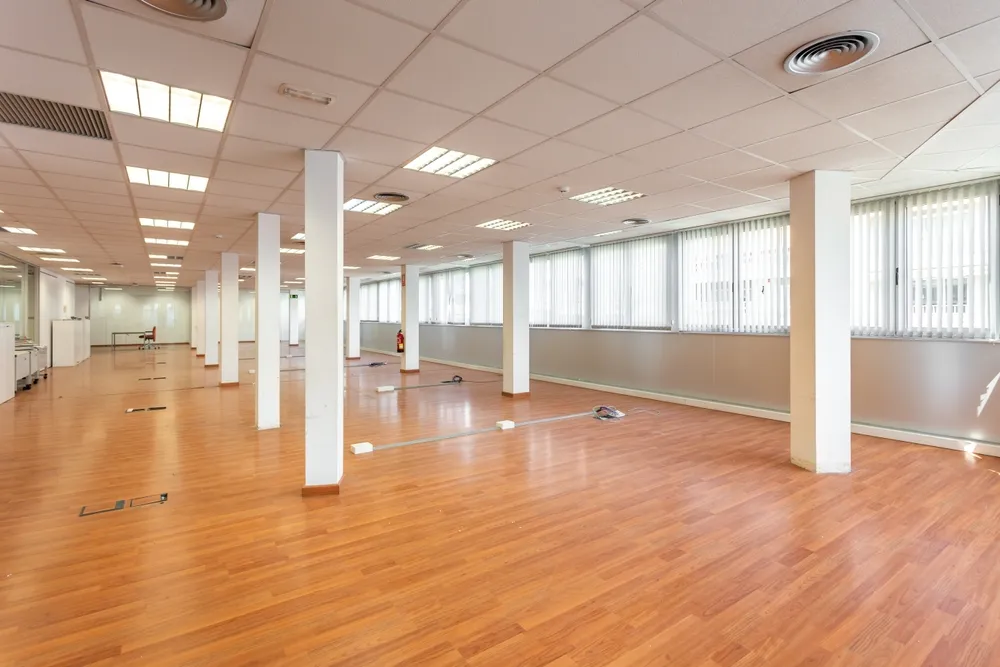
The traditional office lease, five or ten years, fixed rent, passive landlord, made sense when vacancy in major metros hovered in the single digits. In Los Angeles today, roughly 40% of office space sits empty, according to Jerome Chang, founder and licensed architect of BLANKSPACES, one of America’s longest-running coworking brands. That vacancy rate means many landlords collect no rent at all on large portions of their buildings, a position that no longer responds to conventional leasing strategies. What is replacing it, in at least some cases, is a deal structure that distributes risk between landlord and operator rather than concentrating it on one side.
A Shift Toward Shared Risk
A growing number of flex operators are moving away from standard leasing arrangements with landlords and toward revenue-share partnerships instead. BLANKSPACES, which has operated coworking locations in Los Angeles since 2008, is one example of this shift: the firm says it now runs the large majority of its locations under revenue-share partnerships rather than traditional leases.
The shift reflects a straightforward calculation. Landlords holding fully vacant space face the prospect of losing their properties entirely. A revenue-share arrangement trades guaranteed rent for shared upside – and shared downside – but at least produces some income against a baseline of zero.
“The risk right now is astronomically high because they have zero rent, is 100% vacant, and the risk is losing the property altogether,” Chang says. “So our offering is to reduce that risk from horrible to shared.”
Chang is blunt about what this means for landlords still hoping for a return to pre-pandemic conditions. “There is no scenario right now amongst the majority of the office landlords where they can go back to 2019 where their risk is either low to none,” he says. “That no longer exists. So really the biggest problem is office landlords looking in the mirror and being honest with themselves about their future prospects.”
Flex Demand Grew During and After Remote Work
A common assumption is that coworking demand tracks with return-to-office mandates – that when companies call workers back, flex space benefits. Chang describes something different. According to Chang, BLANKSPACES grew during the period when workers were staying home as well as during the return.
“The issue is not a matter of people going into the office or not, it’s a matter of choice,” he says. “In the regular office world, people told you to go into the office space. Some did, and many said they didn’t want to. But as soon as you’re given the choice, people chose to come into the office when appropriate.”
The demand driver, in this account, is optionality rather than occupancy mandates. That shows up in the type of client now showing up at flex spaces more broadly: companies that don’t need a full-time office but want meeting rooms or workspace on their own schedule, a handful of days a month rather than a standing lease. Chang frames the business through a hospitality lens. Before the pandemic, most tenants had one choice – sign a five- or ten-year lease. But companies that need space for one month, five months, or eight months had no equivalent of a hotel booking in the office world. Flex operators fill that gap.
Product Variation and Building Evaluation
The hotel comparison extends to how coworking spaces differ from one another. Some emphasize amenities, others prioritize large team offices, and others focus on private offices to address the noise complaints that drove workers away from open floor plans. Chang says there is no single type, just as there is no single type of hotel.
For landlords evaluating whether their building could support a flex operator, Chang identifies layout and location as the primary variables. The layout determines what kind of revenue the space can generate, how many private offices fit, how meeting rooms can be configured, and how people move in and out of the building. A mismatch between building layout and operator concept is what leads to failures; a large-format building that requires heavy renovation to work as coworking is a common failure pattern, according to Chang.
What Operators and Landlords Still Get Wrong
Two persistent misconceptions trouble the sector, according to Chang. The first is that coworking serves only tech workers – a perception left over from the sector’s growth during the 2010 to 2018 tech boom. The second is that the operational bar is low.
“A lot of people think that all you have to do is get some desks from Ikea and get a Wi-Fi thing from Best Buy and call it a day,” he says. He compares it to restaurants: people underestimate the operational demands, the fact that margins run around four or five percent, that employee turnover is high, and that the work never stops.
Chang expects more startups to enter the coworking space as office vacancies worsen, and expects most to fail. “Most of them, just like in 2015, just like in 2010, they will underestimate what it takes to run coworking and inevitably a decent majority will fail,” he says. “But of course there will be some that finally succeed.”
For landlords considering a flex partnership, the operational competence of the operator matters more than the concept itself. Chang says that even when landlords understand the model, “they rarely stick to the playbook,” meaning their lack of involvement or follow-through undermines the space’s performance.
For landlords still holding vacant floors, the calculus is increasingly binary: accept a shared-risk arrangement that generates some revenue, or continue collecting nothing while the building’s value erodes. Whether revenue-share partnerships become the industry standard, rather than one operator’s approach among several, will likely depend less on any single firm’s track record than on how quickly vacancy pressure forces the rest of the market to follow.
About the Expert: Jerome Chang is founder and licensed architect of BLANKSPACES, one of America’s longest-running coworking brands, with locations in Los Angeles operating since 2008.
This article is based on information provided by the expert source cited above. It is intended for general informational purposes only and does not constitute legal, financial, or real estate advice. Readers should conduct their own research and consult qualified professionals before making any real estate or financial decisions.
Similar Articles
Explore similar articles from Our Team of Experts.