

California policymakers have promoted accessory dwelling units (ADUs) as a solution to the state’s housing shortage. But Wendy Rawley, Team Leader at The Wendy Rawley Team, says most h...

Retirees in Riverside, California Can Keep Their Low Tax Rate When They Downsize

Written by:
Date:
04 Aug 2026
Share via Facebook

Share via Linkedin

Share via X

Copy to clipboard

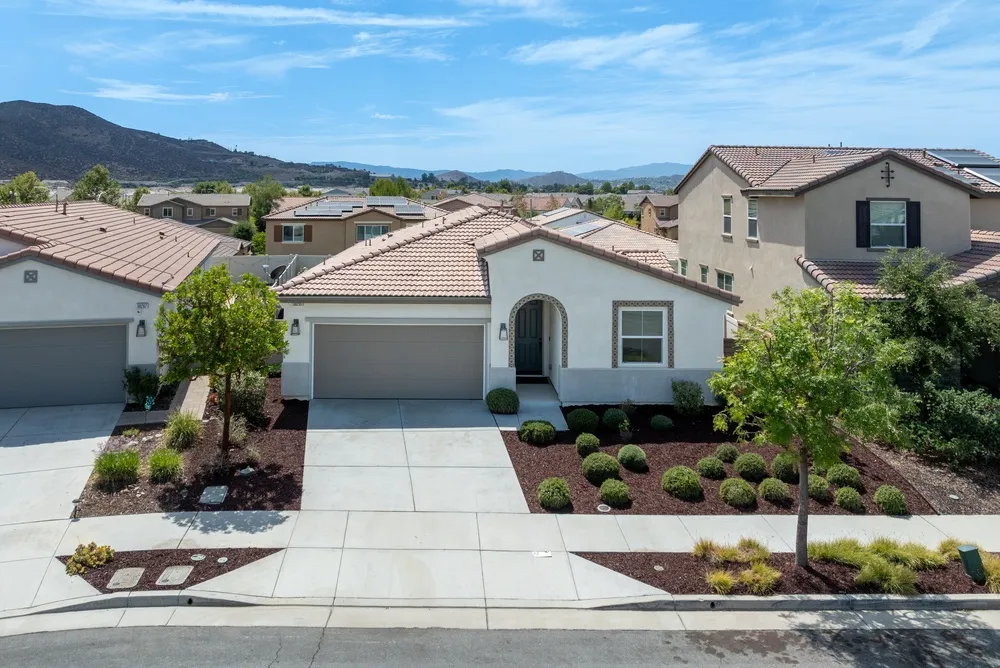
One of the biggest reasons long-term California homeowners never sell is property taxes. After decades in the same house, their assessed value – and therefore their annual tax bill – sits far below what a new purchase would trigger. Moving means resetting to current market value, which in many Inland Empire communities means jumping from a 1% effective rate to nearly double that. But a proposition available in Riverside County and other California counties eliminates that penalty, and according to Shelly Larez, a real estate associate with RE/MAX Partners in Corona, too few homeowners realize it exists.
Larez says she’s seeing more retirees in the Corona market explore the possibility – but many only learn about it during listing conversations, long after they could have been planning around it.
How Tax Base Portability Works
Under California’s Propositions 60, 90, and the more recent Proposition 19, homeowners aged 55 or older can transfer their existing property tax assessment to a new home. A homeowner who has lived in a house for 30 years and whose assessed value is a fraction of today’s market price can carry that low assessment forward – even when buying in a different county.
Larez describes the math directly: “If you’re a 1% and you’re buying a new home in Corona, and maybe that property tax is a 1.75 or a 2%, you can take your property tax base with you.” For a retiree on a fixed income, that gap between their current tax obligation and what a new purchase would otherwise trigger can determine whether downsizing is feasible at all.
Larez calls this “a great advantage for somebody who’s been in their home 40, 50 years and they’re downsizing.”
Why This Isn’t Reaching Enough Homeowners
The challenge is awareness. Larez notes that many of her retiring clients are leaving California entirely – moving to states where their children live, where housing costs less, and where they can stretch their savings further. For those who want to stay in the region but downsize, tax portability removes what would otherwise be the single largest financial barrier. Yet it rarely comes up in conversation until a listing agent raises it.
Corona has several 55-and-older communities that would benefit from this awareness. A retiree sitting in a four-bedroom home with an assessed value from decades ago could move into a smaller property without the tax shock that historically made staying put the only rational financial choice. But if they don’t know the option exists, they remain in homes that are too large for their needs – and those homes remain unavailable to the families who need them.
What Corona Offers Downsizers
Corona’s appeal for retirees considering a local move extends beyond tax policy. Larez, who was born in Corona and has lived in the area for most of her life, describes a city that still carries small-town character despite growing from roughly 20,000 residents when she was born to approximately 175,000 today.
“We have some great 55-and-better communities here,” she says. The city’s central location – connecting to San Diego County, Orange County, and LA County – means retirees who downsize locally don’t lose access to family or medical networks in neighboring areas.
The broader market context reinforces why freeing up housing stock matters. Corona’s median home price sits at roughly $747,000, according to Larez, and homes that aren’t priced competitively are sitting for approximately 60 days. Buyers in this market have more negotiating power than they’ve had in years – Larez says it’s the first time in a long time that purchases aren’t moving overnight, and buyers can take their time evaluating whether a home fits. But inventory constraints remain real, and every homeowner who stays locked in place because of tax fears is a home that never reaches the market.
What Buyers and Sellers Should Know
For buyers watching the Corona market, the implication is structural: every retiree who learns about tax portability and decides to downsize locally adds one more listing to the available supply. The pipeline of potential sellers exists among long-term homeowners whose children have moved away and whose homes exceed their current needs.
For sellers in that position, Larez’s advice is practical: understand the tax portability mechanism early, before listing decisions get made under time pressure. The financial benefit is concrete – carrying a decades-old assessed value forward rather than resetting at current rates – and it removes the primary reason many retirees default to staying put indefinitely.
About the Expert: Shelly Larez is a real estate associate with RE/MAX Partners, with 14 years of experience serving the Corona and Riverside County market in Southern California.
This article is intended for informational purposes only and does not constitute legal, financial, or investment advice. The views and opinions expressed herein reflect those of the individuals quoted and do not represent an endorsement of any company, product, or service mentioned. Readers should conduct their own due diligence and consult qualified professionals before making any investment decisions.
Similar Articles
Explore similar articles from Our Team of Experts.

Perspectives, Residential Real Estate, Market Analysis & Policy, Real Estate Services, Industry News
A single communication breakdown can lead to significant occupancy drops and financial losses in multifamily properties, according to a senior industry executive who recently witnessed this ...