
A buyer scrolling listings in La Quinta or Indian Wells in California sees a monthly HOA fee north of $1,000 and mentally crosses that community off the list. It feels like a penalty – mon...

Corona, California Homes Are Sitting 60 Days – and That's Good News for Buyers
Share via Facebook

Share via Linkedin

Share via X

Copy to clipboard

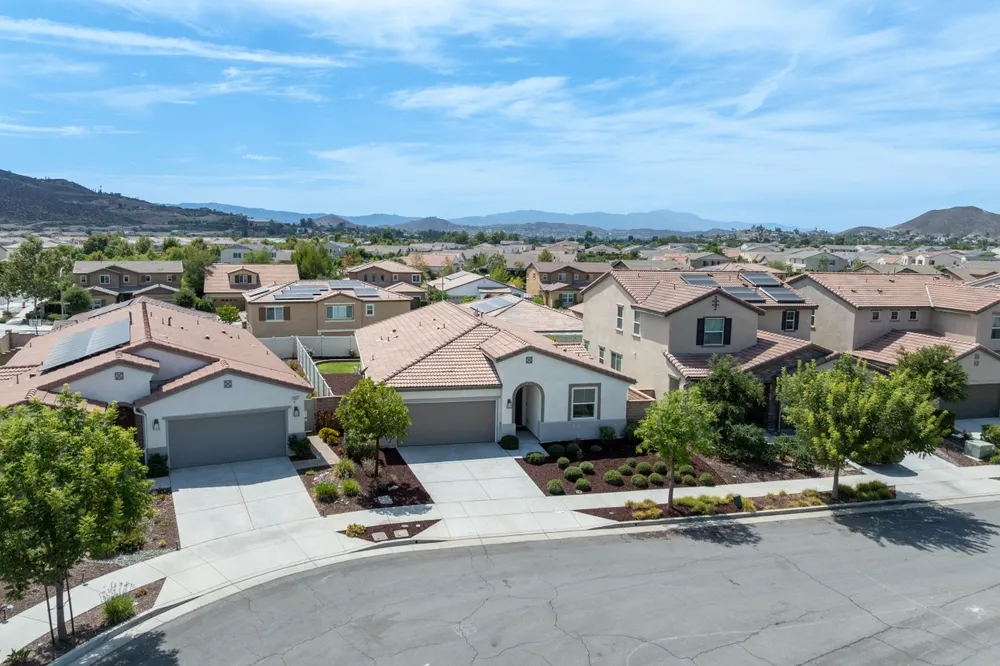
Two years ago, buying a home in Corona, California felt like a sprint: tour a house, make an offer that afternoon, hope not to get outbid by a half-dozen other buyers. That urgency is gone. Homes that aren’t priced aggressively now sit on the market for roughly two months, according to Shelly Larez, a real estate associate with RE/MAX Partners in Corona. Buyers who still behave as though they’re in a bidding war are leaving leverage on the table.
After 14 years working the market, Larez says the current pace is something buyers haven’t experienced in a long time, and many don’t yet realize how much negotiating power they now hold.
How the Pace Has Changed
Larez notes that homes not priced aggressively are averaging roughly 60 days on market. That contrasts sharply with the environment buyers faced as recently as two years ago, when well-priced homes in Corona often attracted six to eight offers. Today, many sellers – particularly retirees who own their homes outright and are relocating out of state – aren’t in a rush. They’re listing at aspirational prices and waiting.
This creates conditions where patience pays. Buyers can sleep on a decision, bring family members back for a second look, and evaluate whether a home fits before committing. “It’s not that trigger reaction that you have to put in the offer the minute you’re walking through the house,” Larez says. “You can take your time and see if this is a good fit for you.”
Where the Leverage Sits
The negotiation window extends beyond purchase price. In Corona’s current market, buyers are finding room to negotiate after inspections and appraisals, not just on the initial offer. If an inspection reveals deferred maintenance or an appraisal comes in below the agreed price, buyers now have space to ask for repairs, credits, or price reductions without the seller simply moving to the next offer in a stack.
“Buyers are feeling that they’ve got negotiation power, and that’s the first time in a long time,” Larez says. That power applies at every stage of the transaction, not just at the offer table.
This leverage isn’t evenly distributed across all price points. Corona’s median home price sits around $747,000, according to Larez, and properties priced competitively from the start – particularly in areas with strong school programs – may still move faster than the 60-day average suggests. The slower pace is most pronounced among overpriced listings and properties where sellers are testing the market rather than motivated to close.
Why Slower Doesn’t Mean Stalled
A 60-day average might sound like a warning sign to sellers – and for those anchored to recent expectations, it is. But for buyers, longer days on market translate directly into better decision-making conditions. Buyers have time to compare properties, run the full cost of ownership, and ensure a home fits their life rather than scrambling to secure anything available.
One cost that catches buyers off guard: property tax rates on newer builds in the Inland Empire run roughly 1.75% to 2%, according to Larez. She says she discloses the property tax rate on every home she shows and runs a sample monthly payment so buyers see the full picture before making an offer. PMI adds another layer for buyers putting less than 20% down. Larez says educating first-time buyers on these recurring costs – including the supplemental tax bill that arrives separately from their mortgage payment months after closing – prevents the surprise that derails confidence after the sale.
Larez argues the current pace produces better long-term outcomes. “I think long term will be better decision making for the buyers right now,” she says. The frantic purchasing of two years ago often left buyers overpaying, waiving inspections, or choosing homes they hadn’t fully evaluated.
What Draws Buyers to Corona
Corona’s appeal rests on accessibility and relative affordability. The city sits just outside Orange County, with direct corridor access to LA County through Chino Hills, Rancho Cucamonga, and Ontario. Buyers can work in Orange County and afford a house with a yard, something increasingly difficult at coastal price levels.
Starter condos in Corona begin in the $500,000 range, while buyers willing to go further into Riverside County can find entry points near $450,000, according to Larez. At the upper end, $1.5 million to $2 million buys upwards of 4,000 square feet on a half-acre to an acre of land.
Families are drawn by the Corona-Norco school district’s specialized programs – dual immersion language programs, engineering tracks, and 4H programs that start at younger ages. Larez says parents frequently choose neighborhoods based on school access rather than home features alone.
For buyers weighing Corona against faster-moving coastal markets, the current 60-day pace is not a sign of weakness. It is a window where deliberate buyers can negotiate on price, negotiate after inspection, and make decisions without the pressure that defined this market two years ago.
About the Expert: Shelly Larez is a real estate associate with RE/MAX Partners, with 14 years of experience serving the Corona and Riverside County market in Southern California.
This article is intended for informational purposes only and does not constitute legal, financial, or investment advice. The views and opinions expressed herein reflect those of the individuals quoted and do not represent an endorsement of any company, product, or service mentioned. Readers should conduct their own due diligence and consult qualified professionals before making any investment decisions.
Similar Articles
Explore similar articles from Our Team of Experts.


Perspectives, Residential Real Estate, Market Analysis & Policy, Real Estate Investment, Industry News
Amid soaring coastal real estate prices, investors from across the country and internationally are discovering exceptional value in Detroit’s historic housing stock, according to a vet...