
Wichita’s housing market has reached a new milestone, with the average home price climbing to $277,000 in 2025, up from $255,000 in 2023. The $22,000 increase signals steady growth and has...

Why Rental Investors Should Think Twice Before Buying South Florida Condos

Written by:
Date:
04 Aug 2026
Share via Facebook

Share via Linkedin

Share via X

Copy to clipboard

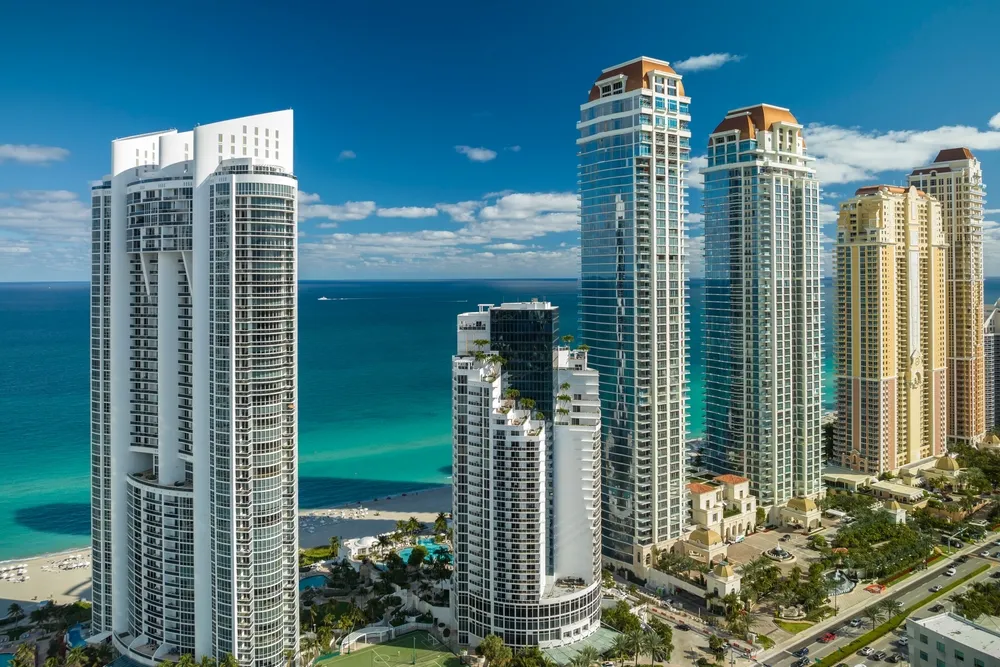
The pitch sounds compelling: buy a condo near the ocean in South Florida, rent it out, and let tenants cover your costs while the property appreciates. But the math on South Florida condos as rental investments is broken at current price levels, according to Stuart Berger, Team Co-Lead of the Stu Berger and Ana Aizenstat Team at Coldwell Banker Realty. Berger, who works primarily in the Aventura, Sunny Isles, Hollywood, and Hallandale Beach corridor, has spent recent months helping foreign investors exit condo positions that have lost money since the day they closed.
The Losses are Already Visible
Berger describes a pattern he sees repeatedly: investors, often foreign buyers who received poor guidance, purchased condos in the $500,000 range expecting rental income to cover costs and generate returns. Instead, they’ve owned for five years and lost ground the entire time. “On a $500,000 property, some of the people are losing $100,000 of their investment,” he says.
The monthly picture is equally stark. Between maintenance fees, property taxes, and financing costs, some owners are losing $1,500 every month, the gap between what they collect in rent and what they owe. These aren’t owners who made reckless speculative bets. They bought standard condos in established buildings, often on the advice of agents who assured them the numbers worked.
The problem is structural. South Florida condo maintenance fees run high, Berger cites figures in the $1,500 to $1,600 monthly range for units around the $400,000 price point. Layer on property taxes and any financing costs, and total carrying expenses exceed what the rental market will support.
New Supply is Compressing Rents
The rental math has deteriorated further as thousands of new apartment units have come online. Berger estimates roughly 10,000 new rental units have been built within 10 miles of his market area. These buildings offer concessions – two months of free rent – and feature modern amenities that older condos cannot match.
The effect on existing condo owners trying to rent is direct. According to Berger, units that previously commanded $4,000 to $4,200 per month are now renting for around $3,500. That $500 to $700 monthly drop goes straight to the owner’s bottom line, widening the gap between income and expenses.
For a prospective investor, this creates a double problem: purchase prices remain elevated from the post-pandemic run-up, while rental income is falling due to new competition.
Where Berger Says to Look Instead
Asked directly what he’d tell an investor looking to deploy capital in residential real estate for rental returns, Berger doesn’t soften his answer. “I don’t even know if I would tell them to buy in the South Florida market,” he says, unless they can identify a genuinely distressed property with clear upside potential.
Even at the high end, the numbers don’t work. Berger points to waterfront homes: “If you buy a $3 million house on the water, you’re not renting it for $ 30,000; you may be renting it for 15,000.” The rental yield at that price point doesn’t justify the capital deployed.
For investors insistent on Florida residential property as a rental play, Berger suggests looking north of Palm Beach County, where purchase prices haven’t run up as far, and the cost-to-rent ratio may still work.
A Split Market, Not a Dead One
None of this means South Florida real estate lacks buyers. Berger draws a clear line between price segments. Condos priced above $1 million – particularly larger units of 2,500 square feet or more in the $1 million to $2.5 million range – face a shortage of inventory. “There’s not a lot available,” he says. Renovated properties at the high end sell almost immediately.
The glut sits in older buildings, 20 to 40 years old, where units are priced at $800,000 and below. Many sellers in these buildings are waiting for a market recovery that Berger says isn’t coming. “We’ve never had a lot of appreciation here,” he says. “The appreciation we had was because of COVID and the South Americans, and it boomed, and now that’s over.”
Buyers purchasing a primary residence near the ocean, or those who want a second home and don’t need rental income to justify the purchase, face a different calculation. But for an investor whose plan depends on tenants covering costs and the property appreciating meaningfully, this corridor presents high carrying costs, softening rents, elevated prices, and flat historical appreciation on condos, conditions that make the bet hard to justify at current levels.
About the Expert: Stuart Berger is Team Co-Lead of the Stu Berger and Ana Aizenstat Team at Coldwell Banker Realty, serving the South Florida coastal corridor from Hallandale Beach through Hollywood, Aventura, and Sunny Isles.
This article is intended for informational purposes only and does not constitute legal, financial, or investment advice. The views and opinions expressed herein reflect those of the individuals quoted and do not represent an endorsement of any company, product, or service mentioned. Readers should conduct their own due diligence and consult qualified professionals before making any investment decisions.
Similar Articles
Explore similar articles from Our Team of Experts.