
In the commercial real estate sector, Vallist is taking new steps to address the persistent issue of vacant office space. In a recent interview, Alexander Passler, co-founder and CEO of the ...

AI Property Valuation Tools Have a Blind Spot That Kills Deals in Older Neighborhoods

Written by:
Date:
01 Aug 2026
Share via Facebook

Share via Linkedin

Share via X

Copy to clipboard

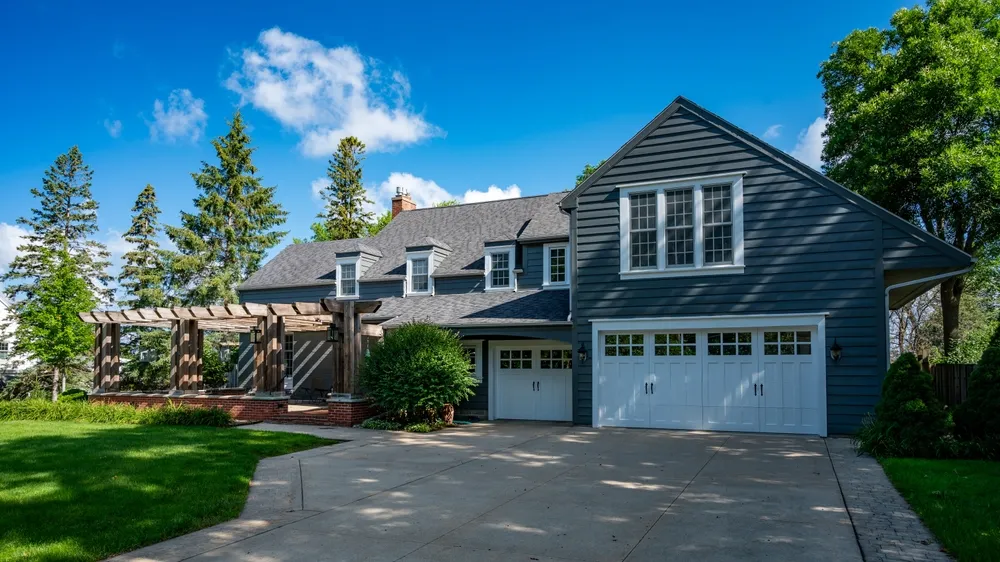
Automated valuation tools pull comparable sales data from nearby properties and produce confident estimates of what a house is worth. But in metros where housing stock spans more than a century, those estimates often fail to account for physical condition, structural age, and zoning designations that only a human can identify. According to one agency working directly with investors, that gap is where deals collapse after contracts are already signed.
Youssef Ahmed, Founder and CEO of VA Horizon, a lead-generation agency that works with real estate wholesalers and investors, sees this repeatedly. Wholesalers are investors who sign a contract to buy a property, then sell that contract to another buyer before the sale closes, rather than buying the home themselves. His company, launched in 2025, helps clients generate leads and close deals on distressed properties across markets including Minneapolis–St. Paul. Ahmed says the most common reason a promising investment deal dies after a contract is signed traces back to a flawed evaluation of the deal before the purchase. In this step, a buyer checks a property’s condition, costs, and numbers. Increasingly, that flawed evaluation involves over-reliance on AI.
Why the Numbers Look Right but Aren’t
In theory, these models produce a reasonable estimate of post-renovation value. In practice, they cannot distinguish between a 2015 build and an 1800s-era structure sitting on the same block.
“AI can’t see the pictures,” Ahmed says. The tool looks at recent sales within a radius, sees that homes sold for a certain figure, and assigns a similar value to the subject property. It cannot evaluate whether the roof is sagging, whether the foundation shows century-old settling, or whether the lot has an unusual shape that limits what a renovate-and-resell investor can actually build.
The result, according to Ahmed, is that investors calculate a maximum allowable offer or the highest price they can pay and still profit after renovation, based on comparables that do not actually compare. They sign a contract, then discover the renovation scope is far larger or the resale potential far lower than the model suggested.
Legacy Zoning Affects Value
Beyond physical condition, Ahmed flags zoning as a hidden variable that trips up AI-assisted investors. In older neighborhoods, a property may carry what is called a grandfathered zone, meaning it was permitted for both residential and commercial use under rules that no longer apply to new construction. That dual designation changes the property’s highest and best use, its buyer pool, and its value.
“You wouldn’t be able to know that unless you actually have firsthand experience,” Ahmed says.
An investor relying solely on AI would never see that flag. The model does not check municipal zoning records or cross-reference historical permits. It simply compares sale prices. A grandfathered commercial designation could make the property more valuable to the right buyer, or it could limit residential resale if the neighborhood has shifted entirely to single-family use.
AI as a Starting Point, Not a Final Answer
Ahmed does not dismiss AI tools entirely. He acknowledges they provide a reasonable starting point. But he draws a hard line against treating automated output as a final answer, especially in metros with a mix of housing eras. “You can’t focus 100% using AI,” Ahmed says. “You need to do some research yourself and some learning yourself to be able to underwrite deals properly.”
This gap matters most for buyers eyeing a home that’s noticeably older than its neighbors, or one on a block where lot sizes vary widely. The same applies to blocks with different setbacks, the required distance a building must keep from the property line. In these cases, the automated value shown online may not reflect reality. A human appraisal, a conversation with the city planning office about zoning, or a drive-by comparison with recent sales could reveal gaps the algorithm missed.
Ahmed says he encounters investors who signed contracts based on AI-generated numbers and then watched the deal unravel during the window after signing, when a buyer can still back out of the purchase, known as the option period, typically seven to 14 days, when closer inspection revealed problems the tool could not detect. In Minneapolis–St. Paul’s older neighborhoods, where homes were built across a wide range of eras, this mismatch between algorithmic confidence and reality can turn a profitable flip into a loss.
For small investors moving fast on distressed properties, the practical safeguard is straightforward: use AI-generated valuations to narrow a search, then verify the numbers with human due diligence before signing a contract. The algorithm cannot walk the block, read the zoning file, or notice that a house built before the neighborhood existed does not belong in the same spreadsheet as its neighbors.
About the Expert: Youssef Ahmed is Founder and CEO of VA Horizon, a lead generation agency serving real estate wholesalers and investors.
This article is intended for informational purposes only and does not constitute legal, financial, or investment advice. The views and opinions expressed herein reflect those of the individuals quoted and do not represent an endorsement of any company, product, or service mentioned. Readers should conduct their own due diligence and consult qualified professionals before making any investment decisions.
Similar Articles
Explore similar articles from Our Team of Experts.