
Leaving the city does not mean leaving city prices behind. In the counties and communities within commuting distance of Manhattan, including Westchester to the north and Hudson County and su...

In Dallas-Fort Worth's Commercial Land Market, Seller Financing Is Bridging the Gap That High Rates Created

Written by:
Date:
23 Jul 2026
Share via Facebook

Share via Linkedin

Share via X

Copy to clipboard

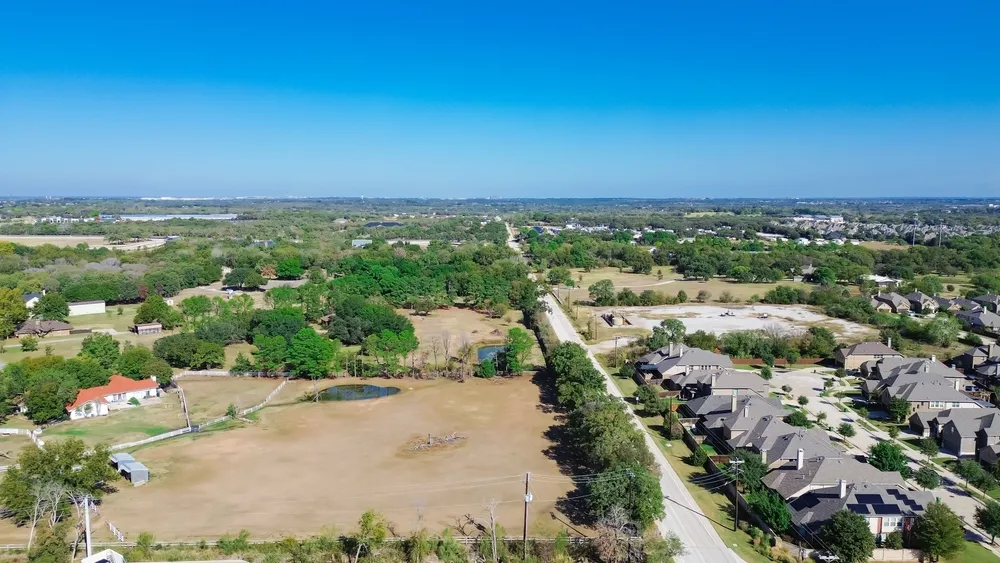
The conventional path to closing a commercial land deal in Texas, lender underwriting, extended documentation, months of back-and-forth, has become slow enough in the current rate environment that buyers and sellers are finding workarounds. In the Dallas-Fort Worth metro’s outlying counties, where land transactions for development, ranches, and commercial projects regularly run into six- and seven-figure territory, seller financing has emerged as a practical mechanism for getting deals done when traditional lending timelines stretch past what either party wants to endure.
Suresh Malepati, Realtor and Founder of the Akhanda Group in Frisco, Texas, operates across commercial land acquisition, syndication, asset management, and development in the DFW market. His firm closed two owner-financed land deals last year and one lender-financed deal more recently, and the difference in pace, he says, was significant.
“Owner financing helps to close faster deals,” Malepati says. “Say, for example, a million-dollar deal and then owners say, ‘Put 20 down, remaining 800,000, I’ll give the loan for you for the next five years.’ We closed last year two deals like that quickly. But this year we closed one deal with the lender, again took a longer time.”
Sellers Are Offering to Carry the Note
The current market has shifted negotiating power toward buyers in commercial land transactions across the DFW metro. Sellers who want to move properties – whether due to relocation, personal circumstances, or a desire to exit – are increasingly willing to offer concessions that go beyond simple price reductions.
Malepati describes a property his firm is showing: a six-million-dollar asset where the owner is prepared to carry financing with 20 percent down. “The reason he wants to move out is that he wants to quickly move on,” Malepati explains. “If someone puts 1.2 million as cash, the remaining 4.8 million, they will give a loan for us.”
This willingness to offer carryback loans reflects the broader challenge high rates have imposed on commercial transactions. According to Malepati, the math is straightforward: at 6 percent versus 3 percent on the same asset, buyer repayment capacity drops substantially. Sellers who are debt-free on their properties can offer financing terms that bypass institutional lending entirely, creating a transaction structure that works for both sides when traditional credit is slow and expensive.
Commercial Land Timelines
Commercial land deals in DFW’s surrounding counties – Collin, Denton, Fannin, Hunt, Grayson – operate on fundamentally different timelines than residential transactions. Malepati notes that some land deals his firm has completed took close to a year, with a minimum of three to four months depending on the size of the acreage.
The due diligence requirements explain the extended timelines. Land acquisitions require checking for easements, liens, and lis pendens, locating utility infrastructure, determining distances to water and sewer connections, coordinating with architects and engineers on development concepts, and consulting with city and county authorities on zoning and future land use plans.
“When you buy a land, we know what to look, where to look,” Malepati says. “Talk to the city, talk to the county, and what can be done here based on the city’s future land use.”
For buyers unfamiliar with commercial land transactions, these steps mean that the closing timeline itself becomes a negotiating factor. A seller willing to finance the deal removes the lender from the equation entirely, eliminating one of the longest variables in the process.
The Investment Thesis Has Shifted
For investors considering DFW commercial real estate today, Malepati frames the opportunity as a longer hold than what the market delivered between 2020 and 2023. During that period, land values in some cases doubled; properties that were $100,000 per acre moved to $200,000. That pace has slowed.
“Now maybe it takes five to six years,” he says of the timeline for doubling invested capital. “Every five years your money should be doubled, that’s a thumb rule.”
He steers his own investors toward commercial properties over residential, citing longer lease terms – three to five years versus annual renewals – less tenant maintenance friction, and tenants who are less likely to leave once they establish a business. The tradeoff he acknowledges: if a commercial tenant’s business fails after a year, there is a breakage situation and negotiation with the landlord, a risk that comes with longer commitments.
Down payment requirements have also tightened. According to Malepati, commercial acquisitions now require a minimum of 25 percent down, with some lenders asking 35 percent, compared to 20 percent for a primary residential purchase.
Who Is Buying
Malepati says his firm works with investors from across the country, not just local buyers. Some approach with capital ready to deploy and ask where to put it. Others find properties the firm has listed on platforms like CREXi or LoopNet and reach out to discuss whether the numbers work.
The DFW market’s underlying strength, according to Malepati, comes from sustained corporate relocation. He points to PGA headquarters moving from Florida to the Frisco area, Toyota’s earlier relocation, and Universal Studios opening on July 1 this year as drivers that generate jobs across construction, technology, and services. When large employers arrive, housing demand follows, and commercial real estate benefits from the population growth those employers attract.
“The Dallas market is still strong, even in commercial and residential space,” Malepati says. “Because of the companies moving here, people are moving here.”
On the ranch and farm side, Malepati sees a split between investors who buy and hold land for appreciation and end users who often prefer leasing due to the large initial capital required. He notes that owners of countryside properties tend to sell when development reaches their area, then relocate 10 to 15 miles further out, a pattern that continues pushing the development frontier outward.
What Comes Next
Malepati sees one variable as the determining factor for market momentum. “Only the killing part is the interest rates,” he says. “If the interest rates go down, everything will be settled. The market will be a little up. I’m sure like next year or so the market can still go up.”
Until that happens, the deals getting done in DFW’s commercial land market are the ones where buyers and sellers structure around the rate environment rather than waiting for it to change, with seller financing serving as the primary tool for bridging that gap.
About the Expert: Suresh Malepati is a Realtor and Founder of the Akhanda Group in Frisco, Texas, operating across commercial land acquisition, syndication, asset management, and development in the Dallas-Fort Worth market.
This article is based on information provided by the expert source cited above. It is intended for general informational purposes only and does not constitute legal, financial, or real estate advice. Readers should conduct their own research and consult qualified professionals before making any real estate or financial decisions.
Similar Articles
Explore similar articles from Our Team of Experts.


New Orleans Commercial Real Estate Faces Buyer-Driven Market as Costs and Constraints Redefine Value
The New Orleans commercial real estate market is undergoing a clear shift from the seller-driven conditions of recent years to a landscape where buyers hold more leverage and deals face grea...