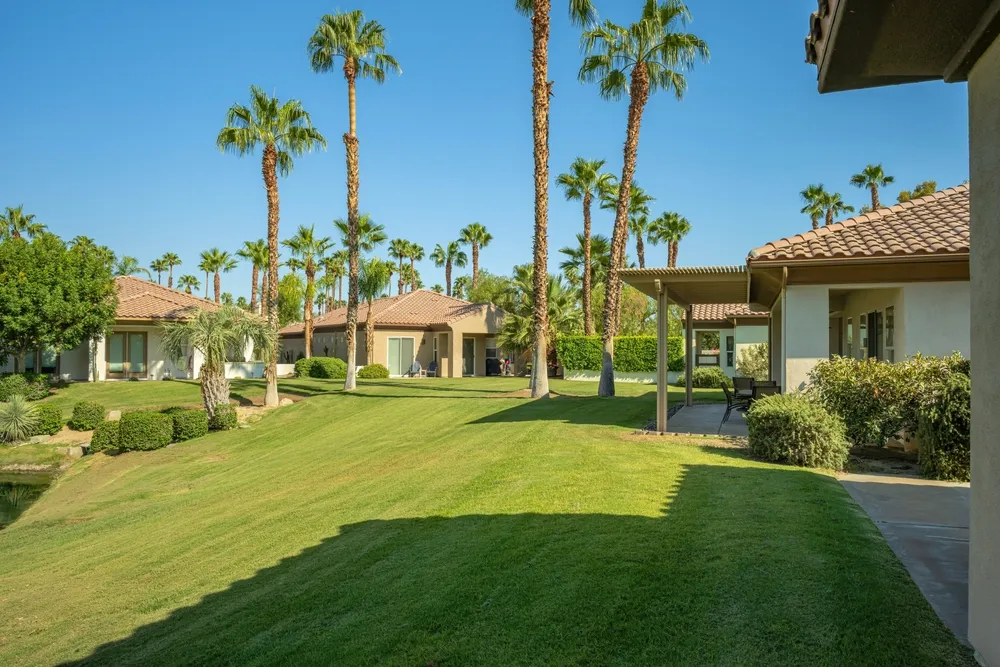
Real estate standoffs usually resolve themselves, prices drift, expectations adjust, and transactions eventually clear the backlog. In California’s Coachella Valley, some sellers are skipping that process altogether: rather than cut prices to move a stalled listing, they’re pulling it off the market and waiting out the slow summer season instead.
The shift reflects a broader standoff. Neither buyers nor sellers are giving ground in mid-2026, resulting in a frozen market rather than a repriced one.
A Market With No Advantage
According to Lisa Angell, a Realtor with LPT Realty who has worked the Coachella Valley for over six years, the standard buyer’s-market-or-seller’s-market framing no longer applies to what she’s seeing on the ground in mid-2026.
“It’s nobody’s market,” she says, paraphrasing an observation she attributes to broker Ryan Serhant. “Nobody’s happy right now.”
Angell distinguishes today’s conditions from the Great Recession, which she also worked through as an agent. That period, she says, was in some ways more severe but had a clearer shape. The current market instead produces a grinding, low-transaction environment where deals still happen but rarely satisfy either party. “The transactions are a little bit more tedious,” she says, “because everyone’s just kind of like, you know, I got this high payment, or I didn’t sell this for as much as I wanted.”
Neither Side Will Budge
The standoff has a specific structure. Sellers have not fully adjusted their price expectations downward; many purchased or refinanced during a period of exceptional appreciation and remain anchored to those peak values. Buyers are contending with interest rates that make monthly payments difficult to absorb even at prices sellers consider reasonable concessions.
“The sellers are not selling for maybe as high or as quickly as they got used to selling for quite some time,” Angell says, “but they’re still not coming down as much as the buyers would like.”
She offers a concrete example of how this plays out in seller psychology. A parent of one of her sellers recently balked at accepting an otherwise acceptable offer because the buyer had requested $10,000 in closing cost assistance. “The parent just couldn’t get over the fact that we were going to be paying their closing costs,” Angell says. In her view, closing cost concessions were standard practice for years before the pandemic-era seller’s market conditioned sellers to expect clean, no-concession offers. That expectation has not yet reset.
The result: properties that don’t meet a narrow standard of condition and pricing simply sit. “If your home isn’t perfect and priced right – or really cheap, like way cheaper than it probably should be, you’re not selling,” Angell says. “Everything in the middle” is stalling.
The Case for Delisting
One of the more telling strategic shifts Angell describes is the advice she’s now giving some of her active sellers: consider coming off the market temporarily rather than accumulating days on market during the slow summer period.
In the Coachella Valley, summer is structurally quiet. Temperatures regularly exceed 110 degrees Fahrenheit in July, and buyer activity drops sharply after the Fourth of July, often not recovering until after Labor Day. Angell says the combination of seasonal slowdown and broader market hesitancy makes this an especially poor time to sit on the market with a listing that isn’t moving.
“The conversations I’m having with some of my sellers even right now are like, maybe we want to come off the market for a little bit, just take a breath, let the summer play out a little bit,” she says. “Don’t rack up those days on market.”
A listing that accumulates weeks without offers invites buyer skepticism about what’s wrong with the property, which can push offers lower or deter them entirely. In a market where buyers already feel cautious, Angell’s view is that a strategic pause preserves negotiating position better than grinding through a slow season with a stale listing.
The Short-Term Rental Glut
The standoff is compounded in specific neighborhoods by a supply overhang tied to short-term rentals. Angell describes areas near the Empire Polo Grounds – where the Coachella and Stagecoach festivals draw visitors – that attracted waves of investors during the pandemic buying frenzy.
Those investors purchased at elevated prices, often adding pools and upgrades, expecting rental income to cover the cost. Instead, oversupply drove nightly rates down. Angell says owners who once earned $20,000 in April from festival-season bookings saw that figure drop to $8,000 to $10,000. Owners carrying mortgages began losing money and eventually listed their properties for sale, often at steep losses.
“There’s one across the street that sold twice lately, but it went from like they bought it for like 780, sold it for 675 and put money into it,” Angell says. “So they took a hundred thousand dollar hit.”
That wave of distressed inventory forces even non-rental homeowners to compete against already-discounted properties. Angell says the oversupply in these neighborhoods is just beginning to clear.
What Comes Next
Angell says the low-transaction standoff will persist until conditions outside the real estate market shift. She points specifically to inflation, geopolitical uncertainty – including tensions that have reduced Canadian snowbird buyers in the valley – and a general loss of confidence among prospective purchasers who would rather wait than commit.
When conditions do align – a motivated seller, a cash buyer, and realistic pricing – transactions still close with both parties reasonably satisfied. A deal Angell closed on the day of the interview involved a cash buyer from North Carolina purchasing a property that had been sitting, while the seller finally achieved a sale that allowed them to move forward. “This one might have been one of those where everyone seems pretty happy at the end,” she says. Those outcomes depend on both sides arriving at realistic expectations before the process begins, not mid-deal.
About the Expert: Lisa Angell is a Realtor with LPT Realty, with over six years of experience serving the Coachella Valley market in Southern California.
This article is intended for informational purposes only and does not constitute legal, financial, or investment advice. The views and opinions expressed herein reflect those of the individuals quoted and do not represent an endorsement of any company, product, or service mentioned. Readers should conduct their own due diligence and consult qualified professionals before making any investment decisions.
Amid soaring coastal real estate prices, investors from across the country and internationally are discovering exceptional value in Detroit’s historic housing stock, according to a vet...
While headlines focus on rising home prices and the struggle for local buyers, veteran real estate professional Elizabeth Hume offers a different perspective on Boise’s housing market. The...
Building a luxury mountain home is a long, complex process that requires years of planning, permitting, and construction. Unlike suburban developments that can be completed quickly, mountain...
Southwest Florida’s real estate market is confounding expectations, with luxury properties over $1 million selling more easily than mid-range condos, according to Mike Newes of John R. Woo...
Most first-time home buyers in the East Bay focus on one number: the purchase price. But in a market where home prices remain well above national averages, the monthly payment, and specifica...
Drive 20 minutes north in New York’s Hudson Valley, and the housing market changes dramatically. In Orange and Dutchess Counties — about an hour from the Bronx — homes priced realistic...