

If you’ve been watching Miami real estate from the sidelines, waiting for prices to dip before making a move, consider this: many buyers who held back a year ago are now facing higher ...

Scottsdale Homes Under $1 Million Sit for Months — Buyer Urgency, Not Marketing, Is the Problem

Written by:
Date:
23 Jul 2026
Share via Facebook

Share via Linkedin

Share via X

Copy to clipboard

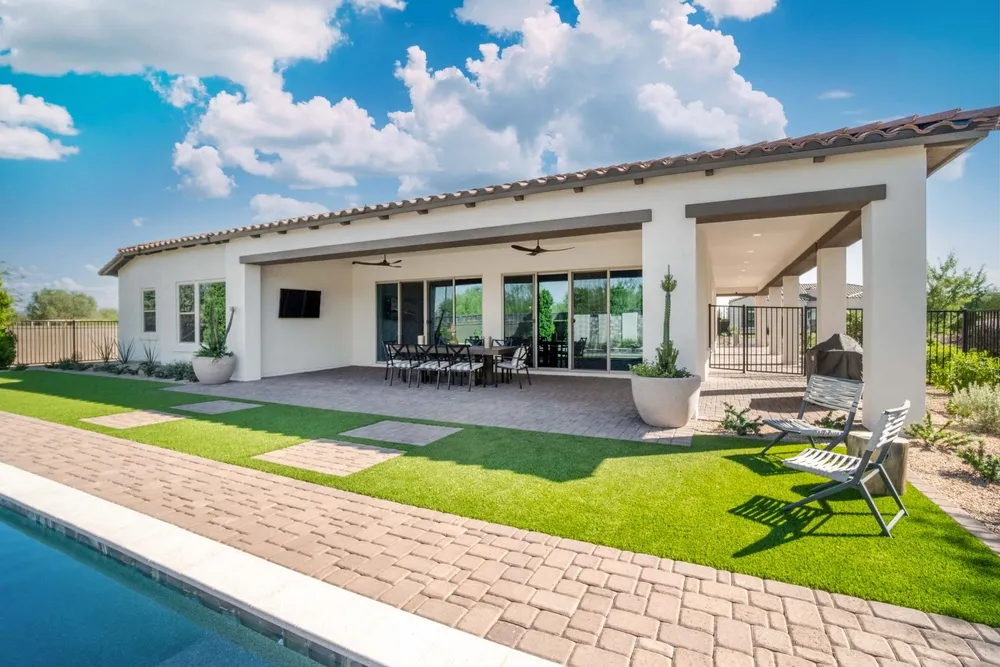
A home that would have drawn 15 offers in a weekend three years ago now sits for 60 to 120 days or longer in the Scottsdale area, and according to Brad Kimmelman, Team Leader, Senior Global Real Estate Advisor with The Homanity Team at Russ Lyon Sotheby’s International Realty, the listing itself is rarely the issue. The buyers simply aren’t in a hurry.
Kimmelman, who works across price points from condos near $460,000 to properties in the $20-to-$30-million range, says frustration among sellers in the sub-$1-million segment is the dominant emotional note in his practice right now. Homes priced roughly between $300,000 and $1 million are sitting longer. Interest rates have hovered around six to seven percent without meaningful relief, prices for everyday goods remain elevated, and first-time or move-up buyers in that range are choosing to wait. They’re browsing and touring, but they’re not making offers with urgency.
“The fact that it hasn’t sold yet is not a marketing problem,” Kimmelman says. He points instead to buyer motivation and a lack of urgency. The distinction matters. A marketing problem has a marketing solution: better photos, more open houses, a different agent. A motivation problem requires a different response entirely.
Concessions Are Replacing Patience
Some sellers are choosing to wait, betting that rates will drop or that buyer urgency will return as economic uncertainty settles. Others whose life circumstances don’t allow for patience are turning to concessions.
One approach gaining traction: temporary rate buydowns on the first year of a mortgage. Kimmelman says his team is offering these on some listings because buyers in this segment are making decisions based almost entirely on monthly payment thresholds. “We’ve got a lot of buyers backing into monthly payments of a certain amount,” he says. If a property doesn’t fit within that monthly budget, those buyers move on without a second look, regardless of the home’s quality or location.
The logic behind a first-year buydown is that it lowers the buyer’s initial monthly payment enough to trigger a purchase. Kimmelman’s team forecasts that interest rates will eventually decline, allowing the buyer to refinance into a lower permanent rate. If rates don’t drop, the buyer faces the original, higher payment after the buydown period ends. A temporary buydown doesn’t change the loan’s underlying rate; it defers the full cost. Sellers offering this concession are subsidizing the first year of ownership to get the deal done now.
The Luxury Market Tells a Different Story
While homes under $1 million languish, Scottsdale’s luxury segment above $2 million is moving in the opposite direction. Kimmelman says the upper end is seeing price increases and more activity, driven by cash buyers who are purchasing regardless of broader economic uncertainty. Median prices are rising because the upper end of the market is pulling them up.
These buyers remain selective – Kimmelman says they’re particular about finishes, location, condition, and community – but when those factors align, they pay prices consistent with seven years of appreciation. The result is a market split sharply by price: stagnation below $1 million and competition above $2 million.
Golf memberships are intensifying this divide. Kimmelman says it is nearly impossible to get a golf membership at any Scottsdale-area club unless the home itself has one attached to it. Buyers searching for a golf lifestyle are ignoring homes, regardless of quality – that don’t include membership access. Sellers whose properties carry attached memberships hold a distinct marketing advantage.
The Emotional Gap Between Memory and Reality
The hardest part of Kimmelman’s work right now is navigating the distance between sellers’ recent memory and today’s conditions. Just three or four years ago, the same homes attracted 15 offers in a weekend. Sellers who anchored expectations to the frenzy of 2021 and 2022 face a market that no longer rewards those pricing strategies.
Multiple offers still happen, but only when a home is priced precisely right and checks every box. The norm is a longer timeline, more negotiation, and sellers deciding whether their life goals can accommodate waiting or whether concessions offer a faster path to closing.
Kimmelman frames the challenge as both educational and emotional. Agents who lack the ability to help sellers process the psychological weight of extended market time are leaving the business. “If you really don’t have the grit for it, you’re not going to persevere and survive,” he says.
For buyers in this price range, the current dynamic offers leverage that didn’t exist two years ago. Sellers are more willing to negotiate, more likely to offer financial incentives, and less likely to hold firm on an asking price that doesn’t generate interest within the first few weeks. The tradeoff is that rates remain elevated, and any concession a seller offers still operates within that higher-rate environment.
About the Expert: Brad Kimmelman is Team Leader and Senior Global Real Estate Advisor with The Homanity Team at Russ Lyon Sotheby’s International Realty, serving the Scottsdale and Paradise Valley markets in Arizona.
This article is intended for informational purposes only and does not constitute legal, financial, or investment advice. The views and opinions expressed herein reflect those of the individuals quoted and do not represent an endorsement of any company, product, or service mentioned. Readers should conduct their own due diligence and consult qualified professionals before making any investment decisions.
Similar Articles
Explore similar articles from Our Team of Experts.

Perspectives, Residential Real Estate, Real Estate Investment, Market Analysis & Policy, Industry News
The multifamily housing market is facing a severe and potentially long-lasting supply shortage that could reshape the industry, according to Jason Yarusi, Managing Member of Yarusi Holdings,...