
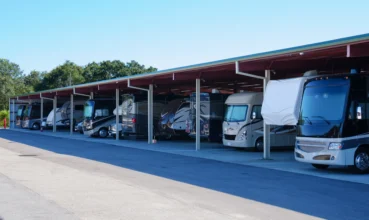
An estimated 8 million recreational vehicles are on U.S. roads today, and a growing share of their owners have nowhere to put them when they’re not in use. The mismatch between RV owne...

Airspace Is Becoming a Real Estate Asset. Developers Are Already Positioning for It.

Written by:
Date:
24 Jul 2026
Share via Facebook

Share via Linkedin

Share via X

Copy to clipboard

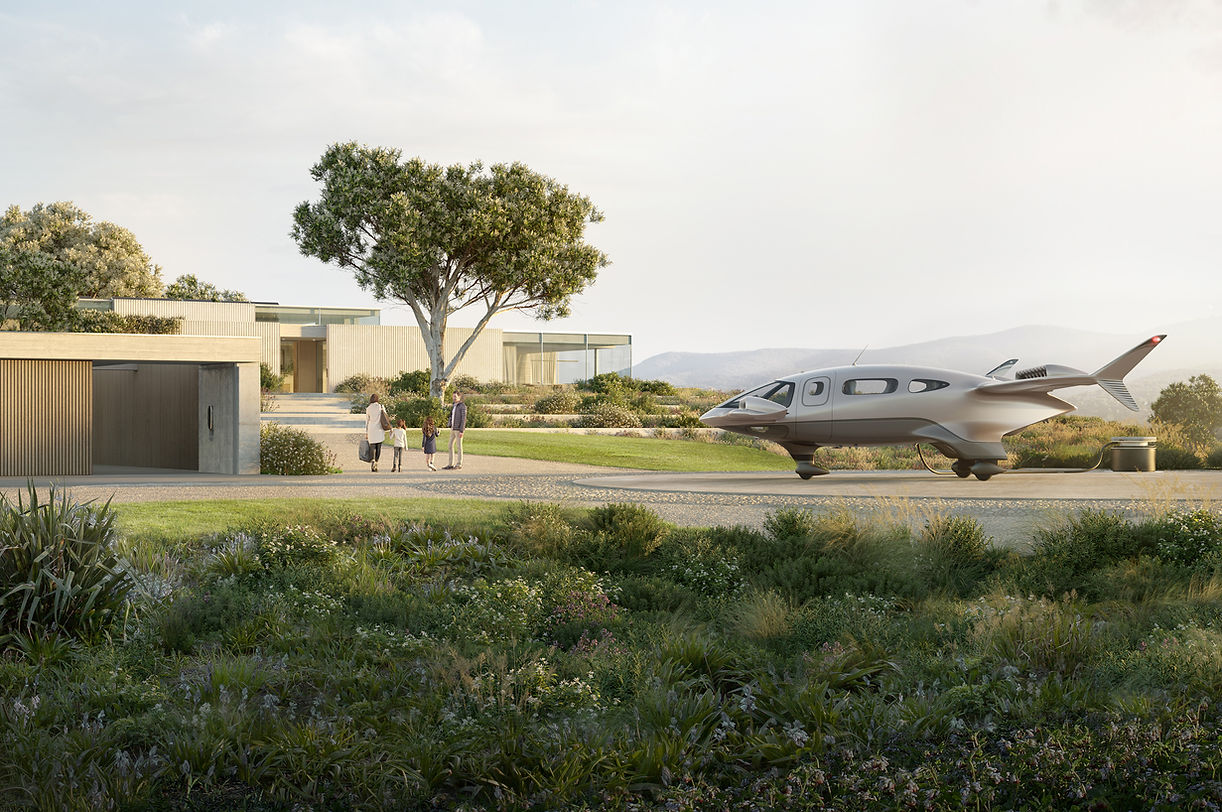
Most real estate developers assess property value in terms of ground-level access, street frontage, transit proximity, and walkability. But a growing number of established developers and landowners are evaluating their properties from a different direction: the sky above them. As electric vertical takeoff and landing (eVTOL) aircraft move closer to commercial deployment, whether a rooftop or adjacent site can host a vertiport – a landing pad for these aircraft – is entering the due diligence process for new developments and existing assets alike.
The shift is early, but no longer hypothetical. Certified vertiport infrastructure is already being developed in the Middle East, and regulatory activity in the U.S., particularly in New York and New Jersey, indicates the conversation is spreading to markets where real estate capital is already concentrated, according to Rasha Alshami, Founder & CEO of LYNEports, an aviation infrastructure advisory and technology company.
The Question For Developers
When developers approach aviation infrastructure advisors, the question is typically straightforward: can this work on my site? According to Alshami, the inquiry usually combines brand positioning with future-readiness. “They want their location to have a brand positioning to be premium, to be better,” she says. “They want it to be future-ready.”
The feasibility answer is rarely simple. It depends on airspace availability, proximity to military operations, surrounding obstacles, regulatory jurisdiction, and the specific zoning of the area. A site near a busy airport like Heathrow might support only minimal operations. A rooftop on a 60th-floor tower raises firefighting and rescue questions that ground-level sites do not.
LYNEports works with developers at different stages, some before they acquire a site, others after development is complete, and they want to retrofit. “We have clients that come in after they already have developed a site and they want to integrate it and rehabilitate their building,” Alshami says.
A Layer of Property Value
The framing that connects this to real estate investment is Alshami’s argument that airspace above a property functions as an asset layer, much like ground-floor retail or rooftop amenity space. “The same way you have real estate on the ground and it costs X amount of dollars because it’s premium or it’s located in a specific area, it’s the same thing with airspace,” she says. “Real estate developers are starting to look into the airspace as well, not only on the ground space.”
A property with viable aerial access could command higher occupancy, premium rental value, and increased asset valuation – not because the developer operates flights themselves, but because they can lease that infrastructure to an operator. Some developers may never intend to run the vertiport; instead, they lease the rooftop or adjacent area to a third-party operator and collect revenue from an asset that previously generated nothing. Alshami compares unused rooftops covered in mechanical equipment to “dead square meters that you have not taken any potential value out of.”
She draws a parallel to data centers. “When they first came in, and nobody knew where to place those data centers within cities, today this is super normal,” she notes. “Almost quite a lot of companies and family offices own data centers.”
What Makes a Site Work
There is no universal template for a viable vertiport site. Strong indicators include proximity to major destinations, good ground transport connectivity, limited surrounding obstacles, viable approach paths, and sufficient separation from sensitive land uses like military bases, hospitals, and schools.
The last-mile connection matters. If a passenger lands at a vertiport but faces an hour-long walk to their final destination, the time savings that justify aerial transit disappear. “If that cycle is broken or it would require you to wait a little bit longer, it might not be relevant anymore,” Alshami says. Cities with strong existing transit networks have an advantage because passengers can move quickly from the vertiport to their destination by bus, train, or bicycle.
Zoning determines not just whether a site can host aviation but what kind. A residential area might be appropriate for small cargo drones delivering packages rather than passenger aircraft. A hospital zone suggests emergency landing operations. “The location matters. The zoning matters. The functionality of it also matters,” she says.
The hardest constraint is airspace conflict with military operations. A site near a military base faces severe difficulty obtaining approval, according to Alshami. Weather conditions, safety protocols for high-rise rooftops, and proximity to congested commercial airspace also narrow the field of viable locations.
Where the Market Is Moving
The Middle East leads in deployment. Alshami points to the recent announcement of a certified vertiport in Dubai involving Skyports, RTA, and Joby, along with activity in Saudi Arabia and Qatar. The U.S. follows, concentrated in New York and New Jersey. Europe is progressing through regulatory frameworks and collaborative planning.
The client base skews toward established developers and institutional players. “The majority are actually more established real estate developers – developers that really want that premium capture and future capture,” Alshami says. Investment offices and family offices are also exploring whether their holdings can accommodate this use.
The financial logic has to close. Alshami emphasizes that attractiveness and premium positioning alone do not justify the investment. “If you are unable to make sure that this location has a big probability to be leased, has a big probability to be utilized, then there is no point for me to add a vertical landing in my property at all,” she says.
For developers evaluating whether to pursue aviation-ready infrastructure now, the calculus involves not just current feasibility but the pace at which regulatory approvals and operator demand are building in their specific market. Properties positioned early in regions where deployment is already underway – Dubai, Saudi Arabia, parts of the northeastern U.S. – stand to capture that lease value before competition for viable airspace intensifies.
About the Expert: Rasha Alshami is Founder and CEO of LYNEports, an aviation infrastructure advisory and technology company focused on vertiport development and airspace feasibility for real estate developers and institutional landowners.
This article is based on information provided by the expert source cited above. It is intended for general informational purposes only and does not constitute legal, financial, or real estate advice. Readers should conduct their own research and consult qualified professionals before making any real estate or financial decisions.
Similar Articles
Explore similar articles from Our Team of Experts.