

The Greater Chicago area remains a critical logistics center, with its unrivaled transportation infrastructure driving demand for industrial real estate even as the region’s office sector ...

South Florida's East-West Divide Is Shaping Who Gets Discounts and Who Faces Bidding Wars

Written by:
Date:
10 Jul 2026
Share via Facebook

Share via Linkedin

Share via X

Copy to clipboard

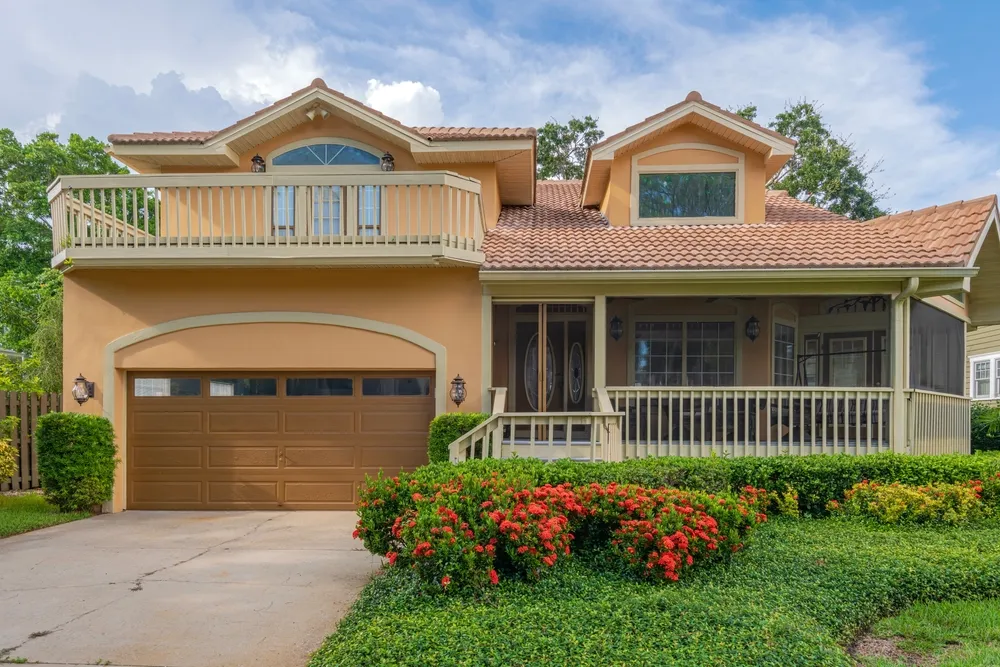
In South Florida’s residential market, geography matters in ways that don’t show up in regional averages. Properties in western suburban communities with strong school districts are drawing multiple offers within days of listing, while homes on the eastern side, closer to the beach and urban cores, are sitting with heavy inventory and selling at discounts of $50,000 to $100,000 below asking price, according to Hector Valdes, Principal and Luxury Realtor with The Hector Valdes Team at Coldwell Banker Realty. The split illustrates how a single metro area can contain a buyer’s market and a seller’s market simultaneously, depending on which direction you drive.
The divergence traces back to a post-COVID correction. During 2020 and 2021, investors bought single-family homes in tourist-heavy eastern areas – particularly Fort Lauderdale and Hollywood – to operate as short-term rentals. When the rest of the country and Europe reopened, vacation demand in South Florida cooled. Those owners now face lower returns, and many are listing, flooding eastern submarkets with inventory.
Valdes describes the last two to three years as broadly favoring buyers across much of South Florida. “What happened in those submarkets is that all of a sudden we have a lot of inventory, and it’s supply and demand; we have lots of listings, and then the pricing starts to go down,” he said.
The western side tells a different story. A listing Valdes took in Davie, a community west of Fort Lauderdale, drew four showings immediately and an offer within three to four days. A listing last year in another western neighborhood attracted multiple offers. The driver, according to Valdes, is straightforward: good school districts keep demand firm regardless of broader softness.
The housing stock itself reinforces the divide. Eastern homes built in the 1950s, 60s, and 70s often have problems with cast-iron pipes and aging roofs. Western communities tend to have newer construction without those issues, reducing buyer hesitation. For buyers comparing properties at similar price points, the age and condition gap means that eastern homes often require more due diligence and a larger budget for deferred maintenance.
The Condo Problem
South Florida’s condo market faces a separate structural challenge. Following the Surfside building collapse in 2021, regulations now require buildings to carry structural integrity reserve studies and reinspections. Buildings must hold more reserves for repairs over specified periods, which has driven up costs for unit owners, sometimes dramatically.
Valdes describes one listing in Pompano Beach that carried an $85,000 assessment for a single unit. That kind of exposure has made older condos a cautionary category for investors. “I always tell people to probably avoid older condos,” he said, noting that well-run buildings have been less affected but that the regulatory burden has broadly depressed the condo market and pushed inventory higher.
Newer buildings operate under different math. A recent transaction Valdes closed in Miami’s Design District, a one-bedroom condo purchased by a Canadian investor for $465,000, illustrates the distinction. The building, called Quadro, was built in 2020 and allows short-term rentals with a minimum three-day stay. For an investor seeking Airbnb income, the newer construction means minimal near-term exposure to the reserve requirements weighing on older buildings.
For buyers considering condos, the practical question is not just price but age and financial health of the building’s reserves. A lower purchase price on an older unit can be offset quickly by a single large assessment.
Price Arbitrage Play
One pattern Valdes highlights is migration from Miami into Broward County communities where comparable homes cost significantly less. Oakland Park, a city between Fort Lauderdale and Pompano Beach, has become a consistent draw.
“Whenever I get a listing in Oakland Park, I always get tons of buyers from Miami, because it’s such a value,” he said. “People come here, and they see they can buy a home for 450, 500,000, and in Miami it’s going to be 800,000.”
The price gap is large enough to pull buyers who might not have considered the area otherwise. Valdes notes that the community offers single-family homes, townhomes, and some condos, a range of options that makes it accessible to different buyer profiles. For buyers priced out of Miami but unwilling to leave South Florida entirely, communities like Oakland Park represent a middle path between affordability and proximity to urban amenities.
A Potential Tax Shift
Looking ahead, a ballot measure coming to Florida voters in November could reshape the market’s incentive structure. The proposal would increase the homestead exemption, which reduces the assessed value subject to property taxes, from $50,000 to $150,000 in the first year, then to $250,000 in the second year. The exemption applies only to Florida residents who own their primary home.
Valdes ran his own address through a calculator and found his taxes would drop from roughly $8,500 to $4,500, a reduction he describes as hundreds of dollars per month off his mortgage payment.
If the measure passes, it could strengthen demand from existing residents looking to buy, effectively lowering the carrying cost of homeownership. It would not, however, benefit out-of-state investors or second-home buyers, since the exemption requires residency. Much of South Florida’s recent demand has come from exactly those non-resident buyers. The measure could tilt the market’s composition further toward primary residents, though its actual impact depends on voter approval and how broadly buyers factor the savings into purchase decisions.
For current homeowners already carrying a Florida mortgage, the savings would be immediate and measurable. For prospective buyers weighing whether to establish residency, the exemption adds another variable to the rent-versus-buy calculation, one that favors committing to Florida as a permanent home rather than treating it as a seasonal destination.
About the Expert: Hector Valdes is Principal and Luxury Realtor with The Hector Valdes Team at Coldwell Banker Realty, serving the South Florida residential market across Broward and Miami-Dade counties.
This article is based on information provided by the expert source cited above. It is intended for general informational purposes only and does not constitute legal, financial, or real estate advice. Readers should conduct their own research and consult qualified professionals before making any real estate or financial decisions.
Similar Articles
Explore similar articles from Our Team of Experts.