
Arizona’s luxury real estate market looks, from the outside, like a single thing: subject to the same forces, responding to the same headlines, moving in one direction at a time. Acros...

In Palm Desert, California, Condos Are Lagging Behind Houses – and Canadian Buyers Are Coming Back

Written by:
Date:
16 Jul 2026
Share via Facebook

Share via Linkedin

Share via X

Copy to clipboard

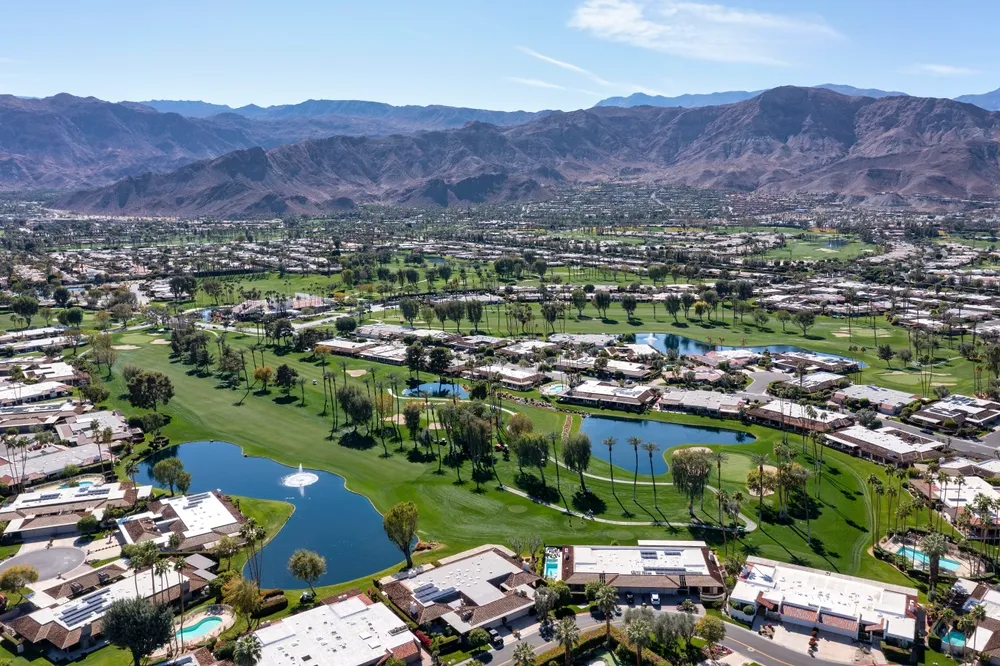
Single-family homes in Palm Desert’s gated golf communities are holding value and selling quickly. Condominiums in the same communities are not. The split has less to do with location or club membership than with whether a unit has been renovated, and in a market where three-quarters of owners use their homes only four to five months a year, buyers are unwilling to take on a remodel in a place they barely occupy.
“Our houses are holding their value and are selling quite quickly, where the condominiums are tending to lag in their market time,” said Peggy Mason, Owner, Founder, & Lead Broker of The Mason Group, who operates out of two onsite sales offices at golf course country clubs in Palm Desert. “They’re on the market longer, and their prices are softer.”
What Sells and What Sits
Both communities Mason covers – the Lakes Country Club and Palm Desert Resort Country Club – were built in the 1980s. That vintage creates a clear dividing line between units that move and units that don’t.
Renovated units with good views sell without sitting, according to Mason. Unrenovated units, particularly those with carports instead of garages, face price reductions or extended time on market. Buyers from the Pacific Northwest gravitate toward water views, and the Lakes community has roughly 20 bodies of water.
For buyers considering a seasonal home they will occupy less than half the year, move-in condition is not a preference but a requirement. A renovation project in a property used November through April carries costs and logistical burdens that discourage all but the most committed purchasers.
The Canadian Factor
Canadian buyers are returning after pulling back sharply last season. Mason said many Canadians who typically rent seasonally between November and April stayed away last year due to political frustration. That absence was felt across the market.
“This year I already have reservations for rentals; nine of those seasonal rentals are Canadians,” Mason said. “And we are seeing Canadians step back into our purchasing market.” She closed a condo sale to a Canadian couple approximately two weeks before the interview.
The volume Mason describes – nine rental reservations, one closed sale, is early evidence rather than a confirmed trend. But for a market that depends heavily on seasonal demand from cold-weather states and Canada, even preliminary signs of Canadian re-engagement affect pricing confidence and listing strategy.
HOA Costs and Buyer Decision-Making
For buyers comparing communities, Mason identified a rough hierarchy: price relative to amenities comes first, followed by the amenities themselves, with HOA fees ranking third. But those fees carry real weight. Monthly HOAs in the area range from $900 to $2,700 depending on the club: a spread wide enough to reshape a buyer’s monthly cost of ownership substantially, especially on a property used only part of the year.
For a seasonal owner occupying a unit five months annually, a $2,700 monthly HOA represents a fixed cost of $32,400 per year regardless of occupancy, a figure that can exceed property taxes and approach the annual cost of renting seasonally instead.
The Short-Term Rental Angle
For investors, one community stands out. Palm Desert Resort Country Club voted to allow short-term rentals, which is not typically permitted in Palm Desert. That exception makes it attractive enough that some owners hold five units, treating them as a business. The desert’s event calendar supports the model; Mason cited the BNP Paribas Open at the Indian Wells Tennis Center, which she said draws 450,000 visitors over two weeks, along with the American Express golf tournament and a newer hockey arena.
The short-term rental permission is community-specific. Investors unfamiliar with the area could easily assume it applies broadly across Palm Desert’s gated communities when it does not. Buyers considering an investment purchase in any other community should verify rental rules before committing.
Concessions and Financing
Seller concessions remain limited. Both communities charge a reserve replenishment fee, and Mason noted that sellers have not yet reached the point of offering to share that cost with buyers, something that happened in previous slowdowns. The primary concession right now is sellers paying the buyer’s agent commission.
On financing, Mason observed that the majority of transactions in these private communities are cash purchases, though many buyers fund them through HELOCs on primary residences. That makes interest rate movement relevant even in a nominally cash-heavy market; tighter credit or higher HELOC rates could slow transaction volume without showing up in conventional mortgage data.
Pickleball as a Market Driver
Pickleball is now pulling buyers into these communities at a rate comparable to golf, according to Mason. One club converted its tennis courts and now has 32 pickleball courts; the other has nine. Mason described it as bringing a younger demographic alongside traditional retirees.
For sellers in communities that invested in court conversions, this broadens the buyer pool beyond the retirement demographic that defined the desert before COVID. Communities without pickleball infrastructure may find themselves competing for a shrinking share of purely golf-motivated buyers.
Looking Ahead
The Palm Desert condo market’s near-term trajectory depends on two factors Mason raised separately: whether Canadian seasonal demand continues rebuilding, and whether financing conditions – particularly HELOC availability and rates – remain favorable enough to support cash-equivalent purchases. In a market where three-quarters of owners are seasonal, friction in either channel would amplify the softness condos are already experiencing. For sellers of unrenovated condos in particular, the combination of soft demand and buyer resistance to renovation projects may require pricing concessions beyond what the market has so far demanded.
About the Expert: Peggy Mason is Owner, Founder, and Lead Broker of The Mason Group, operating out of two onsite sales offices at golf course country clubs in Palm Desert, California, specializing in the Lakes Country Club and Palm Desert Resort Country Club communities.
This article is based on information provided by the expert source cited above. It is intended for general informational purposes only and does not constitute legal, financial, or real estate advice. Readers should conduct their own research and consult qualified professionals before making any real estate or financial decisions.
Similar Articles
Explore similar articles from Our Team of Experts.