
Outside investors acquiring retail properties in secondary markets with plans to upgrade tenant quality are discovering an uncomfortable reality: financial strategies that promise higher ret...

In Michigan, Property Taxes Are Rising Fast Enough to Undercut the State's Affordability Advantage

Written by:
Date:
14 Jul 2026
Share via Facebook

Share via Linkedin

Share via X

Copy to clipboard

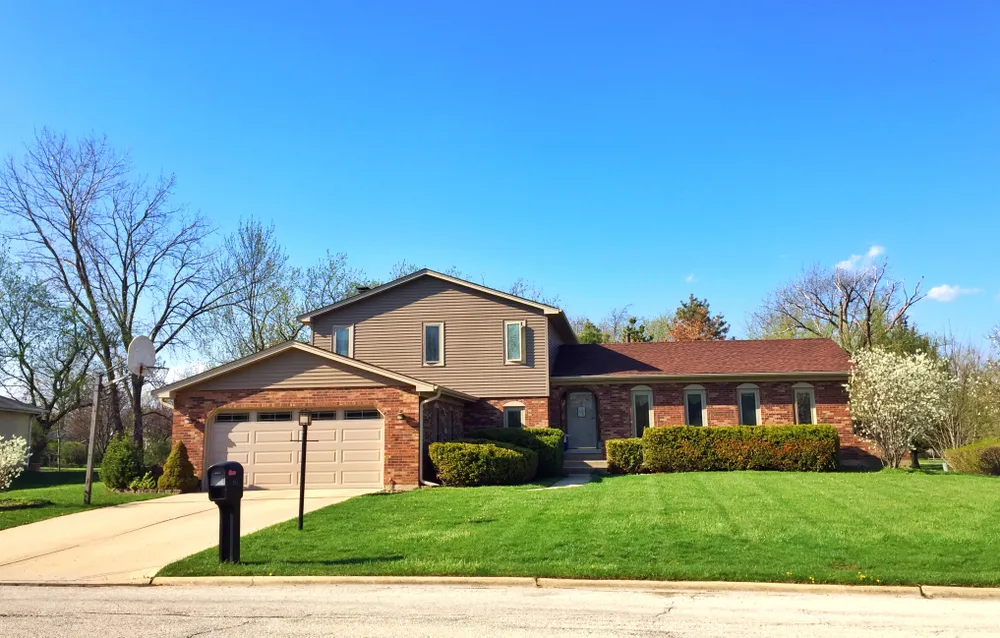
If you are shopping for a home in Michigan right now, you are probably watching mortgage rates. But veteran observers in the Lansing and Grand Rapids markets argue that a different number on your monthly statement deserves more attention: your property tax bill. It has been climbing fast enough to cancel out some of the affordability that drew buyers to Michigan in the first place, and a November ballot measure could change the math entirely.
Jeff Burke, associate broker and coach at Jeff Burke and Associates with eXp Realty, has been selling homes across central and western Michigan for nearly 29 years. His team closes roughly 170-180 transactions per year across the greater Lansing and Grand Rapids markets. In mid-2026, he says the biggest headwind he is watching is not interest rates or inventory. It is property taxes.
Affordability’s Hidden Cost
Michigan has long marketed itself as an affordable alternative to pricier coastal states. Burke acknowledges that home prices have risen, but notes the state still compares favorably on sticker price. The problem is what happens after closing. Property tax assessments have jumped sharply enough that monthly housing costs now push some buyers – particularly first-time buyers – past their comfort zone.
The effect is especially painful for entry-level purchasers who stretched to qualify for a mortgage, only to discover that taxes add hundreds more per month than they budgeted for. As Burke puts it, “It’s pricing first-time home buyers out of homes.”
Taxes Outpace Interest Rates
This matters because Michigan’s affordability pitch has always been relative. Compared to Illinois, Ohio, or states farther afield, the state offered lower purchase prices and a reasonable cost of living. But property taxes are a recurring cost that compounds every year. A buyer who locks in a fixed-rate mortgage still faces rising tax bills that inflate the true monthly payment over time. That erodes the advantage Michigan once held.
Meanwhile, interest rates, the number most buyers obsess over, have moved in a narrow band. Burke notes that rates have risen and fallen slightly, with no meaningful change for most buyers. In mid-2026, rates are neither dramatically better nor dramatically worse than they were six months ago. Property taxes, by contrast, have moved in one direction: up.
A November Vote Looms
The potential relief comes from a ballot measure headed to Michigan voters in November. The state is moving toward a vote on eliminating property taxes entirely. A separate proposal would also target the state and county transfer tax, the fee buyers and sellers pay at closing. If both measures pass, homeowners’ monthly savings could be substantial, and the purchase-day cost of buying would also drop.
That said, ballot measures are not guarantees. Michigan voters would need to approve the change, and even then, implementation timelines and replacement revenue sources remain unclear. A state that eliminates property taxes must fund schools and local services some other way, typically through higher sales taxes or income taxes. Buyers banking on this change should not treat it as certain.
What Buyers Should Check
For now, the practical takeaway is straightforward. If you are budgeting for a home purchase in Michigan, do not stop at the mortgage payment. Pull the property tax history on any home you are considering and look at the year-over-year increases. A home that looks affordable at today’s tax rate may feel less so in three or four years if assessments keep climbing at their current pace.
Burke frames the tension simply: “Affordability is the one thing, but property taxes are getting in the way of true affordability.” The state’s biggest selling point and its highest emerging cost are now the same line item.
The Transfer Tax Question
One detail worth noting for anyone watching the November vote: Michigan also charges a transfer tax split between the state and county levels. Burke says proposals to eliminate that fee are circulating alongside the property tax measure. For a buyer purchasing a median-priced home in the Lansing area, eliminating transfer taxes at closing could mean keeping several thousand dollars that currently goes to the government on day one. Whether that freed-up cash flows into down payments or upgrades is up to the buyer, but it would change the closing-day arithmetic in a market where every dollar of out-of-pocket cost matters.
Taken together, these proposals suggest Michigan is at a decision point about how it funds local government, and how much of that cost falls on homeowners versus other revenue streams. If the November measures pass, the state’s affordability argument strengthens considerably. If they fail, buyers should expect property taxes to remain the fastest-growing line item in their housing budget, one that no fixed-rate mortgage can protect against.
About the Expert: Jeff Burke is an Associate Broker and Coach at Jeff Burke & Associates (eXp Realty), serving the Greater Lansing and Grand Rapids markets in Michigan for nearly three decades. His team has closed more than 1,200 transactions over the past five years and operates across roughly three-quarters of the state.
This article is intended for informational purposes only and does not constitute legal, financial, or investment advice. The views and opinions expressed herein reflect those of the individuals quoted and do not represent an endorsement of any company, product, or service mentioned. Readers should conduct their own due diligence and consult qualified professionals before making any investment decisions.
Similar Articles
Explore similar articles from Our Team of Experts.



Perspectives, Real Estate Investment, Industry News, Commercial Real Estate, Market Analysis & Policy
Amid growing market uncertainty, private lending expert Philip Bennett argues that experience in evaluating distressed commercial real estate assets has become more crucial than ever, partic...