Suburban real estate values are being redefined, according to Connecticut broker Todd Gibbons, who says the longstanding appeal of rural seclusion has given way to a new priority: paying mor...

Why Buyers in New York's Capital Region Are Choosing 10-Month Waits Over Bidding Wars

Written by:
Date:
09 Jul 2026
Share via Facebook

Share via Linkedin

Share via X

Copy to clipboard

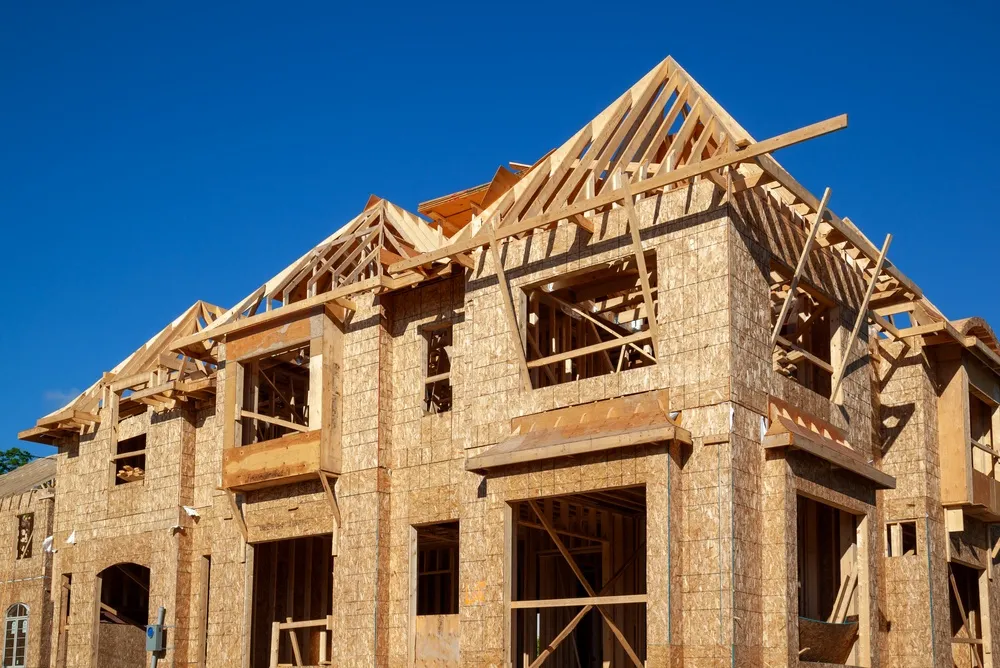
In New York’s Capital Region, a growing number of home buyers are making a choice that would seem counterintuitive in most markets: voluntarily signing up for an eight- to ten-month wait for a home that does not yet exist. The reason, according to agents working the ground there, is simple math. When resale inventory stays this thin for this long, patience becomes a more reliable path to homeownership than competing in multiple-offer situations on the handful of listings that do appear.
Kerry Loiselle, a licensed associate real estate broker with Sterling Real Estate Group, works primarily in new construction across the Capital Region. She says the pattern has become unmistakable over the past several years – buyers who start out looking for an existing home end up pivoting to custom builds not because they prefer the process, but because the alternatives have dried up.
A Persistent Inventory Crunch
The Capital Region’s inventory crunch is not new. Loiselle notes that the area has experienced persistently low supply for roughly four years running. Unlike markets in other parts of the country where inventory has begun to loosen as mortgage rates stabilize, this region has remained stubbornly tight. Pockets of the market are still generating multiple offers, with homes selling above asking price. For buyers who need a specific size, layout, or location, the odds of finding it on the resale market at a price they can accept have narrowed considerably.
That dynamic is what pushes buyers toward new construction. But the Capital Region’s version looks nothing like what buyers in Sun Belt markets might picture. There are no rows of spec homes sitting finished and waiting for occupants. Loiselle describes a fully custom model in which nothing is built until a buyer commits to a specific lot and a set of features. The buyer picks the location, selects the layout, and then waits while the home goes up from scratch.
A Different Kind Of New Construction
This means new construction here does not function as a pressure valve for inventory the way it does in markets with large-scale production builders. Each home is a one-off project tied to a single buyer’s decision. The timeline runs eight to ten months from commitment to closing. Buyers accept that wait because the alternative – endlessly competing for a shrinking pool of resale homes – feels even less certain.
The trade-off is real, though. A buyer committing to a custom build in mid-2025 is locking in today’s construction costs and today’s interest-rate environment for a home they will not close on until early to mid 2026. If rates drop meaningfully in that window, they may have locked into financing at a higher cost than what becomes available later. If material prices shift, there could be change-order surprises. And unlike buying an existing home, there is no inspection of a finished product before committing – the buyer is trusting the builder and the process.
How The Builder Relationship Works
Loiselle’s brokerage is affiliated with New York Development Group, which acquires land and partners with builders to develop it. She represents the builders on the real estate side, which means her clients are working within a specific ecosystem of lots and builder partnerships rather than shopping the open market. Buyers considering this path should understand they are selecting from available lots within these developments, not hiring an independent builder on land they already own. Other custom-build options exist in the region, but this model bundles land acquisition, builder selection, and brokerage representation into a single relationship.
Still, for many buyers in the region, the math tilts toward building. Loiselle describes a recent closing involving a military family relocated to the area for work at a local Navy base. They built a home in Wilton, New York, on an acre of land, within ten minutes of the base and five minutes from the Thruway. That family chose the custom route because, as Loiselle puts it, “they’re willing to take the time, whether it be eight months or 10 months, for a new home to be built.”
Who This Path Works For
The buyer profile skews toward first-time purchasers, families sizing up into larger homes, and empty nesters sizing down. What unites them is not a love of the building process but a practical calculation: in a market where many buyers are simply waiting for the right house to appear, choosing to build is choosing certainty over competition.
The risk that this approach does not address is timing. A buyer who commits today cannot move for the better part of a year. For someone relocating for a job that starts in sixty days, or a family whose lease expires in three months, the custom-build path simply does not work. Those buyers remain stuck in the same thin resale market, competing for whatever comes available. The Capital Region’s inventory problem, in other words, has no quick fix – only a slow one, built one house at a time.
About the Expert: Kerry Loiselle is a Licensed Associate Real Estate Broker with Sterling Real Estate Group, with more than 15 years of experience in New York’s Capital Region specializing in new construction sales.
This article is intended for informational purposes only and does not constitute legal, financial, or investment advice. The views and opinions expressed herein reflect those of the individuals quoted and do not represent an endorsement of any company, product, or service mentioned. Readers should conduct their own due diligence and consult qualified professionals before making any investment decisions.
Similar Articles
Explore similar articles from Our Team of Experts.