
The real estate brokerage industry is under increasing pressure to reduce costs while maintaining high service standards. As physical office spaces become more expensive and competition grow...

The Architecture Gap in Northeast Florida – and Why Flexibility Fills It

Written by:
Date:
08 Jul 2026
Share via Facebook

Share via Linkedin

Share via X

Copy to clipboard

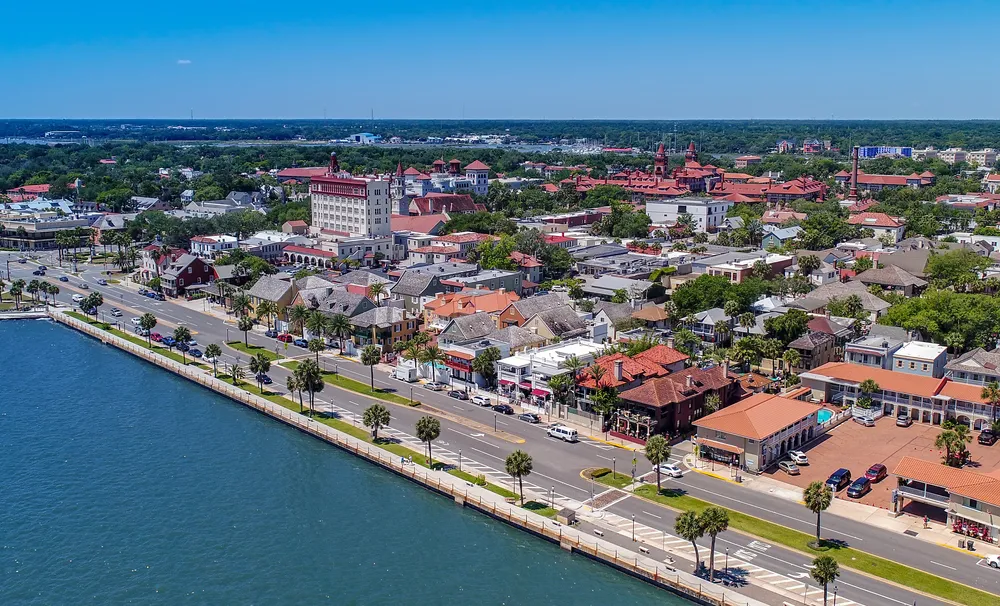
Northeast Florida has spent much of the past decade absorbing population growth, tourism pressure, and an aging building stock that increasingly needs attention. For smaller design firms operating in this environment, the challenge is less about chasing volume and more about finding the right clients at the right time. Open City Architecture, a boutique firm based in St. Augustine, has built its practice around exactly that kind of selective, relationship-driven approach.
Founded by R. Conner Dowling, the firm operates with a local team of four to five people and a distributed network of remote collaborators, many of whom Dowling has worked with for two decades or more. The result is a flexible, project-specific model that spans custom residential work, institutional commissions, hospitality, sports facilities, and municipal projects without committing to any single sector.
A Deliberately Varied Practice
That range is intentional. The firm’s portfolio includes everything from a climbing gym in Jacksonville to a hotel in St. Augustine to parks infrastructure for the city itself. Recent work also includes a performing arts project, a sports training facility, and a renovation for a historic downtown church. “We will work on anything as long as good design is a goal for the project,” Dowling says.
By avoiding overexposure to any one market segment, the firm sidesteps the volatility that has forced larger, more specialized practices to downsize during downturns. “The idea was, we can do a little bit of everything,” Dowling says. “We just have to find the right clients to do that.”
That philosophy has kept the firm grounded in its community, which matters in a place like St. Augustine. This city is small, historically dense, and relatively underserved by architecture firms given its size and growth trajectory. Dowling notes that Jacksonville and its surrounding counties are still developing their professional services infrastructure. That gap has worked in the firm’s favor, generating referrals and repeat business without the need for aggressive marketing.
Residential Pipeline
On the residential side, the picture in Northeast Florida is mixed. Large-scale homebuilders have pulled back after a period of rapid construction, and new housing starts in the suburban corridors between St. Augustine and Jacksonville have slowed. But that slowdown hasn’t affected Open City Architecture’s pipeline in the same way, largely because the firm was never competing for production homebuilding work.
The firm works on custom homes across a range of budgets, prioritizing clients who want a thoughtful design process over those simply looking for square footage. Alongside new construction, a meaningful share of residential work now comes from renovation and addition projects, driven by homeowners expanding for growing families, downsizing strategically, or planning for aging in place.
That last category is particularly relevant in Florida. Dowling describes clients whose current homes work fine today but who are looking ten to fifteen years ahead, adjusting layouts and systems so they can remain in place as their needs change. These projects require a different kind of design thinking, one that accounts for accessibility, caregiver access, and long-term livability rather than just aesthetics or square footage.
Building in Florida also carries its own set of physical constraints. Flood risk, hurricane exposure, and evolving building codes all factor into the design process, adding time and cost to projects that might be more straightforward in other markets. “A lot of our time is spent understanding how to mitigate those things,” Dowling says, describing resilience and sustainability guidance as a core part of what the firm offers.
Construction Costs
Like most practitioners, Dowling is candid about the cost environment. Construction pricing jumped sharply at the onset of the pandemic and has not returned to pre-2020 levels. The volatility has leveled off somewhat, but the baseline is simply higher than it was five years ago. “People just look at their spreadsheets, go back to 2019, and they’re just like, how can this be,” he says.
The firm’s response has been to treat budget discipline as a design skill rather than a constraint imposed from outside. Dowling’s approach is to establish project goals upfront and design toward them, finding cost savings through value engineering without compromising intent. He’s also direct that good design sometimes costs more – and that’s a legitimate outcome when the goals warrant it. “We design within a budget,” he explains. “Let’s create goals for this project and achieve those goals, and we’ll be able to align with the budget.”
Commercial Work
The firm’s commercial work reflects the particular character of the Northeast Florida market. The firm has found consistent work in hospitality – given St. Augustine’s role as a major tourism destination – as well as in institutional and community-focused projects.
One trend Dowling flags as increasingly relevant is the condition of the region’s existing building stock. A significant number of commercial and institutional buildings in the area date to the 1970s and 1980s, and many have not been well-maintained. Bringing those buildings up to current standards, whether for safety, energy performance, or functional relevance, represents a quiet but steady source of demand. “There’s a lot of buildings that need some love,” he says.
Growth Without Scaling
What’s notable about Open City Architecture’s trajectory is what Dowling is not trying to do. He’s not building toward a significantly larger headcount, not chasing developer relationships for their own sake, and not investing heavily in marketing infrastructure. The firm’s growth has come through the quality of completed work and the relationships that follow from it.
“We’re not going to double in size over the next two years,” he says. “It’s a very personal experience working with us, and I want to keep that.”
For a region still developing its design culture and absorbing sustained population growth, that kind of practice is small, technically grounded, and community-embedded. The pipeline is varied, the client relationships are durable, and the firm’s flexibility across project types gives it room to move as different sectors cycle up or down. In a market where professional services infrastructure is still catching up to demand, a firm that can work across scales and sectors without losing quality has a structural advantage, one that grows more valuable as the region continues to mature.
About the Expert: R. Conner Dowling is the founder of Open City Architecture, a boutique design firm based in St. Augustine, Florida, with a practice spanning custom residential work, hospitality, institutional commissions, sports facilities, and municipal projects across Northeast Florida.
This article is based on information provided by the expert source cited above. It is intended for general informational purposes only and does not constitute legal, financial, or real estate advice. Readers should conduct their own research and consult qualified professionals before making any real estate or financial decisions.
Similar Articles
Explore similar articles from Our Team of Experts.