

The multifamily development landscape faces significant challenges as construction costs remain high and interest rates continue to impact project feasibility. Despite these pressures, some ...

In Texas, Distressed Builder Inventory and Legislative Shifts Open Doors for Smaller Build-to-Rent Investors

Written by:
Date:
14 Jul 2026
Share via Facebook

Share via Linkedin

Share via X

Copy to clipboard

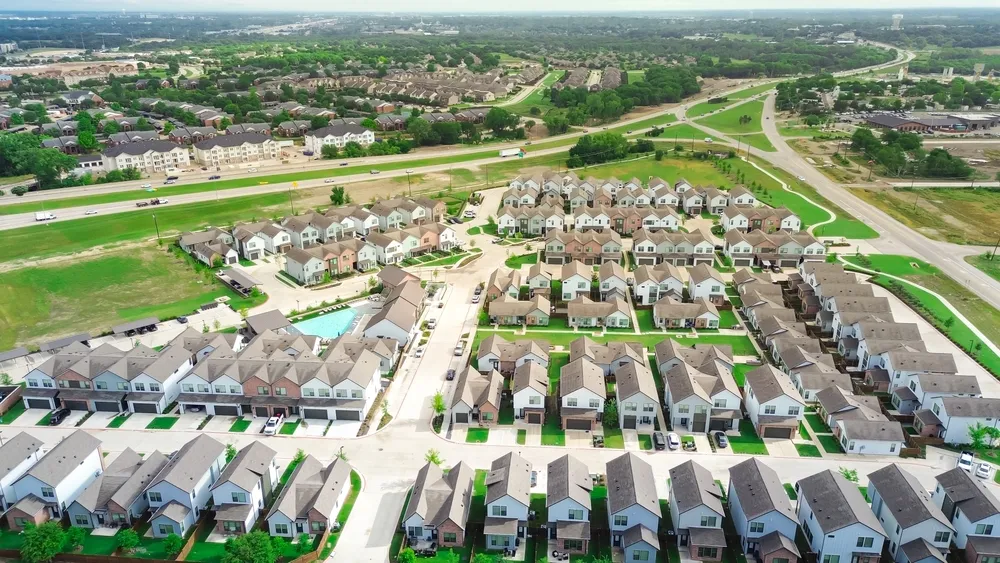
The build-to-rent sector in Texas is entering a period of genuine transition. Institutional buyers are pulling back, distressed builder inventory is surfacing across master-planned communities, and recent federal legislation is quietly opening doors for smaller investors who have long been crowded out of the market. For those paying close attention, the window may be narrower than it appears.
Charlie Kriegel, CEO and Owner of WinHill Advisors – Kirby, has spent the last 12 years working at the intersection of land entitlement, institutional capital, and residential development across Texas and the broader Sun Belt. His firm operates as a full-cycle development partner rather than a traditional brokerage, contracting raw land, navigating entitlements, managing horizontal and vertical construction, and delivering shovel-ready projects to builders, REITs, and family offices.
A Shifting Investor Landscape
The most significant near-term development Kriegel is tracking is the effect of new federal legislation restricting institutional acquisition of single-family properties. Large buyers have responded by cutting acquisition staff – he estimates around 35% reductions – and stepping back from the MLS market.
For local investors and family offices, this creates an unusual opening. Institutional buyers are not competing for properties the way they were even a year ago, which means smaller players can acquire distressed assets without offering at or above asking price. “Right now is a great time for a group of investors or a local guy to take advantage, because you’re not competing against institutional,” Kriegel says.
The evidence is showing up in pricing. Working with banks on REO disposition, his team is seeing discounts at levels that haven’t been common in recent years. At the same time, cash purchases above the $1 million threshold are running higher than usual, suggesting that well-capitalized buyers understand the moment.
The caveat is timing. Institutional capital is not exiting permanently. “They’re multi-billion dollar companies, they’re going to find ways to acquire properties,” Kriegel says. The current window is a function of regulatory adjustment, not structural retreat.
Distressed Builder Inventory
A separate opportunity is emerging from within master-planned communities themselves. Builders who entered markets over the past three years, raised capital, and then fell short of projected sales volumes are now sitting on inventory that banks are beginning to pressure.
Kriegel’s firm has been active in this space. In one recent week alone, the team acquired 35 homes in foreclosure from a builder. The appeal is straightforward: new construction product, no deferred maintenance for at least three to five years, potential access to opportunity zone tax treatment, and pricing that reflects the seller’s distress rather than the asset’s condition.
“You’re taking advantage of a builder that built a really good product,” he explains. “The market might be restricted for sales in an area, but either a local investor, a group of local investors, or an institutional investor can now go buy a product that’s already been built at a discount.”
The main variable to check before moving forward is HOA restrictions on rentals, which can limit the ability to convert a for-sale community into a rental portfolio.
The Underwriting Edge
One reason institutional groups continue to engage WinHill even as they scale back internal teams is proprietary underwriting capacity. Kriegel authored a book on build-to-rent through Forbes Publishing and has developed software that cross-checks institutional models against on-the-ground data from active Texas projects.
Much of this edge comes from navigating municipal dynamics, understanding where new MUDs (Municipal Utility Districts) and PIDs (Public Improvement Districts) are being created, what reimbursement structures are available, and where city pushback on build-to-rent zoning is likely to create delays. As Kriegel puts it, “It seems easy: buy some land, build some homes, and rent them out. But you’re getting a lot of pushback from municipalities and lot size demographics, so you have to have a group that understands how to go over those hurdles.”
The Affordability Argument
One of the more persistent criticisms of build-to-rent development is that it competes with homeownership, particularly in markets where land is already constrained. Kriegel pushes back on that framing directly, positioning his firm’s projects as an alternative to luxury apartment living rather than a replacement for ownership.
A family paying $2,200 per month for a two-bedroom apartment in a high-rise can often access a three- or four-bedroom home with a garage, backyard, and gated security in a build-to-rent community for a comparable monthly cost. For renters who have the credit profile to buy but are prioritizing flexibility or savings, the product fills a real gap.
“It’s $1,500 cheaper nationwide to rent now than to own,” he says. “I’m allowing people to live in a vibrant community, gated, brand new construction with amenities.”
Kriegel notes that most tenants in his communities have the credit scores and income to purchase; they’re choosing to rent while saving or starting families. Home maintenance costs rising 32% in a single year is one data point he cites when arguing that ownership carries costs that don’t always surface in the purchase decision.
What Comes Next
WinHill’s geographic scope extends beyond Texas through affiliated brokers across Sun Belt states, with a particular focus on markets showing strong rent growth and net in-migration. Kriegel also sits on boards related to modular construction, which he sees as an increasingly relevant tool for delivering affordable housing at scale.
On the build-to-rent outlook, he expects renewed institutional interest within 24 to 48 months, contingent on how the legislative environment evolves and where interest rates settle. The near-term period, however, belongs to smaller and mid-sized investors willing to move while the larger players are on the sidelines. The question is whether those investors can identify, underwrite, and close on distressed inventory quickly enough to capture the discount before institutional workarounds emerge and competition returns.
About the Expert: Charlie Kriegel is CEO and Owner of WinHill Advisors – Kirby, with 12 years of experience working at the intersection of land entitlement, institutional capital, and residential development across Texas and the broader Sun Belt. He is also the author of a book on build-to-rent through Forbes Publishing.
This article is based on information provided by the expert source cited above. It is intended for general informational purposes only and does not constitute legal, financial, or real estate advice. Readers should conduct their own research and consult qualified professionals before making any real estate or financial decisions.
Similar Articles
Explore similar articles from Our Team of Experts.