Toronto’s luxury real estate market is at a turning point, shaped by government policies, global economic volatility, and changing attitudes among wealthy buyers. After nearly two decades of rapid appreciation, the market is now experiencing what some industry observers call a necessary correction.
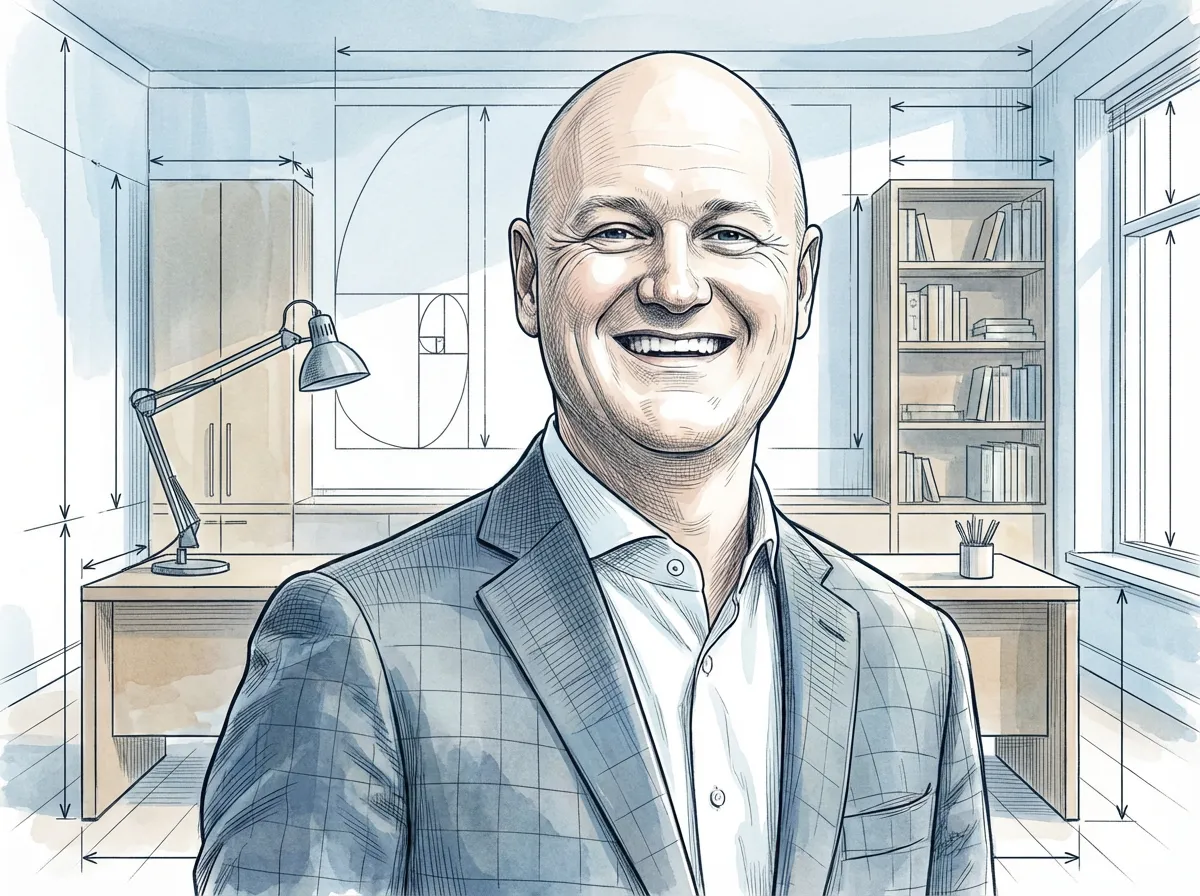
Andy Taylor, founding member of Sotheby’s International Realty Canada, has spent 23 years in Toronto’s high-end market. Taylor recalls a time when luxury homes in neighborhoods like Lawrence Park sold for a fraction of today’s prices. “A brand new custom home in Lawrence Park would sell for $2.5 million in 2004–2005. That same house would be between $7–$8 million now.” This rise reflects more than inflation. It marks Toronto’s evolution into a city that attracts global capital and residents.
How Toronto Became Global
Toronto’s shift from a regional to a global real estate market did not happen overnight. In the early 2000s, many dismissed the idea that Toronto could rival New York, London, or Hong Kong as a magnet for international wealth. “People would say, ‘That’s great, Andy, but Toronto is not New York or London or Hong Kong,'” Taylor recalls.
Perceptions of Toronto as a secondary market have since changed. Today, Toronto draws international buyers because of its stable banking system, quality of life, and political environment.
The city’s condo boom in the early 2000s illustrates this shift. When the Ontario government established a greenbelt to limit suburban sprawl, developers pivoted to high-rise construction in the urban core. This led to rapid densification. Toronto became one of the highest per-capita walk-to-work cities in North America, according to Taylor. Condos became both homes for residents and investment vehicles for buyers seeking rental income, in a city that had seen limited new rental construction since the 1970s.
Policy Changes Slow Toronto Sales
As prices climbed and affordability worsened, policymakers intervened. Ontario imposed a 15% non-resident tax, later raised to 25%. In 2023, the federal government banned non-residents from purchasing urban residential properties. These tax and ownership restrictions, intended to cool the market and improve affordability, have had a clear impact.
Resale transactions in Toronto have dropped sharply. “Our resale sales are about 50% of what they would have been three years ago,” Taylor says. The pre-construction sector has slowed even more dramatically. “Toronto was building about 35,000 new condo units a year, and we’re down to about 500.” This near-halt in new supply could create future inventory shortages. Taylor warns, “With no pre-construction and no new product, in five years, when demand returns, we’ll have no inventory and prices will shoot up again.”
Luxury Segment Shows Mixed Results
The luxury segment has shown more resilience than the broader market, but it has not escaped the downturn. Taylor recently sold a Ritz Carlton unit for $1,800 per square foot, a 10% drop from the $2,000 to $2,100 per square foot these units commanded three years ago. Standard condos have seen steeper declines. Some now sell for $1,200 per square foot, down from a peak of $1,600 to $1,800 per square foot.
Luxury sellers, however, tend to be less pressured. “In the luxury market, sellers mostly don’t need to sell,” Taylor explains. Many listings come to market only when sellers have specific reasons, keeping inventory tight even as sales volumes decline.
The buyer pool has also changed. With the non-resident ban in effect, most high-end purchases are now domestic, from buyers in Toronto, Ontario, or other Canadian regions. Some Americans remain active in recreational markets outside city limits, where the ban and higher non-resident taxes do not always apply.
Luxury Homes as Investment Assets
Luxury residential real estate is increasingly viewed as an asset class by the world’s wealthiest individuals. Taylor’s experience with Sotheby’s International Realty Canada’s Market Leaders Group, a cohort of 50 top agents who collectively sold $6 billion in real estate last year, gives him a global perspective.
Taylor points out that the number of billionaires worldwide has grown significantly, from approximately 2,153 in 2019 to 2,769 in 2024 and 2,919 in 2025, according to Forbes data. However, the supply of trophy residential properties has not kept pace. “They’re looking at these residential assets as a new asset class in their portfolio. It’s not just about a place to live. With this segment growing and limited new supply, these homes are being treated as investments,” Taylor says.
This supply-demand imbalance is visible in Toronto, where international buyers, when permitted, compete for a limited pool of luxury properties. The resulting gap between supply and demand supports prices at the top end, even as broader market conditions soften.
Toronto Market Outlook for 2026
Looking toward 2026, Taylor sees a market defined by uncertainty and selective opportunities. The non-resident buying ban is scheduled to expire at the end of 2026, but its future remains unclear. Global conflicts and trade disputes have made Canadian buyers more cautious. “When Canadians don’t know what’s coming economically, they go deer in headlights and don’t do anything,” Taylor says. This hesitation slows the market and eventually leads to softer prices.
Despite this uncertainty, early signs of renewed international interest are emerging. Taylor reports inquiries from expats and investors affected by conflicts in Iran and Ukraine. “We’re seeing interest from the Middle East, Dubai, Germany, London, and Europe,” he notes. Some Canadian citizens who had moved capital to Dubai are now returning funds to Canada. For buyers, current conditions present opportunities. Properties listed today are often held by motivated sellers who understand the need to price competitively. “These sellers aren’t giving away their product, but they understand where the market is and that they have to offer good value,” Taylor says.
Toronto Luxury Market Next Steps
Toronto’s luxury real estate market now reflects broader global trends: local policy influence on international investment, the emergence of residential property as an institutional asset, and the challenge of balancing affordability with sustained demand at the top end.
If policy restrictions ease and economic conditions stabilize, Toronto’s international appeal and limited high-end inventory could drive a new round of growth. For now, the market is defined by low transaction volumes and selective deals. There is a growing recognition that luxury homes are more than places to live. They are strategic assets in a global portfolio.
Buyers and sellers must navigate a landscape shaped by policy, global events, and shifting investment priorities. Those who adapt to policy and market conditions and focus on long-term value will be best positioned for whatever comes next.
About the Expert: Andy Taylor is a founding member of Sotheby’s International Realty Canada and has spent 23 years specializing in Toronto’s luxury real estate market. He is a member of Sotheby’s International Realty Canada’s Market Leaders Group, a cohort of top-producing agents across the Sotheby’s International Realty network.
This article is based on information provided by the expert source cited above. It is intended for general informational purposes only and does not constitute legal, financial, or real estate advice. Readers should conduct their own research and consult qualified professionals before making any real estate or financial decisions.