
The Long Island, NY real estate market continues to show notable stability, especially in its top-rated school districts, where demand remains strong regardless of broader economic fluctuati...

While the Second Home Market Cools, This New Jersey Lake Community Has Built-In Price Support

Written by:
Date:
03 Jul 2026
Share via Facebook

Share via Linkedin

Share via X

Copy to clipboard

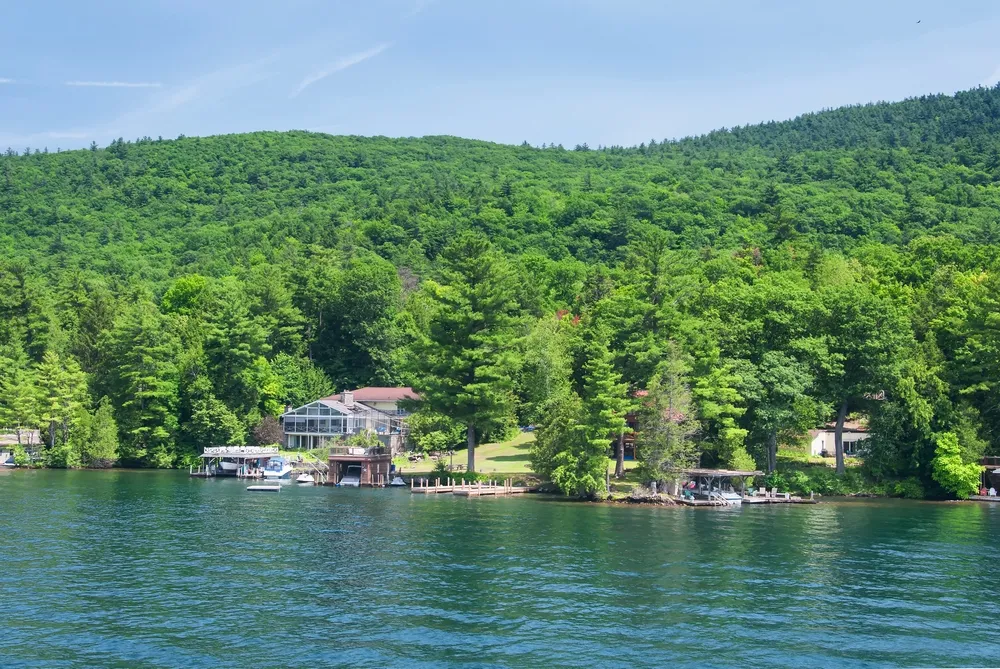
Thirty-two miles from Midtown Manhattan, a private lake community of 450 homes sits largely unknown to the broader real estate market. Green Pond, tucked into the hills of northwestern New Jersey, operates by its own rules: limited inventory, strict rental controls, and a buyer profile shaped more by lifestyle than by interest rates.
As second home markets across the Northeast cool from their pandemic peaks, Green Pond offers a useful case study in how geography, scarcity, and community identity can insulate a micro-market from broader economic pressures. With only 450 homes, a gated single-road entrance, and thousands of acres of undeveloped surrounding land, the community’s supply constraints are structural rather than cyclical.
Jill Rotta, a sales associate with Green Pond Real Estate, affiliated with Coldwell Banker Realty, has spent her career selling homes in the same community where she lives. Along with her mother and a third partner – all residents – the team holds roughly 99% of the market. “We have sold every home in the community at least once, and some of them as many as six times,” she notes. That concentration shapes everything from pricing to buyer relations, since every transaction adds a neighbor.
A Community Built on Scarcity
Green Pond’s appeal rests on factors that are difficult to replicate. The lake is fed by glacial springs and consistently ranks among the cleanest in the Northeast, drawing comparisons to Lake George and the Adirondacks despite being less than an hour from New York City. Amenities include sailing, motorboating, tennis, pickleball, and organized youth programs.
“Buyers show up here, walk out to the end of a dock, and say, ‘Where am I? I can’t believe I’m only 32 miles from Midtown,” Rotta says.
Price points currently range from around $600,000 for an off-lake, three-season cottage to over $3 million for a substantial lakefront property. A closing scheduled for late June 2026 is set at $2.3 million – a lakefront home purchased by empty nesters who relocated to Florida after COVID but wanted a summer base near their adult children still living in the New York area.
Two Buyer Types
The community draws from two distinct demographics, both motivated by the same core appeal: proximity to New York without the feel of being near it.
The first group is young families, typically in their 30s and early 40s, often working in finance, living in New York City, Hoboken, or affluent New Jersey suburbs like Summit, Madison, and Chatham. They want a weekend escape that doesn’t require a long drive. “They don’t want to be three to five hours from their primary home,” Rotta explains. The short distance means they can return midweek for children’s activities without losing an entire day to travel.
The second group has grown significantly since the pandemic: empty nesters seeking a place that will draw their adult children and grandchildren back. Many already own homes in Florida or the Carolinas but want a summer anchor closer to family. The $2.3 million closing this month is a direct example of that pattern.
Both groups are drawn by proximity, privacy, and a community atmosphere that Rotta describes as reminiscent of a simpler era. “There are very few places left in the United States that are like Green Pond. You can let your kids ride their bikes to tennis in the morning. It’s extremely safe.”
COVID and What Followed
Like many second-home and lake markets, Green Pond experienced an intense spike in demand during the pandemic. Two homes were sold sight unseen during that period. One went to a couple from Hawaii following a FaceTime walkthrough; they paid $110,000 over asking price without ever visiting. Another, priced around $2 million, sold after a bidding war well above the list price.
That frenzy has since cooled. The spring 2026 market has been slower than expected, with two lakefront listings sitting longer than the team anticipated. Rotta attributes part of the slow start to an unusually harsh winter and a late spring across the Northeast, but acknowledges broader forces may be at play. Comparable lake communities in the region, ones Rotta says don’t match Green Pond’s water quality or privacy, are experiencing similar slowdowns. “The market may be normalizing a little due to extraneous conditions,” she says.
Rental Rules as a Price Stabilizer
One mechanism that distinguishes Green Pond from many comparable communities is its approach to short-term rentals, and how those restrictions function as a price support. The HOA limits rentals to a minimum of one month, caps them at three per year, and restricts peak-season rentals to two between Memorial Day and Labor Day. Fees apply to both the property owner and the renter.
“It’s a very discouraging rental market, which we like, because it keeps our property values up,” Rotta says. “We don’t want to be the Jersey Shore.”
Despite the restrictions, the rental channel still serves a strategic purpose. Renters who experience the community firsthand frequently return as buyers. The team accommodates rentals selectively for that reason, treating them less as a revenue stream and more as a buyer pipeline.
Watching Wall Street
The community’s buyer base creates a specific vulnerability: dependence on equity market performance. The majority of high-end lakefront buyers are finance professionals, many in their 30s, with compensation tied directly to Wall Street. “If the stock market tanks, we’re in trouble,” Rotta says directly.
That said, the community has historically shown some resilience to downturns. During the 2008 financial crisis, some buyers actually accelerated purchases, viewing real estate as a safer place to park capital during equity volatility. Rotta estimates that a major market crash would take six or seven months to register in Green Pond’s sales activity, a lag created by the community’s appeal as an alternative store of value.
That buffer doesn’t eliminate risk, but it does suggest the community’s value holds even when broader conditions deteriorate. For buyers and investors watching the intersection of lifestyle real estate and financial market cycles, Green Pond represents a specific type of micro-market, one where fixed supply, community controls, and proximity to a major metro continue to support prices even as the broader second-home landscape cools. Whether that resilience holds through a sustained equity downturn remains untested at current price levels.
About the Expert: Jill Rotta is a sales associate with Green Pond Real Estate, affiliated with Coldwell Banker Realty, working exclusively within the Green Pond lake community in northwestern New Jersey. She lives in the community and, along with her mother and a third partner, holds roughly 99% of the local market.
This article is based on information provided by the expert source cited above. It is intended for general informational purposes only and does not constitute legal, financial, or real estate advice. Readers should conduct their own research and consult qualified professionals before making any real estate or financial decisions.
Similar Articles
Explore similar articles from Our Team of Experts.