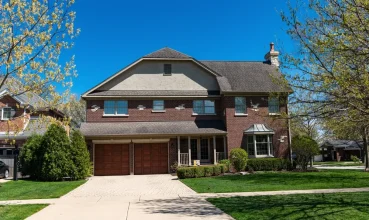

The Treasure Valley real estate market in Idaho has settled into a more predictable pattern after several years of extreme swings, according to Chris Wolford, team leader at Green Pine Homes...

Greater Boston's Housing Market Has Cooled – and the Condo Sector Is Facing Problems That Won't Resolve Quickly

Written by:
Date:
03 Jul 2026
Share via Facebook

Share via Linkedin

Share via X

Copy to clipboard


The Greater Boston real estate market that defined much of the past decade, one where bidding wars were routine and even modest properties attracted dozens of offers – has given way to something more measured. For agents working across Massachusetts, the change is visible in longer days on market, more selective buyers, and a condo sector navigating structural challenges that show no signs of resolving quickly.
Bonnie Lai, Founder and Associate Broker at 1st Knock Realty, has been active in Greater Boston since 2014 and has watched the market move through several distinct phases. Her read on where things stand in mid-2026 offers a useful counterpoint to broad national narratives about inventory shortages and persistent housing demand.
A Market That Moves Property by Property
Current conditions in Greater Boston defy simple characterization. Activity varies dramatically from one listing to the next – what Lai calls a “tornado market,” where results on one property tell you little about the one across the street.
That variability marks a meaningful departure from the COVID era, when cheap money compressed the gap between strong and weak listings. Today, move-in-ready single-family homes in mid-range price bands continue to attract competitive offers, sometimes drawing multiple bids within days. But properties needing significant work are sitting on the market longer, and sellers who price based on pandemic-era comps are finding the market less forgiving.
The buyer pool has also changed in character. Many prospective purchasers have been searching for two years or more, unwilling to overbid and comfortable enough renting that they will only move if the right property appears at the right price. “During COVID, the ugliest house would sell at a very unreasonable price,” Lai notes. That urgency has largely evaporated.
The Condo Market’s Structural Problem
If the single-family segment is navigating a slowdown, the condo market is dealing with something more deeply rooted. Lai traces part of the problem to the 2021 Surfside building collapse in Florida, which prompted insurers nationwide to tighten requirements around deferred maintenance. Buildings that had accumulated unresolved repair needs suddenly faced pressure to fund those projects or risk losing coverage.
The knock-on effect has been significant. Special assessments have risen, condo fees have climbed, and buyers – already cautious about carrying costs – are spooked by the possibility that one visible project signals more to come. Even in strong neighborhoods like South Boston, condos are sitting on the market longer, and sellers are cutting prices to attract offers – something rarely seen before 2020.
The financing layer adds another complication. Many Boston condo buildings have a high proportion of investor-owned units. If any investor or entity owns too many units in the building (more than 10%), it can make them non-warrantable in lenders’ eyes. Other factors include insufficient condo association reserves for future repairs and maintenance, inadequate master insurance coverage, and active litigation. When a condo complex becomes non-warrantable, it limits buyer options; lenders that carry portfolio mortgage products will require 20% or above down, where a 5% product might otherwise apply. More condo deals fall apart late in the process when the lender determines the building does not qualify for the lower down payment threshold, a scenario she is seeing more frequently.
International and Investor Sellers Reshaping Supply
Beyond structural issues in the condo market, the composition of sellers is also changing. International owners and out-of-state landlords, who were net buyers in Boston’s investment market for years, are now exiting in meaningful numbers. Rising property taxes, insurance premiums, and a softer rental market have eroded the investment case for holding. Last year was particularly difficult for landlords trying to place quality tenants; additionally, landlords are now required to absorb the broker fee if they hire a real estate professional to market their properties and seek potential renters. While 2026 has shown some improvement, the economics of holding rental property in Greater Boston require a longer time horizon than many investors planned for. A proposed rent-control measure that originally appeared on the Massachusetts ballot accelerated the trend of landlords selling early in the year.
Lai views the measure skeptically, arguing that rent control erodes landlords’ ability to maintain properties and ultimately pushes down values. On June 23rd, 2026, the Massachusetts Supreme Judicial Court struck down the ballot measure. The court ruled the initiative unconstitutional because it contained an exemption for religious facilities, violating the state’s constitutional ban on including religion-related matters in ballot questions. Although the rent control measure will not make it on the ballot this November, this does not guarantee the effort won’t recur in the future. Uncertainty alone appears to be prompting some owners to sell before the regulatory environment changes further.
At the same time, rising property taxes and a softer rental market have eroded the investment case for holding. Last year was particularly difficult for landlords trying to place quality tenants. While 2026 has shown some improvement, the economics of holding rental property in Greater Boston require a longer time horizon than many investors planned for.
Where Investors Are Still Finding Opportunity
For capital looking to enter the market, opportunities still exist in specific segments, with adjusted expectations. Lai points to neighborhoods such as Dorchester, Quincy, Everett, and Revere, where prices remain accessible relative to core markets like Cambridge or Brookline and where appreciation potential is more meaningful. “When you’re buying in up-and-coming neighborhoods, the appreciation of the home and the rental is going to have a lot more potential to keep going up at a higher percentage,” she explains.
The caveat is patience. The math on multifamily acquisitions at current interest rates and asking prices often does not work for investors expecting a five- to seven-year hold. Sellers in this segment are still pricing based on expectations that no longer align with what the leverage can support. Lai’s advice is consistent: treat it as a ten-year-plus hold, or wait for a more favorable entry point.
The Lock-In Effect and What Could Break It
Inventory constraints in Greater Boston are real, but their cause is specific. The shortage stems less from a wave of listings being held back and more from owners who refinanced at 2-3% having little incentive to sell unless a life event forces their hand. Lai references what she calls the “five Ds” – diamonds, diapers, divorce, downsizing, and death – as the primary drivers of transaction activity in the current environment.
What could change that calculus? Job losses, primarily. Massachusetts households increasingly require two incomes to sustain homeownership in urban areas, and Lai is watching employment trends across the region’s core industries – biotech, tech, finance, healthcare, and higher education – all of which have faced pressure in recent months. If layoffs accelerate, the resulting forced sales could push inventory higher in ways that voluntary sellers have not.
There is also a cohort of buyers who took adjustable-rate mortgages when rates hit 8%, betting on a decline. If rates remain elevated or rise, some of those borrowers may face a decision point in the next few years.
Building a Team Around Honest Advice
Lai launched 1st Knock Realty in February 2026, operating under the Side Real Estate model. This structure provides back-office infrastructure and technology while allowing the founding agent to maintain their own brand. Side works exclusively with high-producing agents; the company reports that 70% of its roughly 3,000 affiliated agents rank in the top 1.5% nationally. Other brokerage platforms offer similar infrastructure-focused models, but Lai chose Side for its combination of independence and operational support.
The team she is building is oriented toward what she describes as being “real estate quarterbacks” for clients – advisors who give honest assessments rather than telling sellers what they want to hear about pricing, and who guide buyers through a market that requires more nuance than it did a few years ago.
In a market defined by selective buyers, cautious sellers, and structural headwinds in the condo sector, the agents who succeed will likely be those who can read each listing on its own terms rather than relying on broad market assumptions that no longer hold.
About the Expert: Bonnie Lai is Founder and Associate Broker at 1st Knock Realty, serving Greater Boston across Brookline, the South Shore, the North Shore, and Metro West since 2014.
This article is based on information provided by the expert source cited above. It is intended for general informational purposes only and does not constitute legal, financial, or real estate advice. Readers should conduct their own research and consult qualified professionals before making any real estate or financial decisions.
Similar Articles
Explore similar articles from Our Team of Experts.