
Buying or selling a home in north central New Jersey comes with no shortage of conventional wisdom — and a lot of it is wrong. Many sellers believe they must strip their homes of all perso...

Whitefish Is Still Drawing Buyers From Outside Montana, But the Profile Has Shifted

Written by:
Date:
09 Jul 2026
Share via Facebook

Share via Linkedin

Share via X

Copy to clipboard

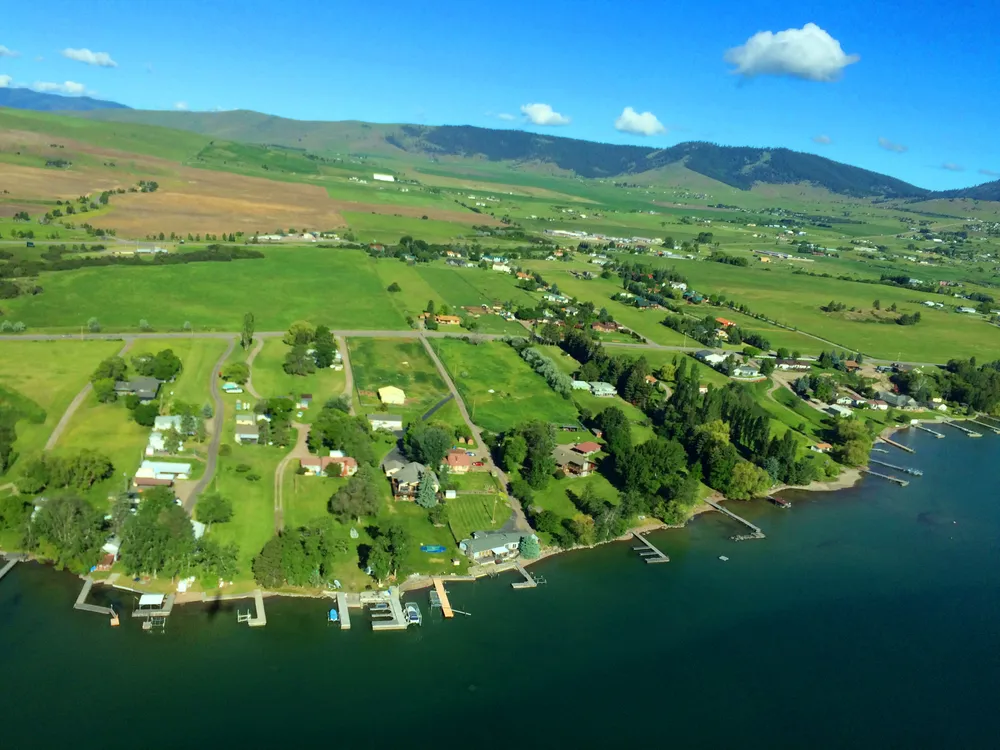
The story of people leaving big cities for Montana took hold during the early 2020s and became familiar shorthand for a certain kind of relocation. What is less understood from outside the state is that the profile of who is arriving in Whitefish has continued to change even as the headline narrative has stayed the same. The buyers showing up now are not just remote workers chasing space. They are a more varied group with more varied motivations, and that mix is reshaping what the market actually looks like.
Brenda Twete, a realtor with National Parks Realty who has spent 22 years working the Whitefish and Flathead Valley area, describes the current buyer pool as spanning young families, recently married couples, healthcare and education workers relocating for local jobs, and retirees making seasonal or permanent moves from warmer states. That range is wider than the remote-worker framing that dominated coverage of the market a few years ago.
The distinction matters for anyone trying to read the Whitefish market from the outside. A buyer pool driven primarily by remote work is vulnerable to employer policy changes, economic slowdowns, or the simple reversal of a lifestyle experiment. A buyer pool that also includes people relocating for local employment, people aging into a retirement market, and people drawn by family considerations is more structurally stable. Twete points to growth in local healthcare and schools as evidence that some of the population increase has produced actual job-driven demand, not just lifestyle migration.
Outdoor Access, Multi-Season
The outdoor access piece remains central to why people choose Whitefish specifically over other Montana markets. Glacier National Park is nearby, but Twete notes that during peak summer months the park itself gets crowded enough that locals often seek out other options. The surrounding region offers lakes, trail networks, and cross-border access to parks in Canada, meaning the outdoor draw is broad and multi-season rather than dependent on a single destination.
What Twete emphasizes as the less obvious draw is something harder to quantify, a sense of community that has survived the town’s growth. Whitefish has expanded considerably over the past several years, but she describes it as still functioning like a small town in terms of how neighbors interact. That quality does not show up in market data, but it is consistently part of why people who visit end up deciding to buy.
Retirees Stabilize Higher Prices
The retirement segment deserves particular attention because it behaves differently from other buyer categories. Twete describes buyers from Arizona and Southern California who are spending summers and falls in Whitefish, using it as a seasonal escape from heat rather than a permanent relocation. These buyers are often paying cash, are less sensitive to interest rates, and are primarily evaluating whether a property fits their lifestyle and will hold its value. They are not trying to time the market or optimize a rental yield. That makes them a stabilizing presence in the higher price ranges, where their demand has remained steady even as the broader market has slowed.
The entry-level and move-up segments are behaving differently. Twete sees a pattern where buyers who purchased starter homes during the growth years are now looking to trade up to properties that better fit their families or their proximity to schools. That move-up activity is constrained by familiar pricing dynamics: sellers of mid-level homes are still adjusting to the reality that 2021 and 2022 price levels are not the current baseline, and buyers making a move-up purchase are working within budgets that do not stretch as far as they once did.
A Market with Layers
The result is a market with genuinely distinct layers. High-end properties near amenities and in established communities are still seeing strong demand. Entry-level and mid-range homes are moving when priced accurately but stalling when sellers hold out for numbers the current buyer pool will not support. And the short-term rental segment has more inventory and softer demand than it did at its peak.
For buyers relocating to Whitefish from outside Montana, the practical takeaway is that the lifestyle case for the market does not depend on any single feature. The combination of outdoor access, community character, proximity to services in nearby Kalispell, and a school system that has adapted to rapid growth gives the area a more durable foundation than a single-amenity resort town. That durability is what separates Whitefish from places where pandemic-era demand proved temporary, and it is what continues to draw a broader, more grounded buyer pool even as the initial wave of remote-work relocations has faded.
About the Expert: Brenda Twete is a Realtor with National Parks Realty, with 22 years of experience serving the Whitefish and Flathead Valley market in Montana.
This article is intended for informational purposes only and does not constitute legal, financial, or investment advice. The views and opinions expressed herein reflect those of the individuals quoted and do not represent an endorsement of any company, product, or service mentioned. Readers should conduct their own due diligence and consult qualified professionals before making any investment decisions.
Similar Articles
Explore similar articles from Our Team of Experts.