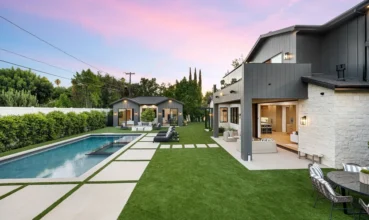

For the better part of five years following the pandemic, the greater Princeton area operated under a simple rule: well-located homes sold fast, prices climbed steadily, and buyers who hesit...

Stability Has a New Address: What Rate Pressure Is Teaching Commercial Investors

Written by:
Date:
22 Jun 2026
Share via Facebook

Share via Linkedin

Share via X

Copy to clipboard


For most of the past decade, a reliable corner of commercial real estate ran almost on autopilot: buy a single-tenant property, sign a long lease with a national brand, and collect income with minimal involvement. That model depended on one thing staying true: cheap debt. It no longer is.
Borrowing costs have roughly doubled since the low-rate era, and the properties built around that era’s math are now underperforming. Investors who haven’t adjusted are either holding assets that have lost value or refinancing into terms that erode returns. The question isn’t whether the strategy needs to change – it’s what the new one looks like.
Randy Sohal, Chief Operating Officer at S&S Singh Partners Real Estate, has been working through that question in real time. His firm, a family-run commercial operator with nearly three decades of history in Pennsylvania and surrounding markets, is in the middle of a deliberate shift toward multi-tenant retail – and the reasoning behind that move offers a useful lens for any investor reassessing a portfolio built for a different rate environment.
When One Tenant Isn’t Enough
For years, single-tenant net lease retail made sense. A Dollar General or AutoZone on a long-term lease meant predictable income, minimal management, and a straightforward hold. Then borrowing costs doubled.
Cap rates on single-tenant properties have moved from the low sevens into the eights and higher, compressing values at precisely the moment investors are refinancing into more expensive debt. Properties that looked like steady performers are now generating returns that barely justify the carry.
The deeper problem is structural. If the tenant closes, income stops entirely, and the investor absorbs the full cost of the property while searching for a replacement. In a market where replacement tenants are harder to attract, and lease-up timelines are longer, that exposure is more consequential than it used to be.
Multi-tenant retail addresses this directly. With five or six tenants, one vacancy doesn’t collapse the income. Because leases don’t all expire at the same time, there’s a natural hedge against rate and market cycles. Rent structures also tend to allow more frequent adjustments, which matters when inflation remains a factor. S&S Singh Partners made this calculus explicitly, selling a Dollar General position after determining that limited rent-escalation clauses and prolonged rate pressure would continue to erode value.
The Geography Advantage
Holdings across multiple states can look impressive on paper. They also entail costs that don’t always show up in underwriting: slower response times, unfamiliar contractors, due diligence blind spots, and financing relationships that take longer to build.
S&S Singh Partners pulled back to focus on properties within roughly two hours of their home base in Schuylkill County, Pennsylvania. Expenses dropped. Contractor performance improved. Financing became more straightforward. Problems that once required coordination across distance got handled faster and more cheaply.
The clearest illustration: a recent $6.2 million acquisition located five minutes from the firm’s offices. The deal closed in 45 days because the team already knew the asset, the market, and the relevant parties. A trusted broker with relationships on both sides kept the process efficient.
Geographic focus isn’t about thinking small. Local operators know which properties have had persistent vacancy problems, which contractors show up, and which markets can absorb a tenant loss, knowledge that’s hard to replicate from a distance and increasingly valuable when execution risk is higher.
What Rural Markets Deliver
Rural and secondary markets get dismissed by investors conditioned to chase growth. What that framing misses is that stability and growth are different things, and for income-focused investors, stability is often more valuable.
Tenants who have operated in a rural market for ten or fifteen years have already survived the conditions that define those markets: limited competition, a consistent customer base, and demand driven by necessity. A convenience store with low rent and no nearby competition, or an auto parts retailer serving a community that depends on older vehicles, generates reliable income precisely because the market isn’t attracting new entrants.
Necessity-based retail – groceries, auto parts, convenience, basic services – tends to hold in rural markets even through economic pressure. Discretionary or specialty retail rarely does. Matching tenant type to market character is the core skill.
There are real risks. Pharmacy closures have left some rural properties with replacement rent that’s difficult to achieve. But a well-tenanted rural property in a stable market, where the tenant has low rent relative to their sales and faces limited competition, can outperform a higher-rent urban asset that turns over frequently and demands constant re-leasing attention.
Positioning for What’s Next
Where interest rates move next will significantly shape the next twelve to eighteen months. For investors who have already repositioned – reducing single-tenant exposure, tightening geography, building multi-tenant holdings with flexible lease structures – a rate decline creates opportunity rather than relief.
If rates ease, single-tenant assets that are difficult to exit today become more liquid, and multi-tenant properties with strong visibility and re-leasability move to the front of the acquisition queue.
A return to near-zero rates isn’t necessarily the goal. That environment created its own distortions: more competition, compressed margins, and valuations that held up only because financing was artificially cheap. A moderate-rate environment, with fewer overleveraged buyers, may offer more room for investors who have done the structural work.
The investors who fare best through rate cycles aren’t the ones who called the market correctly. They’re the ones who built portfolios flexible enough to adapt, and patient enough to move when conditions align rather than when pressure forces their hand.
About the Expert: Randy Sohal is Chief Operating Officer at S&S Singh Partners Real Estate, a family-run commercial real estate firm with nearly three decades of history operating primarily in Pennsylvania and surrounding markets.
This article is based on information provided by the expert source cited above. It is intended for general informational purposes only and does not constitute legal, financial, or real estate advice. Readers should conduct their own research and consult qualified professionals before making any real estate or financial decisions.
Similar Articles
Explore similar articles from Our Team of Experts.