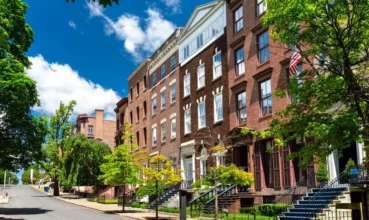

Coronado, California, often seen as a haven for Navy families and retirees, is now dominated by vacation-home buyers whose preferences and strategies are reshaping the local real estate land...

The Wealth Gap Determines Who Can Actually Buy a Home on California's Central Coast

Written by:
Date:
25 Jun 2026
Share via Facebook

Share via Linkedin

Share via X

Copy to clipboard

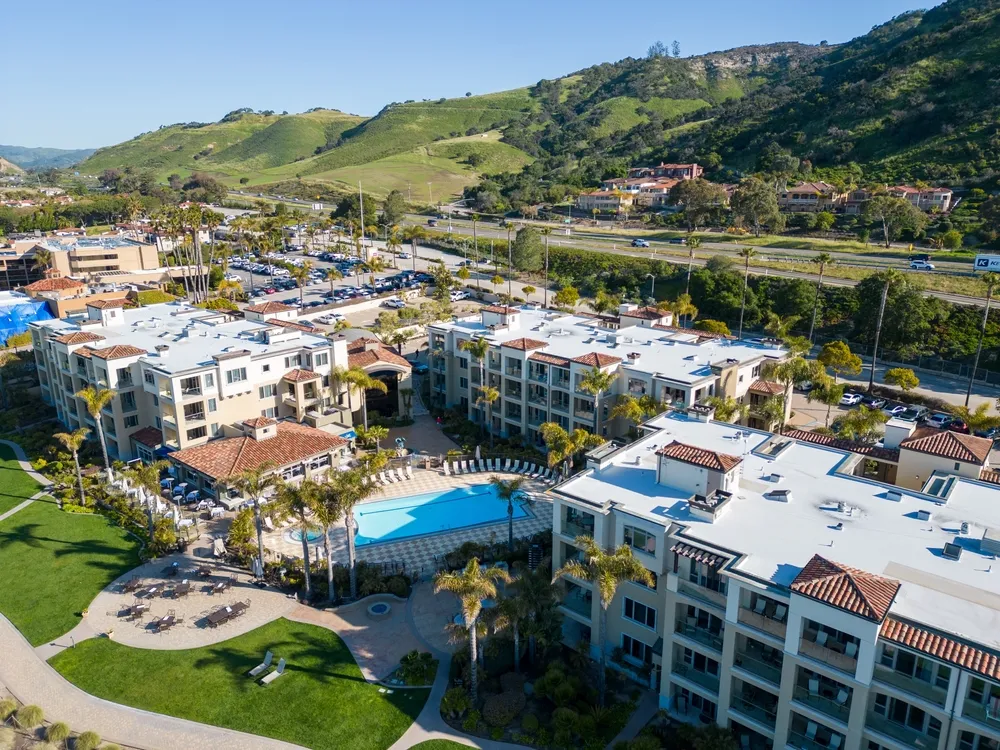
The idea that rising home prices benefit everyone in a housing market is getting harder to defend. What real estate professionals are seeing in markets like San Luis Obispo County tells a more complicated story, one where the same price appreciation that rewards longtime owners is systematically locking out everyone else.
Hal Sweasey, broker and owner of Team Sweasey at Equity Union, a residential brokerage serving San Luis Obispo County, has a name for what he is observing. He calls it the K-shaped economy, a dynamic in which people who already hold assets like real estate and stocks see their wealth grow. In contrast, people who depend primarily on wages fall further behind as costs rise faster than their incomes. In his view, this split is now the dominant force shaping who buys homes on the Central Coast.
Who Is Buying
The K-shape is clear in the buyer profile Sweasey describes. The most active buyers are in their 40s through 70s, have already accumulated significant wealth, and in many cases are arriving from higher-cost markets, such as the Bay Area, Los Angeles, Seattle, where they sold well and are redeploying capital. A price range of $3 million to $4 million, with flexibility to go higher for the right property, is no longer unusual. A decade ago, a $1 million sale was considered a significant transaction.
At the other end of the K, first-time buyers are nearly absent from the market without outside help. Sweasey said that almost all first-time buyers in San Luis Obispo County now require financial assistance from family members to purchase a home. He noted that the national average age of a first-time buyer has climbed to around 40, compared to roughly 28 not long ago, a sign, in his view, of something unhealthy in the broader system.
Investors Have Stepped Back
The investor segment has also contracted. Sweasey described the value proposition for rental property investors as substantially weaker than it was several years ago. A fourplex that a current owner carries with a $2,000-per-year insurance bill might cost a new buyer $6,000 to $8,000 annually for comparable coverage. A mortgage originated at 3% or 4% is replaced by one at 6% or higher. Maintenance and repair costs have risen sharply. The result is that the current owner of a rental property is often the only buyer for whom that property makes financial sense, which keeps those units off the market and further compresses options for everyone else.
The Tech Sector Risk
There is a meaningful risk embedded in this picture that Sweasey flagged directly. A significant share of high-end buyers active in the San Luis Obispo market have financial ties to the Bay Area technology sector, either through employment or stock-based compensation. If equity values in that sector fell sharply, the psychological effect on buyer confidence could quickly ripple through the local market. “If people feel poor, they’re less likely to buy a new car or house,” he said. The local economy would not need to deteriorate for demand to soften; it would only need the people with the most buying power to feel less certain about their net worth.
This is the fragility that the K-shaped dynamic creates. A market dependent on a narrow band of wealthy buyers has demand concentrated in a single demographic. When that demographic pulls back, even temporarily, even for psychological rather than financial reasons, there is no broad middle tier of buyers to absorb the slack.
What It Means for Sellers
For sellers, the practical implication is that the pool of qualified, motivated buyers for higher-priced properties is real but not deep. A well-priced, well-maintained home can still draw multiple offers and sell above asking. Sweasey described a recent transaction where a seven-year-old custom home listed at $1.5 million received eight offers and sold for $1.76 million. But that outcome depends on the property being the right type, turnkey, low-maintenance, ideally single-story, for the buyers who are actually active.
For buyers who do not arrive with accumulated wealth or family support, the options are limited and unlikely to be resolved quickly. The structural forces keeping inventory low, locked-in insurance rates, low legacy mortgages, and strong equity positions give longtime owners little financial reason to sell. The county’s geography constrains new construction. And the entry-level condo segment, which might otherwise serve as a starting point, is now complicated by tighter lender requirements, making financing harder to secure.
Stable or Brittle
Looking ahead, the question for San Luis Obispo County is whether this concentration of buying power proves stable or brittle. If tech-sector wealth holds and migration from higher-cost California markets continues, prices will likely remain elevated, and inventory will remain tight. But if stock market volatility or broader economic uncertainty causes even a temporary pause among the narrow group of buyers propping up demand, there is little beneath them to keep the market moving. The K-shaped economy has not just sorted buyers into winners and losers; it has made the entire market’s health dependent on the confidence of those at the top.
About the Expert: Hal Sweasey is a broker and owner of Team Sweasey at Equity Union, a residential brokerage serving buyers and sellers across San Luis Obispo County on California’s Central Coast.
This article is intended for informational purposes only and does not constitute legal, financial, or investment advice. The views and opinions expressed herein reflect those of the individuals quoted and do not represent an endorsement of any company, product, or service mentioned. Readers should conduct their own due diligence and consult qualified professionals before making any investment decisions.
Similar Articles
Explore similar articles from Our Team of Experts.